Get Full Government Meeting Transcripts, Videos, & Alerts Forever!
Get email alerts on the Water Infrastructure topic
No spam. Unsubscribe anytime.
Richmond officials outline recovery steps, third‑party reviews after multi‑day water outage
Summary
City staff described repairs underway at the treatment plant, confirmed drinking water is safe, and announced two outside reviews—an HNTB forensic review of plant operations and a Hagerty assessment of emergency response—while council pressed for budget and contract details.
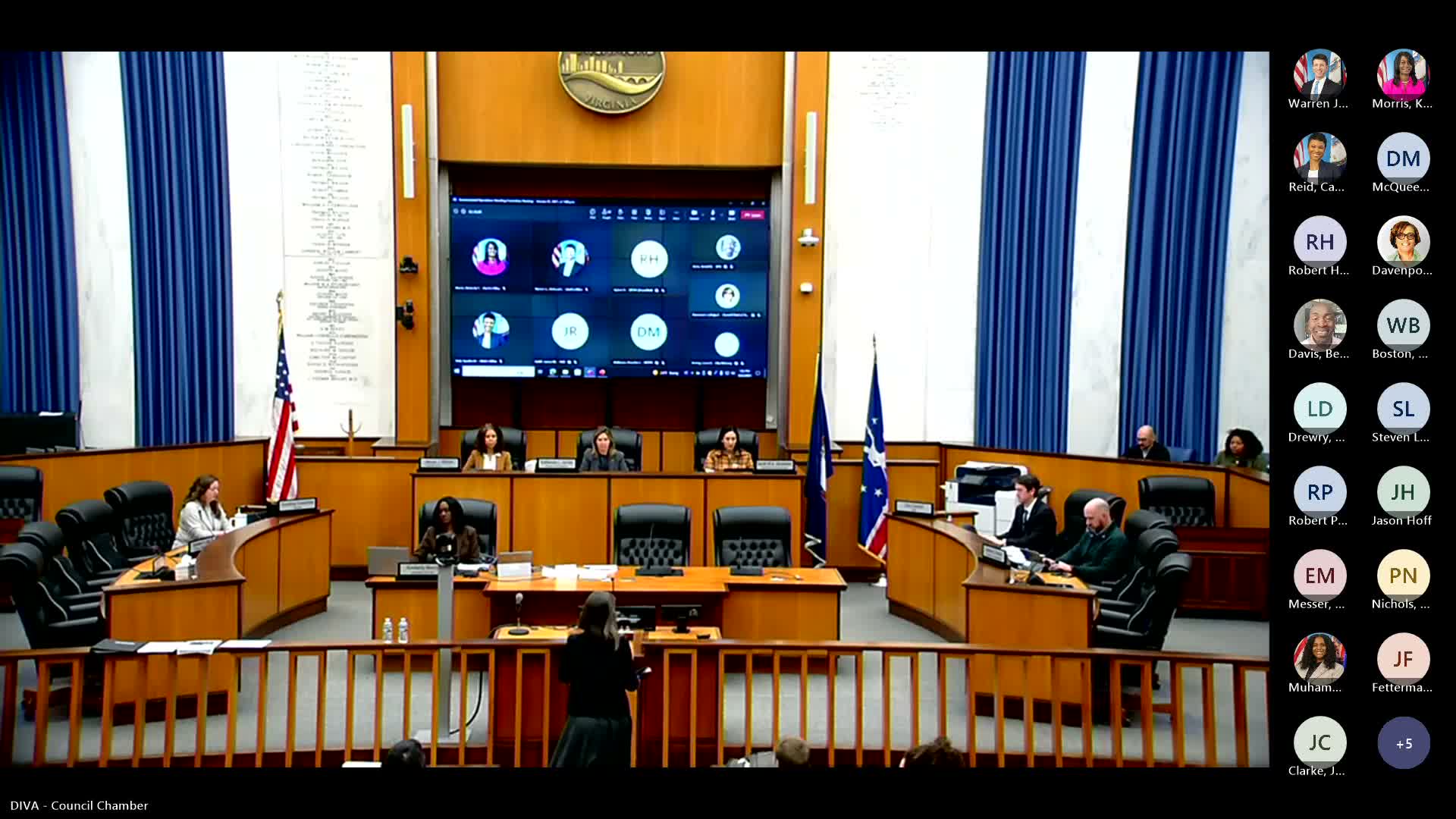
Richmond officials on Jan. 13 told the Governmental Operations Standing Committee that repairs and phased recovery work are underway at the city’s main water treatment plant, that drinking water is safe, and that the city has contracted outside firms to produce a forensic after‑action review and an emergency‑management assessment.
“The water quality is safe to drink,” Interim Department of Public Utilities Director Scott Morris told the committee, adding the plant is operating to meet current demand while staff complete incremental repairs. “We’re pacing our actual output of the water treatment plant based off those needs.”
City senior policy adviser Megan Field said the administration had signed a contract with HNTB, an engineering firm, to lead a forensic after‑action review and that Hagerty Consulting will support an assessment of the city’s emergency response and a post‑disaster recovery plan. Jason Hoff, HNTB’s on‑call lead for the review, said the firm will begin desktop analysis immediately and expects to have staff “boots on the ground” at the plant the week after the committee meeting. He said preliminary findings are anticipated within the first two weeks of fieldwork and that the final report will address operating procedures, timelines and recommendations for system improvements.
Stephen Willoughby, the city’s director of emergency communications, preparedness and response, told the committee he engaged Hagerty to evaluate the city’s incident response, recommend improvements to plans and training, and assist with identifying federal and state funding opportunities and a community needs assessment. Willoughby said Hagerty will also help scope a post‑disaster recovery plan that would guide long‑term rebuilding and community support.
Council members pressed for more detail on costs and contracts. When asked about budgeted purchases made during the crisis, Morris said he was still “in the learning curve” and did not have full procurement details. Field said the administration is compiling cost records and would provide them to council.
Willoughby estimated the emergency‑management engagement at roughly $400,000; he said he did not have the exact figure at the meeting. Field and Willoughby also told the committee the city is assembling documentation needed for disaster assistance applications, appeals to the General Assembly and Freedom of Information Act requests.
Committee members asked about regulatory oversight. Morris described the regulatory framework: the drinking water system is regulated by the Virginia Department of Health at the state level and the U.S. Environmental Protection Agency at the federal level; Morris said his prior role at the Virginia Department of Environmental Quality covered clean water and wastewater regulatory matters. He said state and federal oversight provide standards the city must meet, and that the after‑action review will inform what local improvements and resiliency investments are required.
Council members and commissioners emphasized speed and transparency. Several members requested the HNTB scope of work and the HNTB contract be made public; Chair Jordan and others said the public expects clarity on what outside reviewers are authorized to examine, who will be interviewed and how the city will use the findings. HNTB told the committee it plans to interview operations staff, review documents and develop a timeline of events.
Field recommended dividing reporting across committees so experts and members get focused briefings: operational updates to Governmental Operations, emergency response reviews to Public Safety, and community relief and human‑services follow‑up to Health and Human Services. She said the administration will coordinate with council leadership and the council chief of staff about what to bring to the full council at upcoming Organization Day sessions.
Committee members also asked Morris about capital and operating needs for DPU and whether the department expects a large budget ask. Morris said he is reviewing agency cost centers, prior asset reports and the long‑term capital improvement plan; he said a budget estimate should be possible within a few weeks after the after‑action report’s findings.
The committee did not take formal action on policy or funding at the meeting. Administration officials said their priority remains stabilizing the plant, supporting staff who worked extended hours during the incident, and delivering a timely, evidence‑based after‑action report and an assessment of emergency communications.