Get Full Government Meeting Transcripts, Videos, & Alerts Forever!
Get email alerts on the Immigration Enforcement topic
No spam. Unsubscribe anytime.
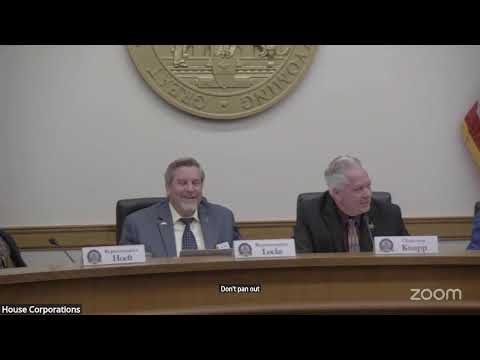
Committee advances bill banning sanctuary policies in Wyoming
Summary
The Corporations, Elections & Political Subdivisions Committee voted 8-1 to pass House Bill 133, which would prohibit sanctuary policies by state and local governments and impose penalties for noncompliance; supporters said the measure is preemptive, while opponents said it is unnecessary and could erode trust between immigrant communities and law‑
The Corporations, Elections & Political Subdivisions Committee voted 8-1 to pass House Bill 133, titled “Sanctuary Cities, Counties, and State Prohibition,” following testimony from the bill sponsor, state officials and several local stakeholders.
Representative Joel Guggenmas, the bill sponsor, told the committee the measure would "ensure uniform enforcement of federal immigration laws across Wyoming by prohibiting sanctuary policies at the state and local levels," and would create new statutes, definitions and penalties for local governments and local officials who fail to cooperate with federal immigration authorities.
The bill’s supporters said the measure is a preemptive step to avoid problems other states have faced. Wyoming Secretary of State Chuck Gray told the committee he “completely” supports the bill and urged adding a private civil cause of action so individuals could sue to enforce the statute if prosecutors or the attorney general do not. "I think a civil cause of action is an important addition," Gray said.
Opponents urged caution. Antonio Serrano, advocacy director for ACLU Wyoming, said the Teton County sheriff "did what he's supposed to do. He followed the law" and argued that the bill would erode trust between immigrant communities and local law enforcement, making crime reporting and cooperation with police less likely. Jim Ford, speaking for the Wyoming County Commissioners Association, said no county commission in Wyoming has established—or intends to establish—a sanctuary policy and described the bill’s penalty provisions as "unnecessarily harsh" and focused only on local governments.
The Wyoming Association of Sheriffs and Chiefs of Police delivered a technical amendment that the committee adopted. Colter Felton, speaking for the association, asked that the bill’s definition of "local official or employee" be revised to move “peace officer” into the managerial category to avoid subjecting rookie officers to felony exposure; the committee adopted that change.
Representative Brown moved the committee to advance the bill; Representative Weber seconded. A roll‑call vote recorded eight ayes and one no (Representative Yin). The committee chair announced, "House Bill HB 133 ... does pass the committee." The record indicates committee members discussed adding a civil cause of action and the secretary of state urged that amendment as well.
Discussion in the hearing covered specific statutory line references and penalties specified in the draft: the bill text cited new statutory sections (definitions on page 2–3), prohibited actions by cities, towns and counties (page 4), local penalties (page 4–5) and separate protections and penalties regarding state employees and local officials (page 5–6). Sponsor Guggenmas described immediate effective-date language in section 3.
The committee vote advances the bill out of committee; sponsors and opponents signaled the possibility of further drafting and floor amendments, including the secretary’s suggestion to add a private right of action and local stakeholders’ requests to soften penalty provisions.