Get Full Government Meeting Transcripts, Videos, & Alerts Forever!
Get email alerts on the Social Services topic
No spam. Unsubscribe anytime.
Caregivers, IHSS advisory committee urge Yolo supervisors to fund after‑hours hotline, keep virtual access options
Summary
Home care providers and the county In-Home Supportive Services (IHSS) Advisory Committee told the Yolo County Board of Supervisors they need an after‑hours Home Care Now hotline, continued funding for IHSS, and more flexible remote participation for advisory bodies and public commenters.
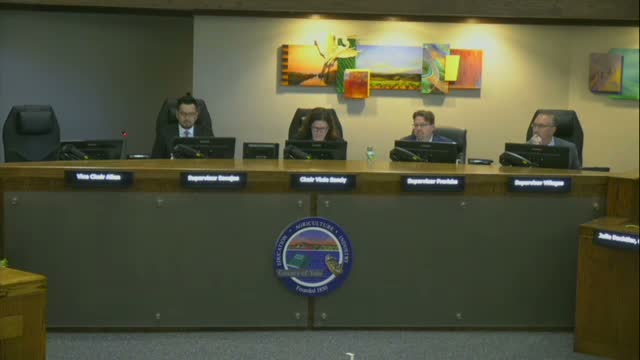
Caregivers who provide In‑Home Supportive Services told the Yolo County Board of Supervisors on Jan. 28 that they need better pay, protections and after‑hours access to Home Care Now services while the committee that advises the county on IHSS urged continued funding and changes to meeting rules.
The issue surfaced during the meeting’s public‑comment period and again when Kate Ladysch, chair of the Yolo County IHSS Advisory Committee, presented the committee’s annual update. “We need your support and collaboration for this negotiation,” said Patricia Ornelas, introducing herself as “a delegate for SEIU Local 2015,” who told the board she cares for her son 24/7 and asked supervisors to support IHSS contract talks.
Why it matters: IHSS supports residents with disabilities to remain at home; caregivers said they are strained by low wages and by gaps in urgent coverage outside regular business hours. The advisory committee also argued that allowing broader virtual participation would increase equity and participation for consumers and providers who cannot travel to board meetings.
Committee findings and requests Kate Ladysch, chair of the county’s IHSS Advisory Committee, told the board the committee represents both consumers and providers and is consumer‑majority. Ladysch said the county has about 35,100 IHSS consumers and nearly 35,100 providers; in fiscal year 2023–24 the program saw an 8.5% caseload increase and distributed more than 66,000 pieces of personal protective equipment.
The committee’s four formal requests to the board were: - Create a Home Care Now hotline for nights, weekends and holidays so consumers can reach on‑call providers when a regular caregiver is unavailable. - Continue to advocate for modernizing the Brown Act to allow advisory bodies to meet virtually, and include that modernization in Yolo County’s 2025 intergovernmental advocacy priorities. - Allow remote participation by presenters and members of the public at board meetings, including remote public comment and closed‑captioning to improve access for people who are deaf or hard of hearing. - Maintain county funding for IHSS so federal and state funding changes do not force people out of home‑based care and into institutional settings.
Board questions, staff response Supervisor Lucas Frerichs and others asked staff for more detail on how many after‑hours Home Care Now requests the county receives and how the hotline could operate. Yesenia (county IHSS staff) told the board that the county averages roughly 20 Home Care Now requests per week and that staff lack funding to operate 24/7; she said the office monitors voicemail during closures and tries to fill urgent needs when possible.
Frerichs asked whether 211 — the county’s existing call center contract — might be used for after‑hours coverage. Several supervisors expressed general support for exploring that option.
Public commenters who spoke during the meeting also asked for wage increases and dignity for caregivers. Rosario Sanchez, who identified herself as an in‑home caregiver for her adult daughter, said she works nights and must be available for breathing equipment, and told the board: “We need more pay.” Jose Luis Reyes, an IHSS family caregiver, said IHSS made it possible to care for his wife at home and asked that the county reach a fair agreement with providers.
Discussion vs. action The board received the committee update and asked staff follow‑up questions; supervisors did not adopt a specific policy at the meeting but discussed options including using 211 and working with county staff on virtual participation. The advisory committee said it will continue outreach and advocacy while requesting board assistance to recruit additional consumer committee members.
What’s next Committee leaders said meetings are held monthly; the committee asked the board for help recruiting four more consumer members and one community member and for inclusion of the Brown Act modernization request in the county’s 2025 intergovernmental priorities. Staff said they will follow up with details about Home Care Now call volume and possible after‑hours arrangements.