Get Full Government Meeting Transcripts, Videos, & Alerts Forever!
Get email alerts on the Environment And Public Health topic
No spam. Unsubscribe anytime.
Council adopts updated oak‑wilt rules after debate over enforcement and timing
Summary
The council approved amendments to the city’s oak‑wilt control ordinance, changing timing, treatment and removal provisions; the vote was 5–1 and followed testimony from a local arborist and public comment questioning the classification of oak wilt as a public nuisance.
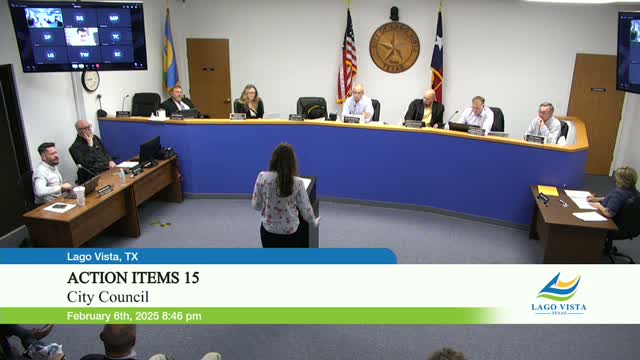
Lago Vista City Council on Feb. 6 adopted revisions to the city’s oak‑wilt control provisions that update trimming windows, clarify treatment and removal requirements, and reflect current technical guidance. The ordinance amendment passed on a 5–1 vote.
Council members discussed technical recommendations from a visiting arborist and Firewise volunteers. The updated language loosens one element in the city’s existing code by clarifying that removal requirements apply primarily to red oaks, while live oaks may be managed differently, and extends some compliance timing to match current best practice. The revision keeps a requirement that cuts be promptly treated to limit vector transmission and sets enforcement and fine provisions for willful noncompliance by contractors or property owners.
One resident urged the council not to broadly declare oak trees or affected wood as a ‘‘public nuisance’’ without specific statutory grounding and asked for more evidence that local oak wilt incidence requires new enforcement steps. City attorneys and staff pointed to similar codes adopted by neighboring jurisdictions and to technical guidance that supports municipal regulation to prevent spread. After council discussion, the ordinance amendment was adopted by a majority vote; the transcript does not record every roll‑call name in full, but the clerk recorded the final count in the meeting minutes.