Derby Fire and Rescue reports fast response times, staffing gains and new programs in 2024 review
Loading...
Summary
Chief Turner told council Derby Fire and Rescue averaged roughly 4-minute drive time response, added vehicles and positions, and launched community programs including a fall-prevention task force and free smoke/CO alarm distribution.
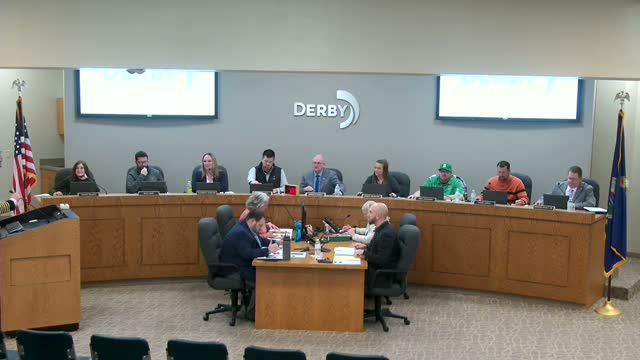
Derby — Chief Turner presented Derby Fire and Rescue’s 2024 annual report on Feb. 11, telling the City Council the department met national benchmarks for response and advanced several equipment, staffing and community-safety initiatives.
Turner said the department’s drive-time response averages about four minutes, a standard tied to successful cardiac and fire outcomes. Staffing on shifts currently totals nine personnel: six assigned to Fire Station 81 and three at Fire Station 82; Turner said an approved position in June will allow Station 82 to operate more independently.
Turner said the department ran about 2,700 calls in 2024, with emergency medical responses making up just over half of calls and roughly 149 total fire incidents that year. He reported overlapping 911 calls occurred roughly 747 times in 2024, a pattern that has increased since 2020 and leads the department to call mutual-aid partners when units are unavailable.
The department received grant-funded equipment, Turner said, including a vehicle-extrication grant from Firehouse Subs and community donations to fund a fire department mascot vehicle to be introduced this year. Turner described a new brush truck suited to the region’s growing wildland interface risk and said replacements for older engines are under order — a 2007 engine was paid for and is scheduled for prebuild this year.
Turner highlighted programs addressing repeat or low-acuity callers: a fall-prevention task force organized as a standalone 501(c)(3) with Rock Regional Hospital and Sedgwick County agencies, and an ongoing smoke- and CO-alarm distribution and installation effort (about 50 alarms issued to date). He also noted investment in training — including hosting a regional live-fire school — and plans to reapply for a SAFER grant to fund additional firefighter positions.
Council members praised the department’s training, mutual-aid work and emergency medical capability. Councilmember Coleman and others discussed Sedgwick County EMS placement and response patterns; staff and chief said county EMS placement affects transport availability and that staff are in ongoing conversations about resources and data from CAD and response dashboards.
No formal council action was required for the report.