Panel debate centers on mandatory minimums as committee advances bill lowering fentanyl threshold to 9 grams
Loading...
Summary
SB1061 drew lengthy testimony Jan. 13 as sponsors pushed to lower the fentanyl weight threshold from 200 to 9 grams; public‑health advocates, defense counsel and the ACLU warned of unintended mandatory‑minimum consequences and measurement challenges.
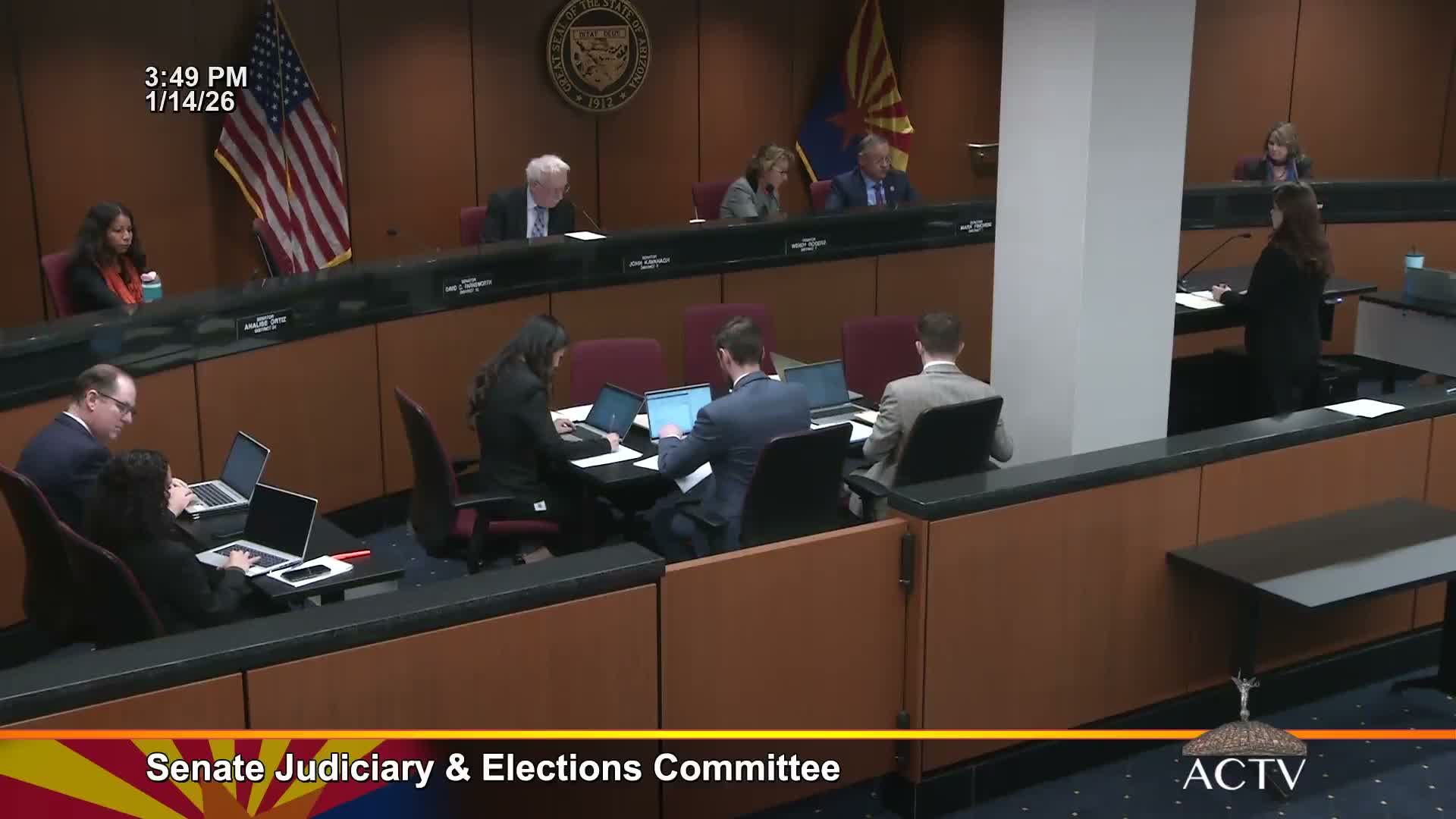
Senate Bill 1061, which the committee advanced on Jan. 13, would lower the fentanyl threshold that triggers enhanced sentencing ranges from 200 grams to 9 grams. The measure produced one of the session’s most contested debates.
Sponsor remarks framed the bill as a response to fentanyl's lethality and a tool to deter distribution of high‑harm drugs. "With the scourge of fentanyl and its tragic impact on our population... I am running this bill to lower the threshold to 9 grams," the sponsor said.
Opponents — including defense attorneys, the ACLU of Arizona, and speakers with lived experience — said the bill, as written, risks sweeping in people who possess pills for personal use or patients with lawful prescriptions. Caitlin Contreras of the ACLU warned that the bill’s reliance on total drug weight including fillers would create due‑process confusion and could result in charging personal users as dealers.
Several testifiers described forensic and practical issues: lab procedures commonly measure active fentanyl content and may separate fillers and cutting agents; law‑enforcement seizure weights often include packaging and diluents. Vicky Lopez, a private attorney and certified criminal law specialist, said labs and practice routinely permit attorneys to test and fractionate seized material but warned about the burden and practical constraints of quantifying active fentanyl in large pill batches.
Advocates for treatment emphasized public‑health alternatives. Kara Jansen, an executive director with lived experience, said mandatory prison terms would send people with substance‑use disorders into incarceration rather than treatment and would not reduce overdose deaths.
Committee action and next steps
Despite the concerns, the committee voted to give SB1061 a due pass recommendation. Multiple senators asked legislative counsel to review ARS 13‑34xx cross‑references and to clarify whether the bill intends to rely on active fentanyl quantification or raw pill weight, and whether mandatory minimums can be applied without further prosecutorial discretion.
The committee’s vote advances the bill to the next stage but leaves open substantive drafting changes to address lab quantification, sentencing discretion and potential exemptions for prescription drugs or medical products.