Lifetime Citizen Portal Access — AI Briefings, Alerts & Unlimited Follows
OLCC updates panel on hemp, marijuana and federal developments; industry urges changes if rescheduling proceeds
Loading...
Summary
OLCC officials briefed legislators Jan. 13 on Oregon’s split regulatory system for adult-use marijuana, medical marijuana and hemp; described a new hemp product registration and labeling regime and urged monitoring of recent federal actions, including a Dec. 18 executive order on rescheduling and appropriations language that could redefine hemp by November 2026. Industry witnesses highlighted the potential tax relief from changes to 280E if rescheduling occurs.
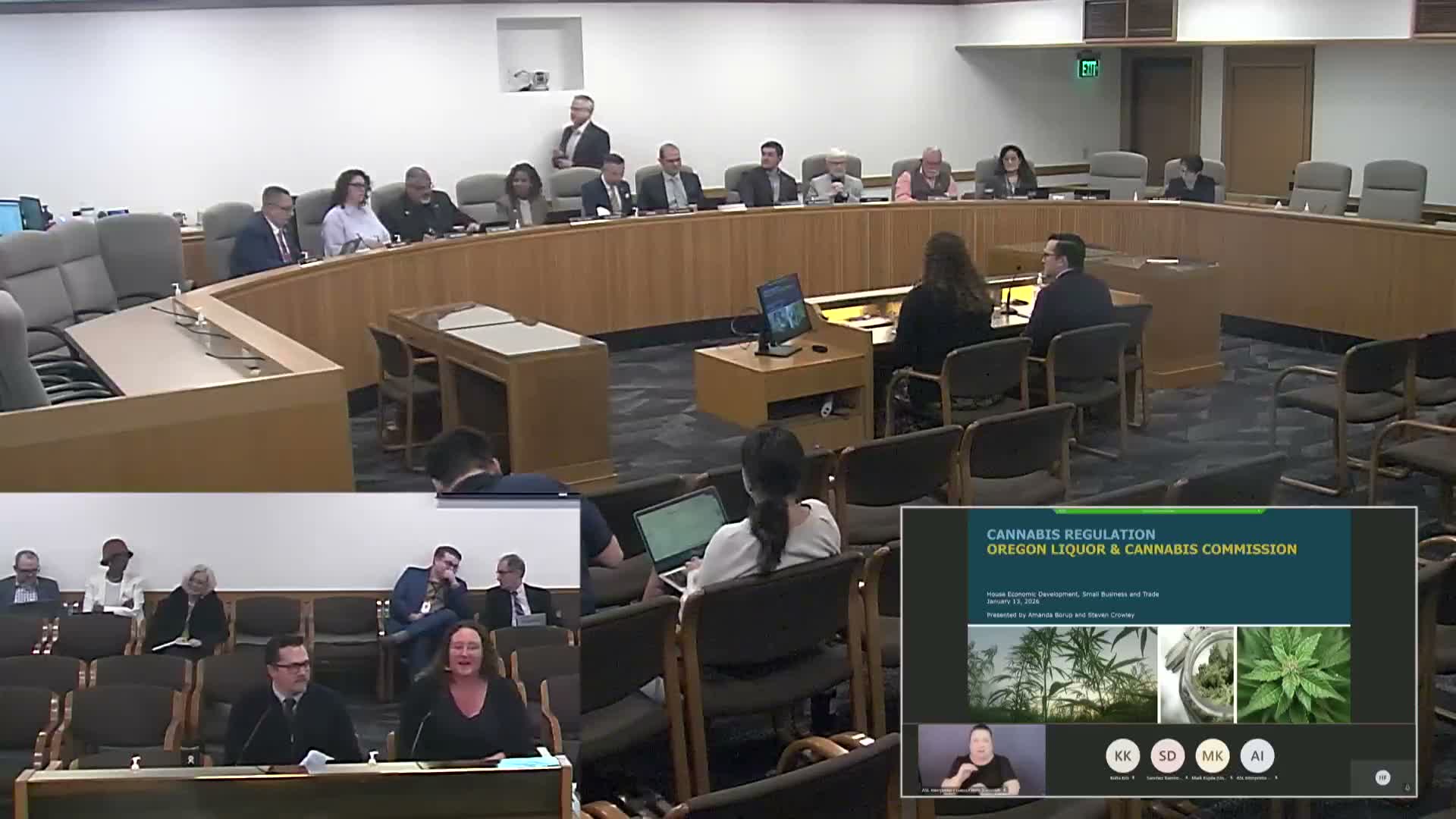
The House Interim Committee heard a multi-agency panel Jan. 13 on cannabis regulation, hemp product registration and recent federal developments.
Amanda Borop (S20), Director of Education, Health and Policy at the Oregon Liquor and Cannabis Commission (OLCC), explained Oregon’s regulatory split: OLCC licenses and regulates adult-use marijuana businesses, the Oregon Health Authority manages medical marijuana testing standards, and the Oregon Department of Agriculture regulates hemp cultivation and related processors. OLCC recently gained authority to maintain a hemp product registry and to set THC potency limits for hemp products sold in general commerce.
Steven Crowley (S8), OLCC cannabis policy analyst, emphasized the difference between hemp and marijuana under state rules and explained enforcement and labeling changes. He noted that hemp products sold in general commerce may now require product registration and labeling similar to marijuana products in order to improve consumer transparency.
Crowley also summarized federal developments: on Dec. 18 the president signed an executive order directing the attorney general to expedite rulemaking on rescheduling marijuana (potentially to Schedule III). That executive order does not by itself reschedule marijuana, but Crowley said rescheduling could remove the federal tax-code restriction in section 280E that currently limits ordinary business deductions for businesses dealing in Schedule I/II substances.
Industry witnesses told the committee the federal changes present both opportunities and challenges. Gabe Partonley (S12), general counsel for a multi-state cannabis company, said rescheduling and changes to 280E could materially lower federal tax burdens that currently result in effective tax rates he estimated at 80–94% for retailers because they cannot take ordinary deductions. He urged the legislature and agencies to consider statutory and regulatory updates to support legal operators while clamping down on illicit production and trafficking.
Committee members raised enforcement concerns about illicit hemp operations in Southern Oregon. OLCC and presenters said they are coordinating with law enforcement and that new registration and labeling tools improve oversight, but enforcement for completely illegal operations remains a law-enforcement matter.
Panelists said they will continue to monitor federal rulemaking and appropriations implementation and will adapt Oregon’s practices as federal guidance and FDA lists become available in coming months.