Get Full Government Meeting Transcripts, Videos, & Alerts Forever!
Get email alerts on the Housing Finance topic
No spam. Unsubscribe anytime.
Committee reviews statute updates to give Housing Finance Commission more lending flexibility
Summary
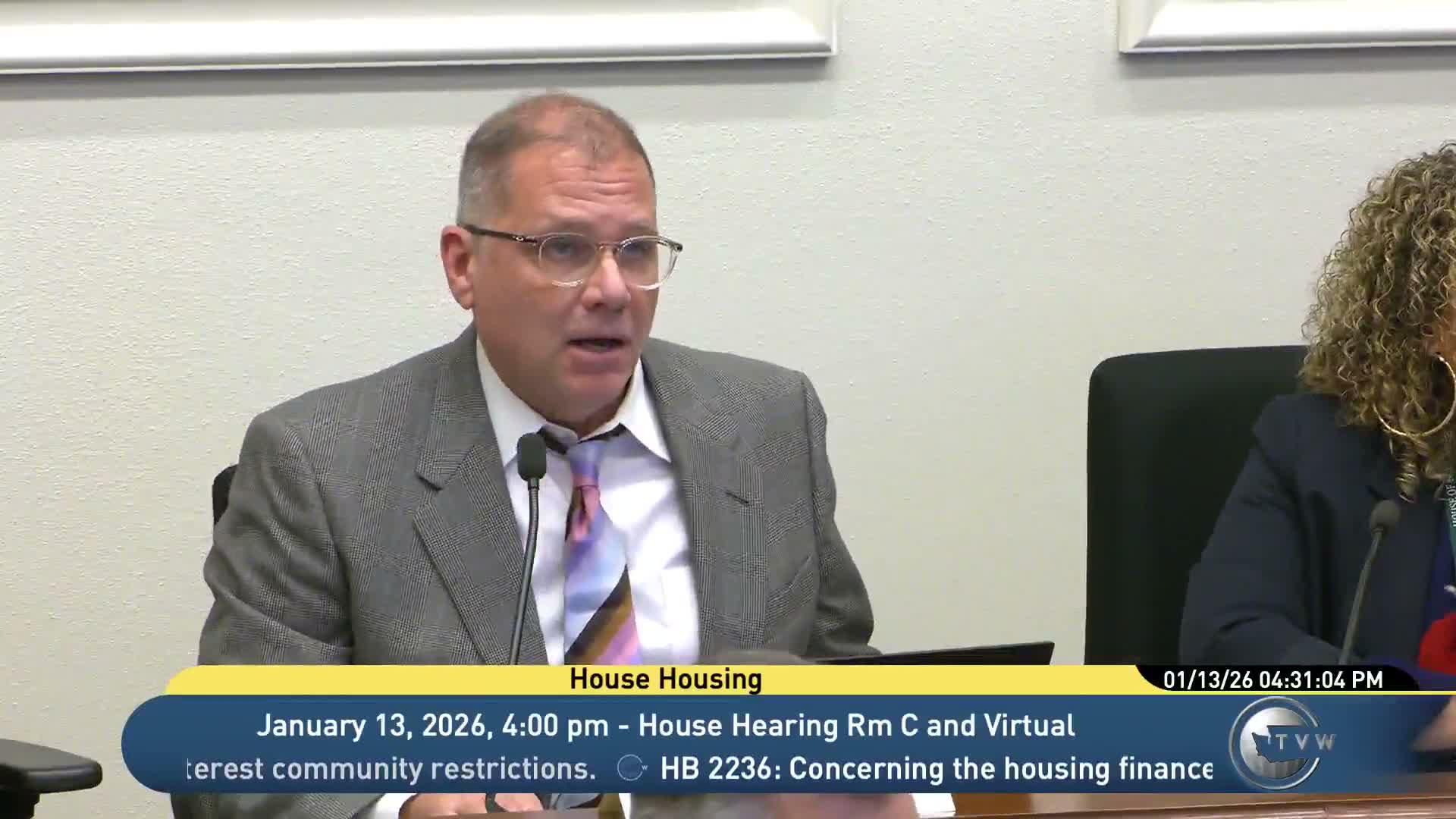
HB 2,236 would modernize the Washington State Housing Finance Commission’s statute to allow some forms of direct lending, extend an attorney term, remove certain plan requirements and update operative language; the commission described potential for gap financing and starter‑home programs while banks asked for clearer definitions and guardrails.
Committee staff opened the second hearing by describing House Bill 2,236, which makes a series of statutory changes to the Washington State Housing Finance Commission (HFC). Audrey Vazik told the committee the bill would authorize the commission to make mortgage loans directly to borrowers in addition to making loans to or deposits with mortgage lenders, extend the commission attorney’s term from two to four years, remove a state finance committee notice requirement for bond issuance, and repeal some housing finance plan requirements.
Steve Walker, executive director of the Washington State Housing Finance Commission, told members the commission was created in 1983 and that the statute (RCW 43.18) reflects 1983 realities. He said HB 2,236 would allow the commission to use its revenue more flexibly to fill financing gaps for multifamily and starter‑home projects and to finance smaller projects that are not suited for larger bond programs. “By removing the statute’s 1983-era restrictions on direct lending and public funds, HB 2,236 would position the commission to create some new financing tools to bring to the market,” Walker said.
Members asked technical questions about bond purchasers, taxpayer risk and the meaning of ‘public funds.’ Committee members and witnesses explained most bonds are tax‑exempt debt arranged under IRS code and are often privately placed with banks. One witness explained the default risk is borne by borrowers and the bank, not the state: “It’s to the borrower and to the bank,” the witness said when asked whether state taxpayers would be on the hook.
Several banking representatives signaled cautious support but urged clearer statutory language. Brad Tower of the Community Bankers of Washington said his organization supported many bill elements but worried that combined changes (direct lending without clear borrower/purpose definitions and striking language barring use of public funds) could materially alter the commission’s operations; he urged more prescriptive legislative direction. Megan Mannigan of the Washington Bankers Association said banks are reviewing the bill language and welcomed clearer definitions.
Commission leaders said they are working with banking partners to refine language and are prepared to offer amendments that clarify direct‑lending scope and define acceptable revenue sources. Committee members thanked witnesses for collaboration and closed the hearing on HB 2,236; no committee vote occurred at this session.
Ending: The committee closed the hearing and adjourned for the day; staff and sponsors indicated continued negotiations with banking partners and possible amendments ahead of executive action.