Get Full Government Meeting Transcripts, Videos, & Alerts Forever!
Get email alerts on the Policing Accountability topic
No spam. Unsubscribe anytime.
Panel hears bill to ban opaque face coverings for officers in public interactions
Summary
HB 2173 would prohibit law-enforcement officers from wearing opaque facial coverings while interacting with the public, allow limited operational exemptions and create a civil cause of action for detained persons; supporters said the measure increases transparency, while law-enforcement groups warned of uncapped liability and operational consequences.
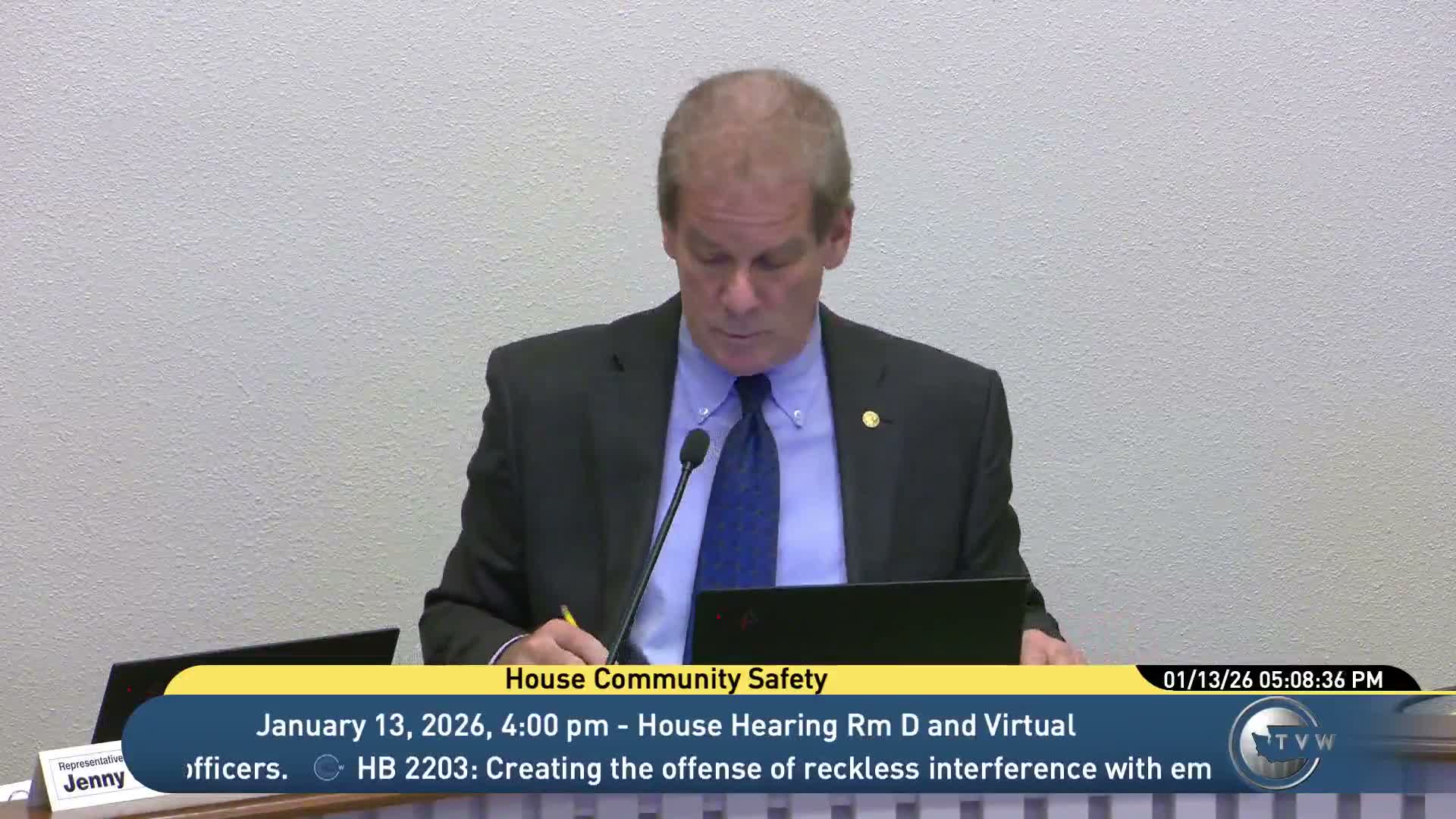
The House Community Safety Committee on Jan. 13, 2026, held a lengthy hearing on House Bill 2173, which would prohibit law-enforcement officers from wearing opaque face coverings while interacting with the public and would permit a civil cause of action for detained persons alleging a violation.
Lina Langer, committee counsel, said the bill excludes undercover operations and protective tactical gear and exempts medical and environmental protective masks and helmets. "Law enforcement officers may not wear facial coverings while interacting with the public in the performance of their duties," she said in the staff briefing.
Representative Julio Cortez, the bill sponsor, said the measure is about accountability and trust: "When law enforcement officers are operating their authority in public-facing duties, the public has the right to know who is policing them." Supporters, including faith groups, the League of Women Voters and survivors' advocates, testified that masked officers increase fear and trauma and can enable impersonation and abuse.
Opponents included the Washington Council of Police and Sheriffs and municipal associations. They raised operational and legal concerns: associations warned the bill's private right of action creates potential uncapped liability for cities and could harm recruiting and retention. Law-enforcement witnesses pressed for clearer definitions and carve-outs for weather, protective equipment and legitimate safety needs.
Committee members discussed intergovernmental-immunity questions about applying the rule to federal agents and cited pending litigation over analogous California provisions. The chair closed public testimony and adjourned; no vote was taken and sponsors and stakeholders were encouraged to continue drafting discussions.