Get Full Government Meeting Transcripts, Videos, & Alerts Forever!
Get email alerts on the Nuclear Policy topic
No spam. Unsubscribe anytime.
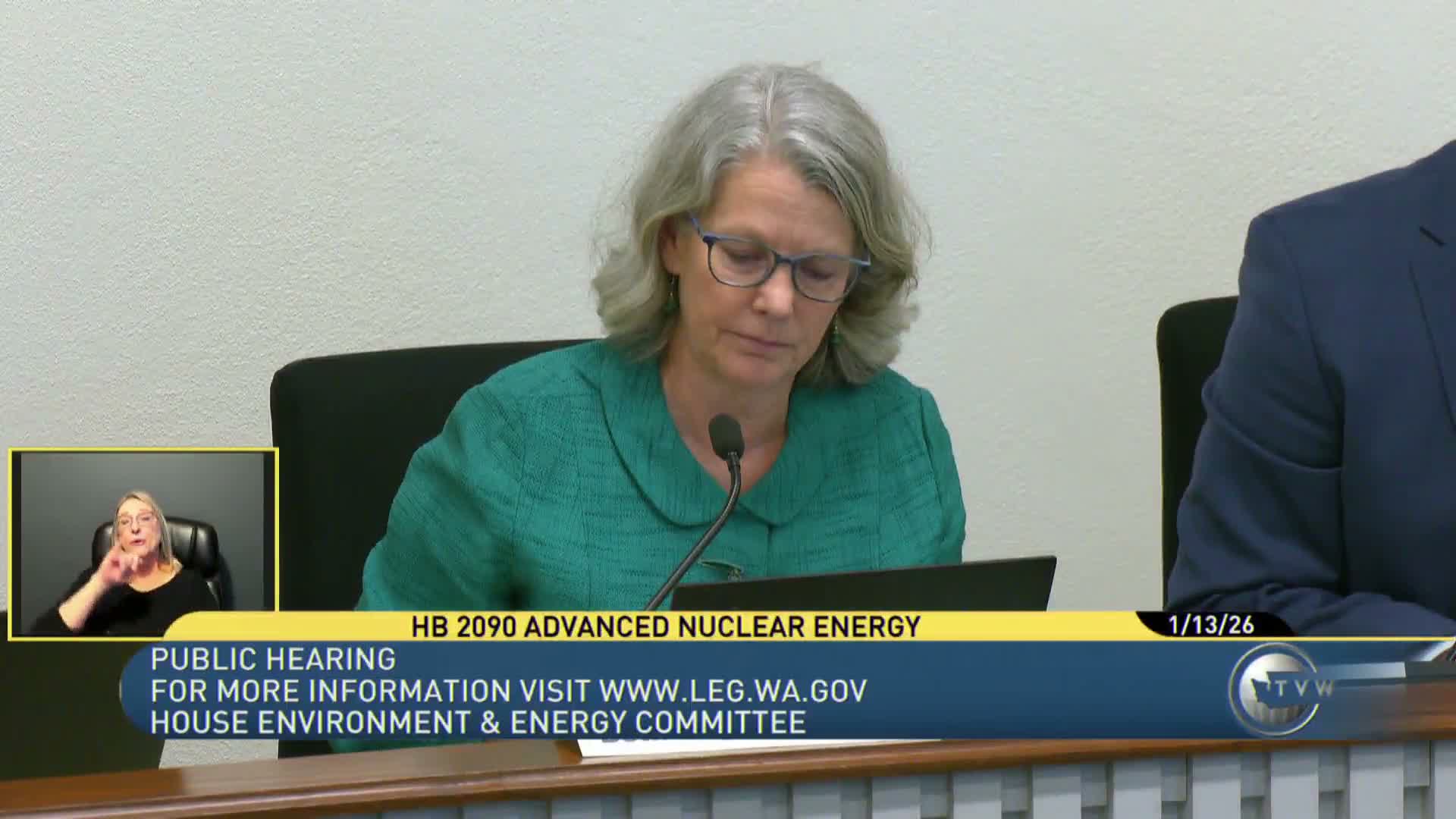
Nuclear-study bill HB 20-90 draws sharp debate over tribal consultation, cost and timing
Summary
HB 20-90 would require Commerce to produce a nuclear strategic framework if nonstate funds cover costs; testimony split: local governments, industry and pro-nuclear groups support study for reliability and planning, while tribes, environmental groups and others demand stronger tribal consultation and warn of private-funding bias and cost risks.
House Bill 20-90 directs the Department of Commerce to develop a nuclear strategic framework by Dec. 15, 2026, contingent on Commerce receiving sufficient nonstate funding to cover the work. The staff summary listed required elements including objectives for new fission electric generation, siting and permitting pathways, workforce and tribal consultation, and consideration of partnerships with other states.
Sponsor Representative Barnard described the bill as a neutral, evidence-based planning exercise, not a mandate to build. She and supporters argued that advanced nuclear could provide reliable, firm energy with a much smaller land footprint than large-scale wind or solar and might be needed to meet growing electricity demand from electrification and data industries.
The hearing drew substantial pro and con testimony. Cities, counties, Energy Northwest and industry representatives, including firms involved in uranium enrichment and SMR development, said the study is needed to inform long-range planning, grid reliability, workforce development, and economic opportunity.
Tribal leaders from the Confederated Tribes of the Umatilla Indian Reservation testified in opposition without stronger, early, and state‑funded government-to-government consultation; they urged a transparent, impartial study overseen by an independent third party and raised concerns about treaty-reserved rights, impacts on first foods, and historic nuclear impacts including Hanford waste.
Environmental and conservation groups warned that privately funded studies could produce biased outcomes and that Hanford is not an appropriate site for new nuclear development; they cited cost concerns and the immaturity of some SMR technologies. Academic and pro-nuclear witnesses argued nuclear has low lifecycle carbon emissions and could be cost-competitive when lifecycle and firming needs are considered.
Committee members asked detailed questions about land footprint comparisons, waste management, permitting timelines, and costs. No vote was taken; the hearing record contains requests for clear tribal consultation language, independent study funding, and fiscal and technical detail.