Rural utilities push for exemption for service vehicles; Ecology urges rulemaking instead of statute
Loading...
Summary
Supporters of SB 6056 said exempting utility service vehicles from some emission standards is necessary to ensure reliable outage response in remote areas; Department of Ecology and environmental groups preferred agency rulemaking and narrower statutory language.
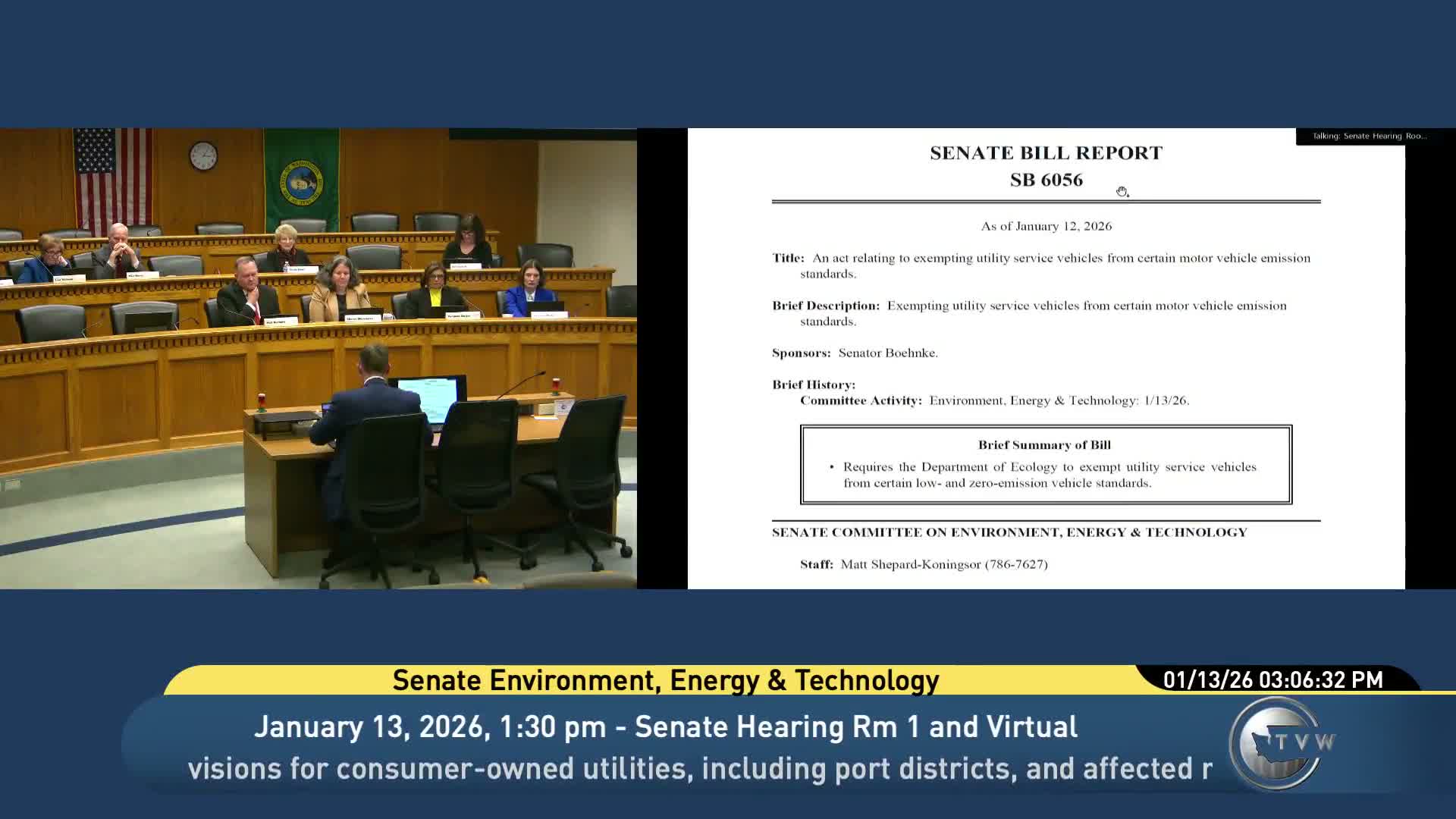
Senator Behnke introduced Senate Bill 6056 as a measure to exempt certain utility service vehicles from California‑derived motor vehicle emission standards adopted in Washington, arguing the exemption would help utilities reach remote outages quickly and maintain public safety during floods and storms.
Staff described the bill as directing Ecology to amend its rules to exempt utility service vehicles, referencing a federal definition that would encompass commercial vehicles used to repair or operate public‑utility infrastructure. Ecology staff noted they are already rulemaking a targeted exemption for utility vehicles including those responding to outages.
Supporters — particularly public utility districts (PUDs) in rural areas — argued current electric vehicle duty cycles, range limitations and charging logistics make full electrification impractical for many service vehicles. Deborah Hafner Ratliff (Cowlitz PUD), Ian Cope (Grays Harbor PUD) and Joe Hathaway (Pend Oreille County PUD) described long outages and remote terrain where bucket and line trucks must operate continuously, sometimes for many hours without grid access, and said charging needs would delay restoration work.
Travis Nelson (Washington PUD Association) and other PUD representatives urged adopting the federal definition in statute to provide clarity and address gaps that they said exist in ongoing Ecology rulemaking.
Opponents recommended rulemaking rather than a statutory exemption. Leah Missick (Climate Solutions) and Joel Creswell (Department of Ecology) both said Ecology’s current rulemaking approach can craft a narrow, implementable exemption while preserving flexibility as vehicle technologies evolve. Creswell warned that embedding a broad federal definition in statute could limit Ecology’s ability to update standards and could disincentivize manufacturers from innovating.
Committee members acknowledged the operational challenges raised by rural utilities and encouraged continued collaboration between Ecology, utilities and other stakeholders. Staff reported sign‑in counts for SB 6056: 126 chose not to testify, pro 115, con 11. The hearing concluded with no committee vote recorded.
What happens next: The record shows strong rural utility support and Ecology preference for rulemaking; the committee will weigh whether a statutory change or narrower, agency‑led rulemaking better balances operational needs, emissions goals and regulatory flexibility.