Lifetime Citizen Portal Access — AI Briefings, Alerts & Unlimited Follows
Committee hears bill to limit —persistent offender— designation to adult convictions; witnesses sharply divided
Loading...
Summary
Senate Bill 5,945 would restrict the persistent-offender (three-strikes) designation to convictions occurring after age 18 and require resentencing review when a used conviction occurred as a juvenile. Proponents cited adolescent brain science and racial equity; opponents warned of retraumatizing victims and fiscal cost. Estimates of affected people ranged from about 22 to 24.
Senate Bill 5,945, introduced to the Human Services Committee on Jan. 13, would redefine "persistent offender" to include only convictions that occurred after a person turned 18 and require resentencing hearings where a conviction used to impose a persistent-offender sentence occurred while the defendant was a juvenile.
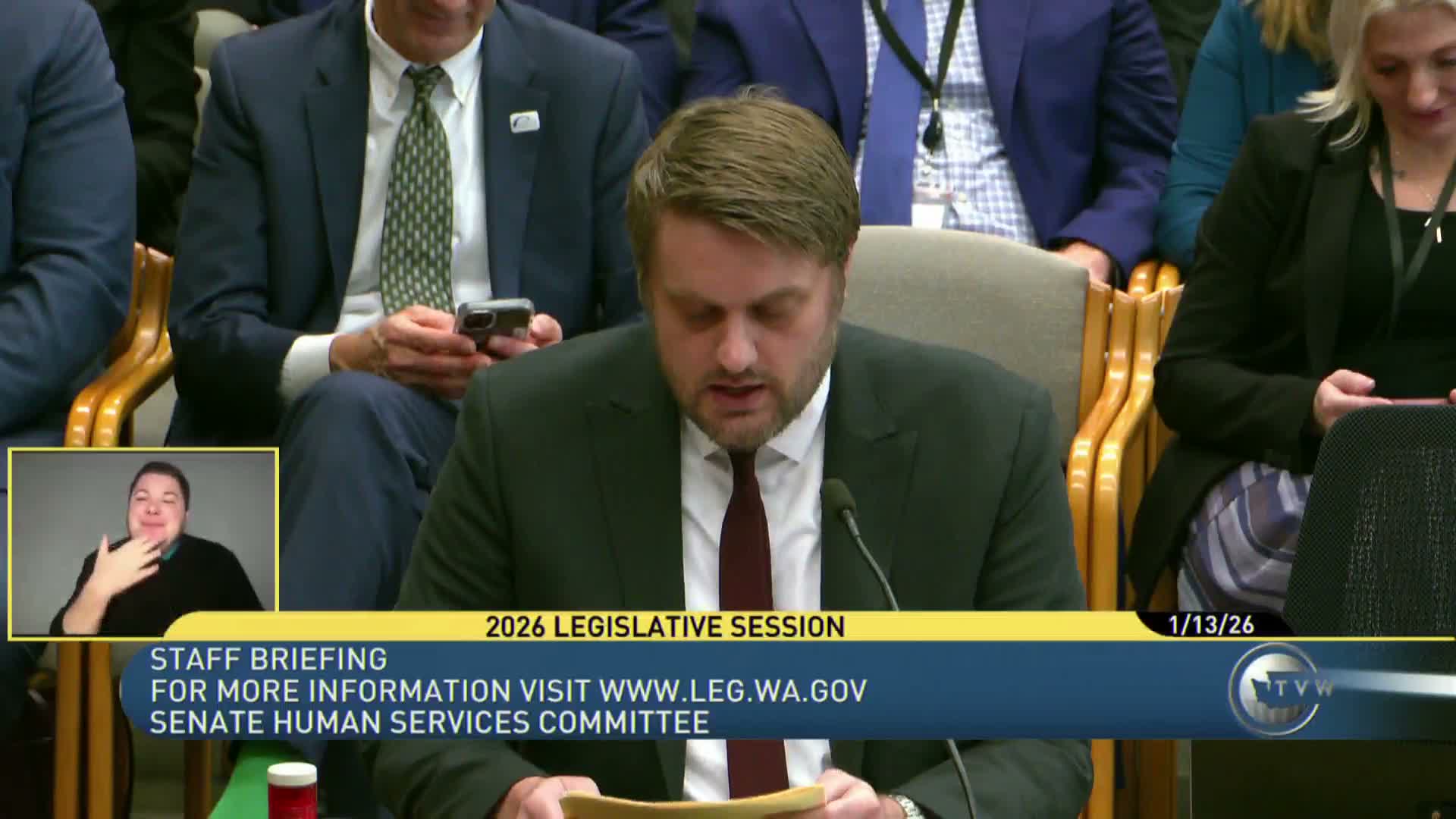
Will Tronson, committee staff, summarized the statutory framework behind the three-strikes law (commonly linked to Initiative 593) and the bill's mechanics: if a sentencing record used to impose a persistent-offender sentence included an offense date before age 18, a prosecutor or the individual could move for relief and the court would set an expedited resentencing hearing. The bill would apply retroactively to people in total confinement on its effective date. A fiscal note had been requested but was not yet available.
Supporters argued the change is required by science and precedent. Katie Hurley of the King County Department of Public Defense said resentencing would prevent people from receiving life-without-parole sentences for crimes committed when they were children. Psychologist Kristin Carson described neurological research showing adolescent brains continue to develop beyond age 18 and said the bill guarantees review rather than release.
"FOBE 5945 doesn't guarantee you release. It just guarantees review," said a testifying psychologist in support.
Prosecutors and victim advocates spoke in opposition. Russell Brown, executive director of the Washington Association of Prosecuting Attorneys, said retroactive resentencing would be a "broken promise" to victims and could carry substantial fiscal costs for resentencing and appeals. Victim advocates emphasized the trauma of reopening decades-old cases; Melanie Roberts recounted the 2024 murder of her grandmother and said resentencing would retraumatize victims and undermine closure.
Witnesses and staff gave differing estimates for how many people would be affected. Some committee discussion cited 24 individuals; other testifiers and organizations cited 22 or about 20'25 individuals already serving life without parole with one or more strikes committed before age 18.
Proponents urged the committee to consider racial disparities in juvenile prosecution and to align three-strikes sentencing with the state's evolving jurisprudence after decisions such as Miller v. Alabama and State v. Reynolds, which shaped juvenile sentencing law. Opponents focused on public-safety and victim-restoration concerns. The committee closed the hearing after hearing both pro and con testimony.