Get Full Government Meeting Transcripts, Videos, & Alerts Forever!
Get email alerts on the Residential Data topic
No spam. Unsubscribe anytime.
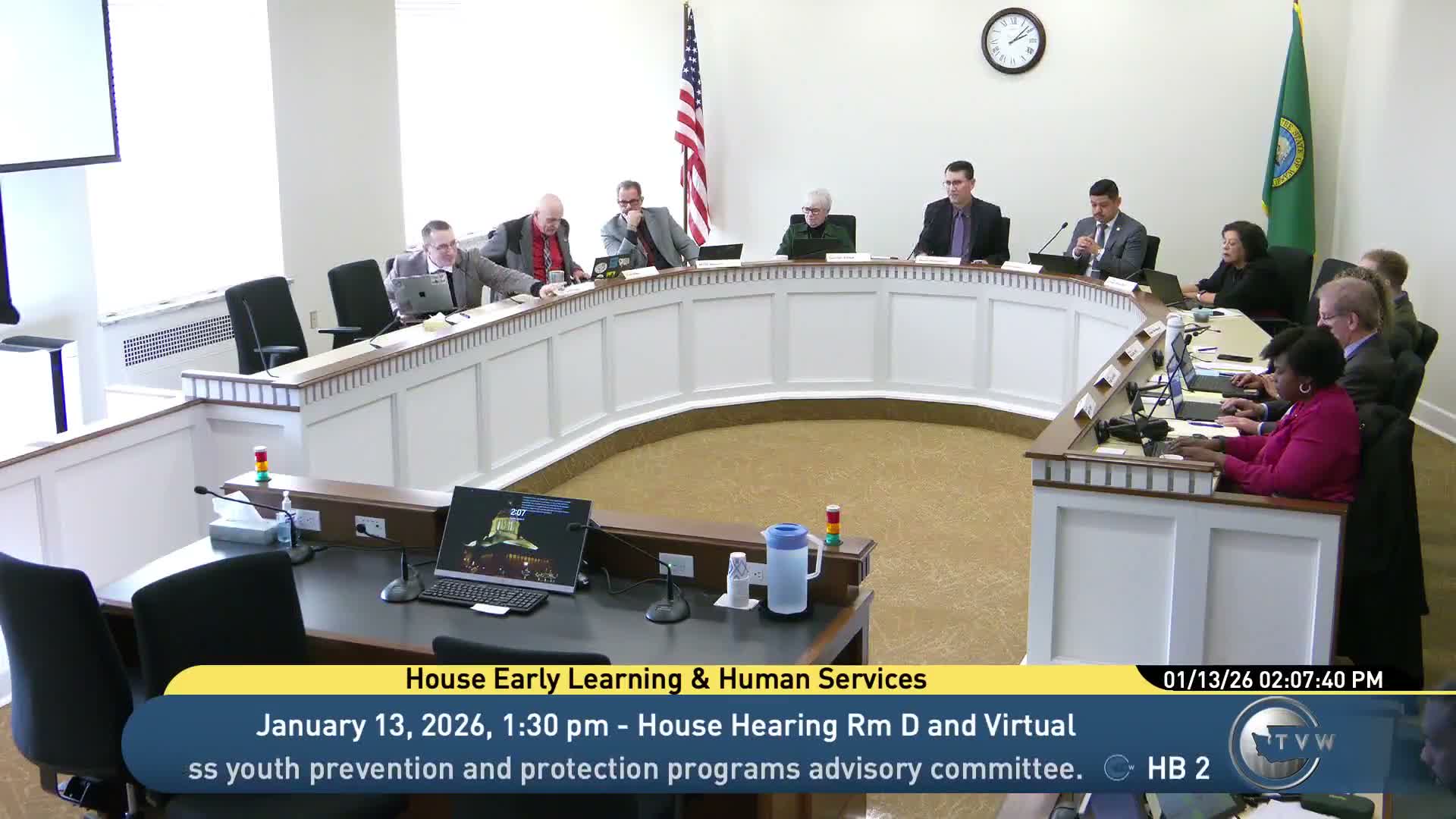
Lawmakers hear bill to require JLARC review, public dashboard on safety and stability in residential settings
Summary
House Bill 2200 would direct JLARC to review 2022–2025 safety and stability outcomes across state and contracted residential settings (911 calls, ER boarding, placement terminations, staff retention) and require DSHS to publish a provider dashboard by mid‑2027; sponsors called it a transparency measure, providers urged careful risk-adjustment and context for the data.
House Bill 2200 would require the Legislative Audit and Review Committee (JLARC) to conduct a retrospective review of safety and stability outcomes across Washington’s residential services continuum for people with developmental disabilities and direct the Department of Social and Health Services to publish an annual, public-facing provider safety and stability dashboard by June 1, 2027.
Staff counsel Omera Harrington told the committee the JLARC review must cover residential habilitation centers (RHCs), state-operated living alternatives (SOLAs) and contracted community residential settings for 2022–2025 and include specific metrics for clients assessed with high behavioral or medical acuity: number of 911 calls due to behavioral management or crisis intervention; emergency-room visits where a client was medically cleared but remained in the hospital because no provider accepted them; placement terminations that resulted in transfer to state custody, incarceration or homelessness; and staff retention rates.
Representative Josh Penner, prime sponsor, said the state lacks consistent data across community settings and that HB 2200 will “turn on the lights” so families and policymakers can compare outcomes across settings. "House Bill 2,200 simply turns on the lights so we can finally see the whole room," Penner said.
Supporters including Mike Estransky of the Washington Federation of State Employees and advocates from Disability Rights Washington said public data will improve accountability and help families choose and advocate for services. Estransky called the bill "about fairness and transparency and most importantly safety."
Providers did not oppose transparency but warned that raw counts could mislead without denominators or risk-adjustment because community residential settings serve far more clients than state-run facilities. Scott Livengood suggested presenting metrics as percentages or ratios and flagged the possibility that a fiscal note would be needed to implement a dashboard.
Committee members and witnesses discussed methodology, data sharing across DSHS divisions, and the need to avoid discouraging providers who take higher-acuity individuals. The hearing closed with no formal vote recorded.
Next steps: JLARC review and the DSHS dashboard deadlines are specified in the bill text; sponsors and stakeholders indicated interest in working on technical amendments to reporting methodology.