Get Full Government Meeting Transcripts, Videos, & Alerts Forever!
Get email alerts on the Merchant Perspective topic
No spam. Unsubscribe anytime.
Retailers and small businesses tell Washington committee BNPL helps sales and cash flow
Summary
Representatives from the Washington Retail Association, industry suppliers and NFIB said BNPL allows merchants to receive immediate payment (minus fees) and can be a useful cash‑flow tool for small businesses, though fees and consumer education vary across providers.
Retail and small‑business representatives told the committee BNPL can be a legitimate tool for commerce and cash‑flow management while acknowledging tradeoffs.
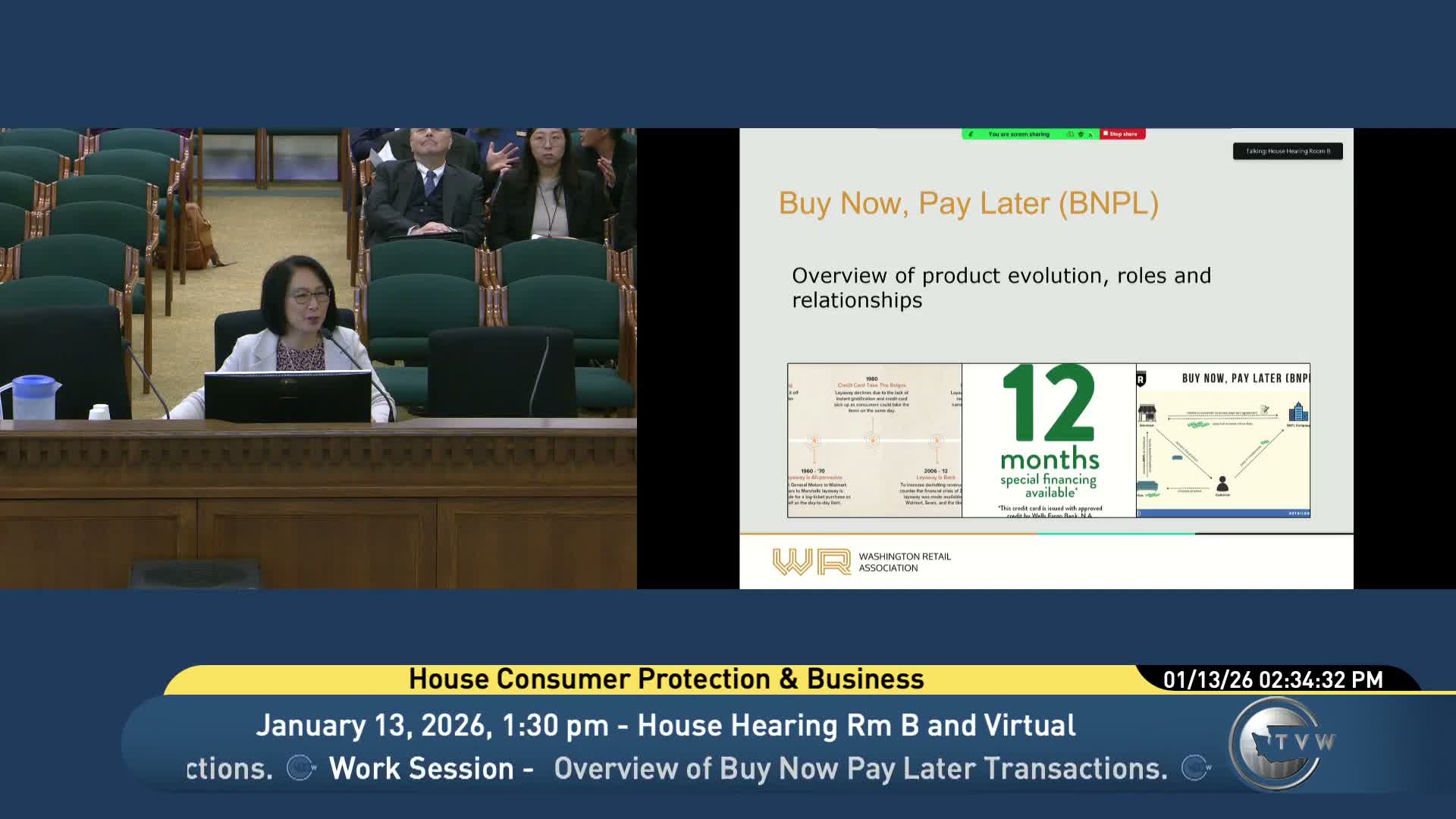
Rose Gunderson of the Washington Retail Association described the merchant‑provider relationship: at checkout the merchant redirects a customer to a BNPL provider, the merchant receives immediate payment minus provider fees and the consumer manages payments with the financing company. Gunderson said merchants rely on providers for consumer servicing and that the practice has long precedents in commerce.
Bob Lyke, who identified himself with a firm supplying high‑tech measuring equipment, said industrial customers use deferred‑payment BNPL programs for 90–180 day terms and that merchants typically accept a discount of about 3–6% to receive upfront funds. "We receive our money right away," Lyke said, adding that providers allow customers to get equipment immediately and handle repayment.
Patrick Hunter of the National Federation of Independent Business told lawmakers many small businesses use pay‑in‑4 and similar options to bridge cash‑flow gaps and avoid higher credit‑card interest. He argued BNPL can be particularly useful for businesses buying supplies or equipment while awaiting payment from their own clients.
Retail and small‑business witnesses said consumer education is generally provided by the financing companies, not merchants, and that merchants lack standardized information about provider discounts and terms. Committee members said they want to hear from retailers as drafting proceeds to balance consumer protections with preserving useful payment options.