Get Full Government Meeting Transcripts, Videos, & Alerts Forever!
Get email alerts on the Hb 2178 Protection Orders topic
No spam. Unsubscribe anytime.
Advocates press for clarity as bill would delay electronic protection-order filing
Summary
House Bill 2178 would align court rules and statutes, raise an aggregated damage threshold, and extend the deadline for courts of limited jurisdiction to implement electronic protection-order filing from Jan. 1, 2026, to 2028; the Administrative Office of the Courts said the extension aligns with a phased case‑management system rollout, while survivors' advocates called for transparency on funding and impacts.
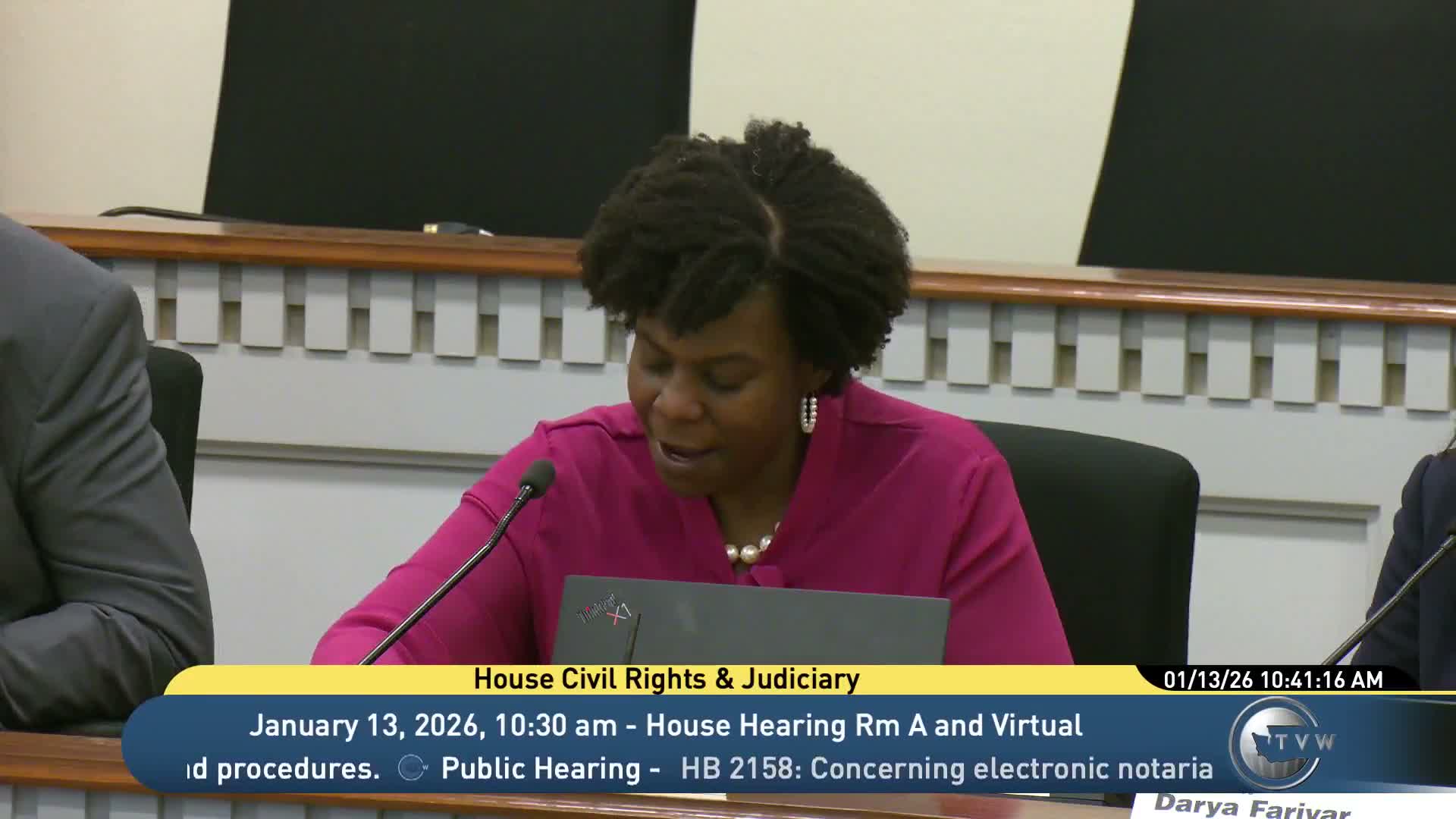
The Washington House Civil Rights & Judiciary Committee heard House Bill 2178 on Jan. 13, 2026, a multi-part bill that aligns statutory timelines with court rules, adjusts criminal aggregation thresholds, revises administrative distribution of certain funds, and — at Section 6 — delays full implementation of electronic protection-order filing for courts of limited jurisdiction from Jan. 1, 2026, to 2028.
Staff outlined several substantive changes: it modifies statutory filing windows for civil infractions to match court rules (changing a 48-hour statutory filing requirement to the five-day rule used in courts), aligns defendant response deadlines with court rules (30 or 33 days depending on service), raises the aggregation threshold for malicious mischief aggregation to $750 to match the primary statute, extends the protection-order electronic-filing implementation deadline by two years, and repeals a statutory requirement that the Administrative Office of the Courts distribute certain legal-financial-obligation grant funds to county clerks.
Representative Milin Tai, sponsor for the bill, told the committee she had asked the Administrative Office of the Courts for additional explanation regarding Section 6 and said the extension "would not be right to say this is simply a technical change," inviting committee questions before the bill moves forward.
Jaylee Schultz of the Administrative Office of the Courts said the extension is intended to align the electronic tracking requirement with the phased statewide rollout of the state's new case-management system so that courts of limited jurisdiction will gain access to consolidated electronic filing and tracking tools by 2028. "As courts transition to the new system in phases between now and 2028, they gain access to electronic filing and related tools," Schultz said.
Elizabeth Hendren, an attorney with a nonprofit law firm identified in the transcript as the Violence Law Center, testified she was "disappointed" by Section 6 and said the apparent delay could undermine reforms enacted in 2021 that were meant to improve access and safety for survivors. Hendren urged the committee to press the AOC for information on how funding allocated to support the original mandates has been used, what concrete barriers remain, how many survivors will be impacted and where, and whether another two-year delay is necessary.
The committee concluded testimony on HB 2,178 without recording a committee vote during the Jan. 13 session. Witnesses and the sponsor requested additional information about Section 6 before the bill advances.