Get Full Government Meeting Transcripts, Videos, & Alerts Forever!
Get email alerts on the Economic Development topic
No spam. Unsubscribe anytime.
Coos Bay intermodal port project: state backing, federal grants and a multi‑year design timetable
Summary
Port and project leaders briefed the committee on the Pacific Coast Intermodal Port (PSIP) proposal for Coos Bay, describing USDOT planning grants, a $160 million state commitment, rail upgrades estimated near $1 billion, and a phased schedule that includes a Corps‑led NEPA process and a five‑year build horizon if all funding and commercial commitments are secured.
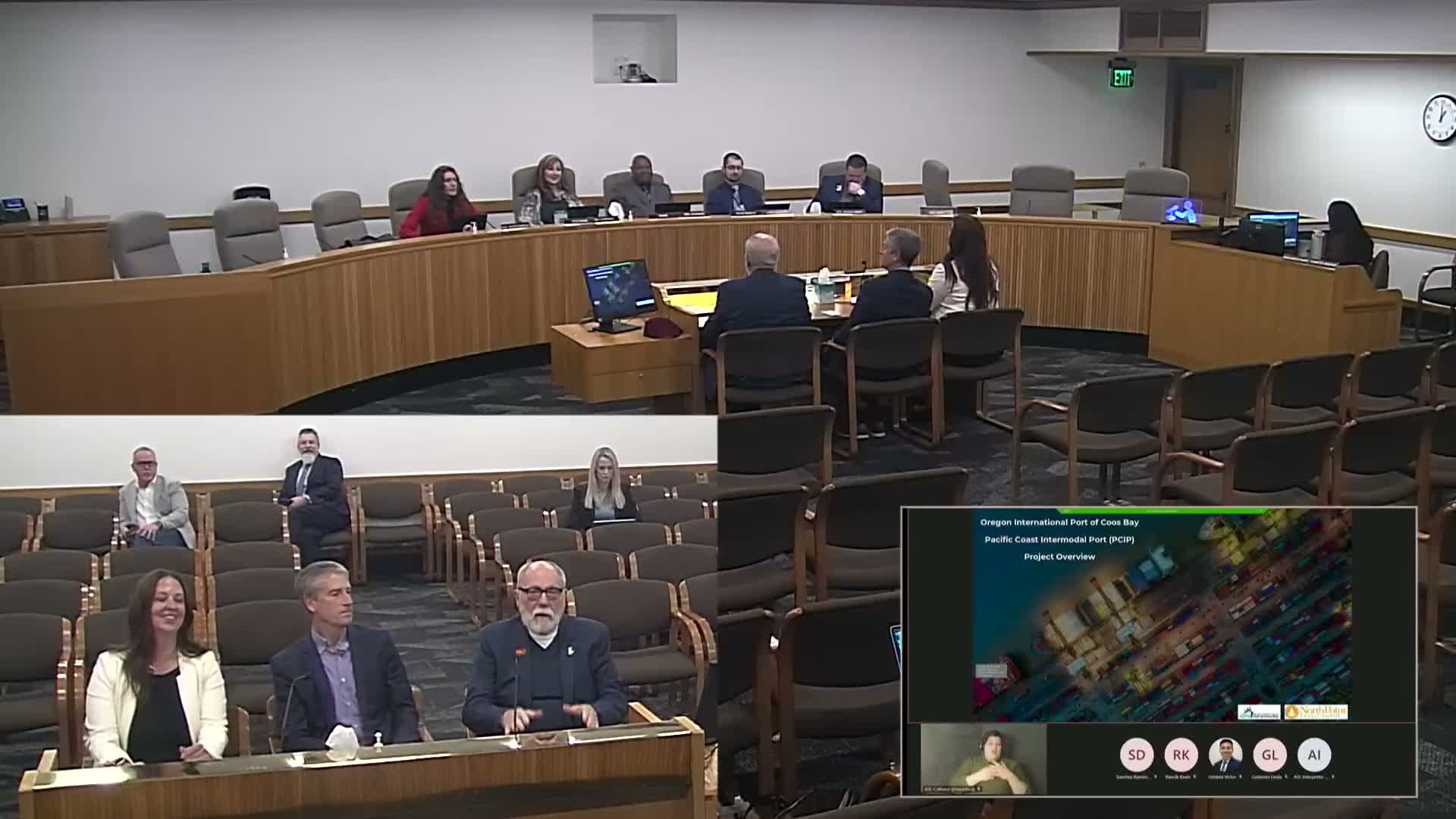
Port Commissioner Arnie Roblin, chief commercial officer Keith Levitt and PSIP executive director Melissa Cribbins briefed lawmakers Jan. 14 on plans to develop a ship‑to‑rail intermodal terminal at Coos Bay intended to increase West Coast supply‑chain resilience and spur regional economic activity.
Roblin framed the project as a long‑standing local priority and said the port’s leaders and community partners have worked to assemble political and federal support. Keith Levitt outlined the project scope: early USDOT grants (planning and design) include roughly $25 million and $29 million awards to fund planning, environmental and permitting; state support includes a $160 million commitment. He cautioned that state funds will only be spent after commercial commitments and other legs of financing are secured.
Melissa Cribbins described rail‑line needs and local impacts: she said the Coos Bay rail line requires substantial upgrades over more than 110 miles and that estimated rail improvement costs approach $1,000,000,000, with an additional roughly $67,000,000 estimated for a rail yard. Levitt said a comprehensive NEPA environmental review led by the U.S. Army Corps of Engineers will run about two years, followed by detailed design and capital funding decisions; an optimistic five‑year timeline to opening assumes all planning, environmental and financing milestones are met.
Supporters on the committee highlighted potential economic and greenhouse‑gas benefits from a ship‑to‑rail mode shift and said the project could be transformational for Southern Oregon communities if carriers and shippers commit cargo volumes necessary to make the terminal commercially viable.
No formal committee vote was taken; presenters said an updated economic analysis will be released Feb. 3, 2026, and will be shared with the Port Commission and the Legislature.