Get Full Government Meeting Transcripts, Videos, & Alerts Forever!
Get email alerts on the Public Works topic
No spam. Unsubscribe anytime.
Neighbors press city on safety, noise and notice around new public‑works fuel station and salt barn
Summary
Residents raised concerns at the Nov. 24 meeting about a fueling station, underground tanks and overnight construction noise at the new public‑works facility; city staff described safety measures, regulatory oversight and committed to follow up with screening and contact information.
Huber Heights — Multiple residents used the Nov. 24 council meeting to press city staff about environmental‑safety and nuisance questions tied to the new public‑works facility and its fueling station and salt‑storage operations.
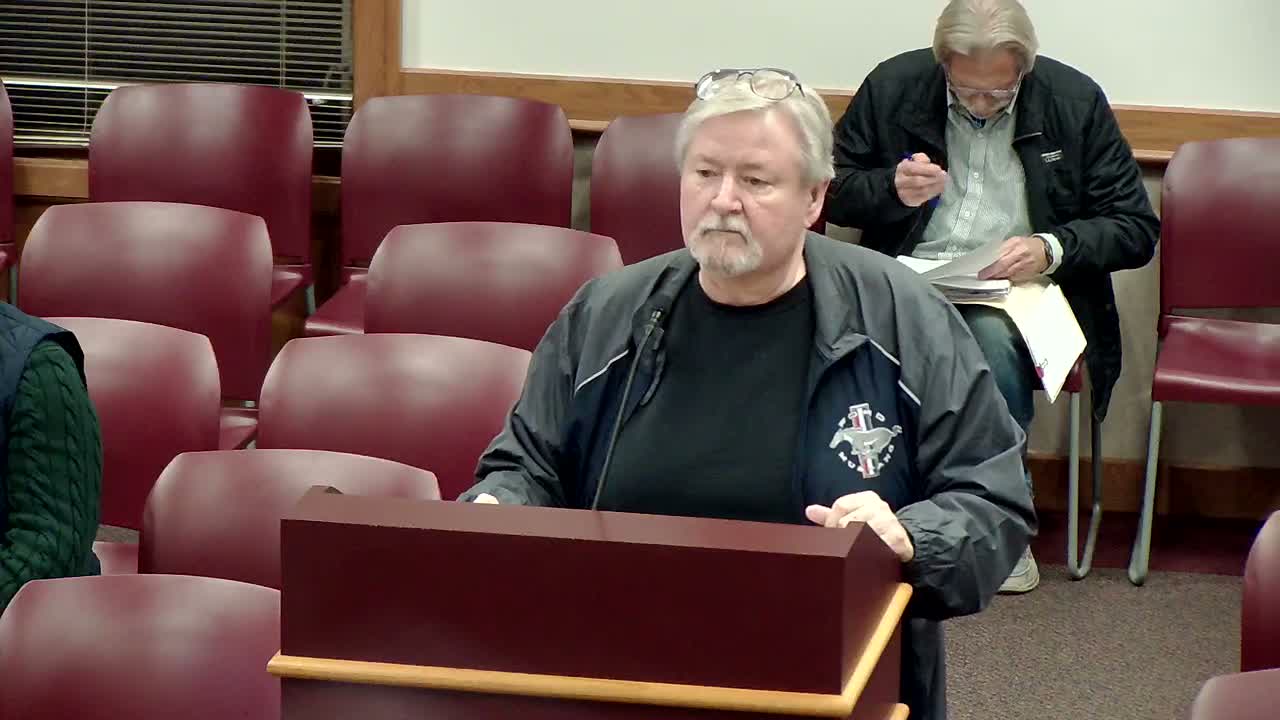
Resident John Osterfeld asked what precautions protect nearby homes downhill from the facility’s fueling pad and whether the tanks would be inspected. City staff explained the underground tanks are double‑lined, separated from neighboring lots by a large retention basin and are subject to regulation and inspection by the Ohio EPA, the county building official and the state’s Bureau of Underground Storage Tanks. "They are double lined, fiberglass reinforced. So the likelihood of any underground leakage is pretty low," a city staffer said.
Staff also said tanks would undergo annual leak testing and that surface spills would be handled according to local regulation with fire‑department coordination if necessary. City Manager John Russell and Public Works staff committed to provide the resident with direct contact information and reassess screening (trees/landscaping) in spring once construction impacts are clearer.
Residents also recounted repeated early‑morning or late‑night contractor activity during construction and asked about operating hours and notice. Staff said construction hours were limited to 7 a.m.–7 p.m. on weekdays with no weekend work, and that the site had been reviewed as a conditional/special use (so a public hearing was not required), with notification provided to property owners within 200 feet during planning processes.
Council and staff pledged to follow up with the resident to provide records showing who was notified during the special‑use process and to give a direct contact number for future complaints. The council encouraged residents to report incidents so staff can address contractor noncompliance.
Next steps: Public Works staff will send contact information to the resident, reassess vegetative screening in spring, and provide the notification record for the special‑use process to the resident on request.