Get Full Government Meeting Transcripts, Videos, & Alerts Forever!
Get email alerts on the Representation And History topic
No spam. Unsubscribe anytime.
Senator says some Freeman proposals are 'deeply offensive'; staff notes limited historical references
Summary
A committee member criticized several Elizabeth Freeman renderings as diminishing and offensive; staff said the RFP limited artists to 'reasonably available' reference materials (Mass Historical) and the panel agreed to request refinements and additional guidance from finalists.
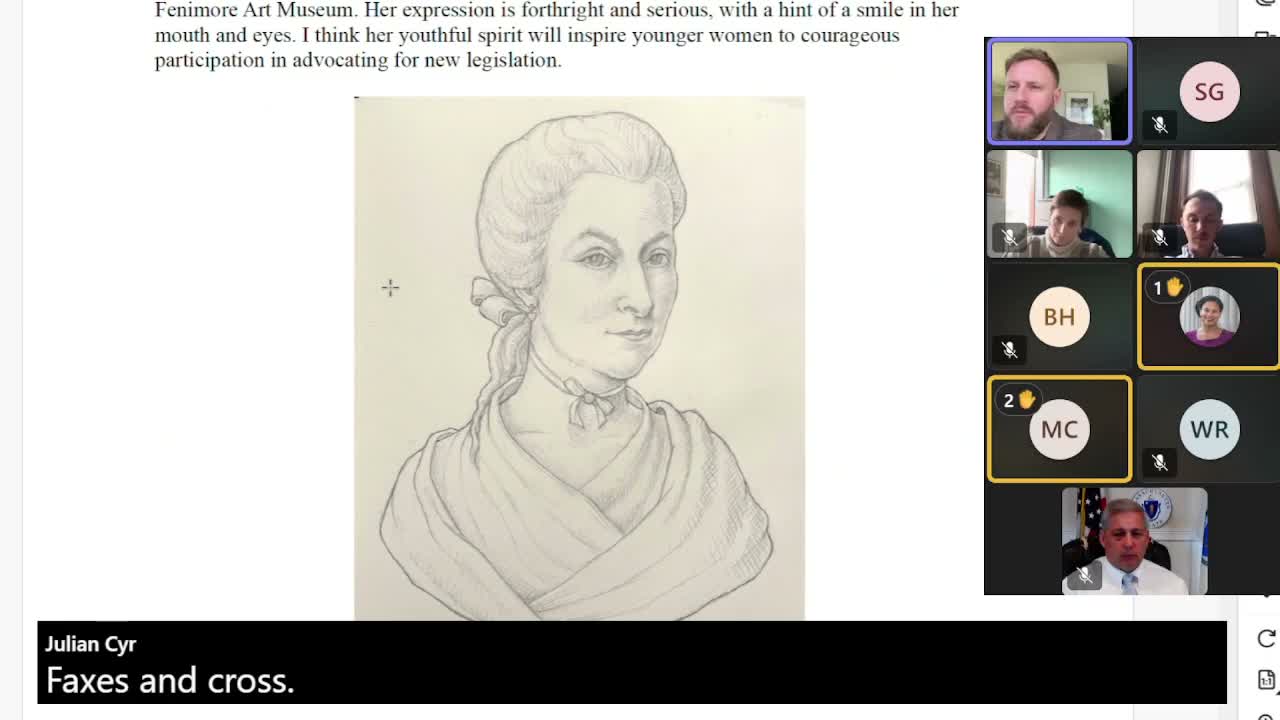
During the Senate Audit Committee’s public review of artist proposals for an Elizabeth Freeman bust, a committee member raised strong objections to several submissions that she said portrayed Freeman in ways she found offensive and diminished. The senator said certain images relied on older Sedgwick portraits that read as pitiful or pleading, and urged the committee to ensure Freeman’s depiction conveys dignity and presence equal to other chamber subjects.
The concern was voiced directly after the committee reviewed multiple Freeman sketches and clay studies. The member said she was particularly troubled that, while Abigail Adams was often depicted as youthful and assertive in several submissions, Freeman’s renderings sometimes emphasized a pleading or mournful expression. “When I saw ... her house slave, Freeman, in that image, I was deeply offended,” the senator said, urging the committee to consider Freeman’s portrayal in tandem with Adams’s so their two portraits relate in age and gaze.
Staff counsel and RFP coordinators responded that the RFP specified use of "reasonably available reference materials," and that Mass Historical provided the only portrait they could identify as a usable reference for Elizabeth Freeman. Staff offered to compile scoring totals after the public meeting and to work with artists on refinements once finalists are identified. Committee members discussed convening additional sessions to solicit targeted revisions that address gaze, age and expression so that Freeman’s likeness communicates the dignity committee members sought.
No final selection or contract award occurred at the session; members said they will identify two or three finalists for each bust at follow‑up meetings and request additional information from those artists before making a recommendation to the Senate.