Denver outlines youth violence prevention grants and program changes; diversion shortened, HYPE partnership funding questioned
Loading...
Summary
Preston Adams announced a 2026 RFP totaling $400,000 plus $100,000 for community initiatives; Kevin Mwango said juvenile diversion average length dropped from six to three months and that alternative citations currently require victim agreement; council members pressed for clarity on HYPE program staffing and budget language.
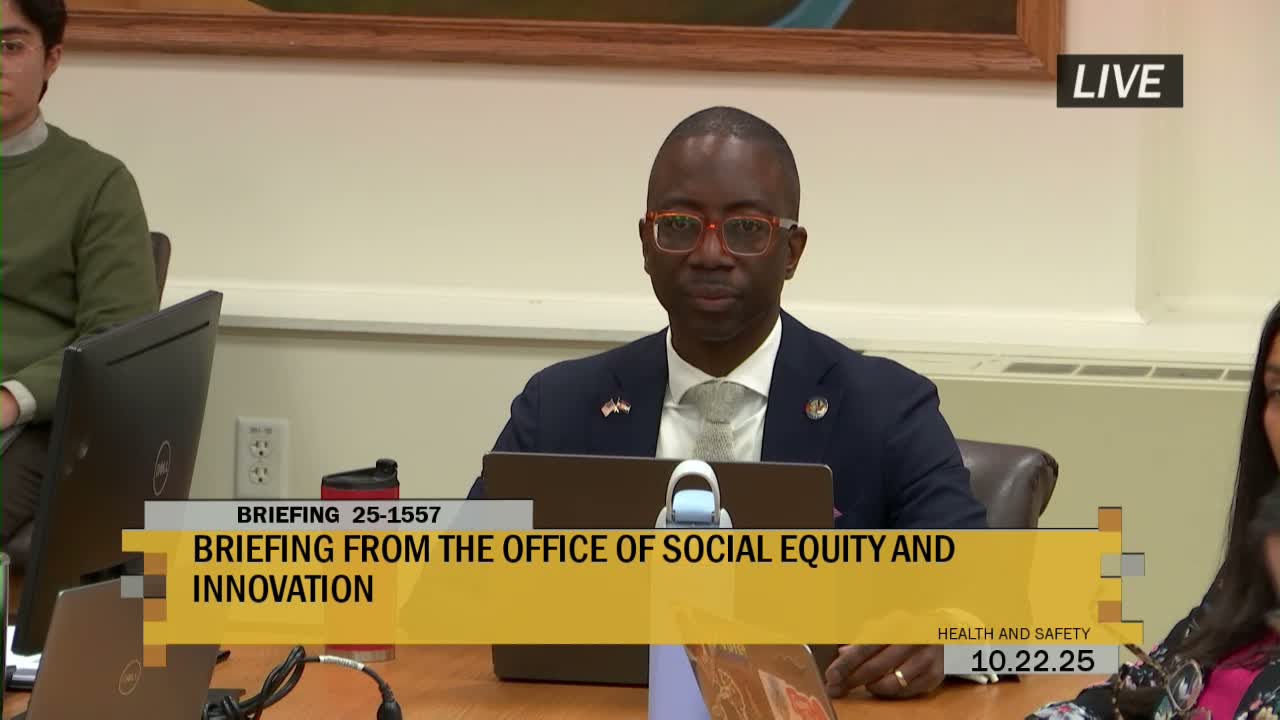
At an Oct. 22 Health & Safety Committee briefing, city officials detailed youth violence prevention funding and program changes within the Office of Neighborhood Safety (ONS).
Preston Adams, youth violence prevention program administrator, said the city released a 2026 request for proposals "totaling $400,000 in new funding to fill one of the biggest gaps identified by both city and community partners." He added ONS will invest another $100,000 directly into community initiatives next year to support middle‑school–aged youth before they become system involved.
Theresa Kimmitt Riley described HOPE (Helping Youth Pursue Excellence), a program for ages 14–18 that includes a 10‑week paid vocational track paying $18.81 an hour and partnerships with the Urban Farm, Denver’s Office of Financial Empowerment and other community organizations. She said the Safe City Youth Leadership Team (ages 14–24) provides year‑round youth work and coordinates an annual summit for hundreds of youth.
Kevin Mwango, program manager for municipal juvenile diversion and the Alternative Citation (ATC) program, said the city expanded ATC citywide in coordination with Denver Police Department and Denver Public Schools. Mwango told the committee the program recently reduced average client time in diversion from "approximately 6 months" to "approximately 3 months" through earlier engagement, increased parental involvement and offering diversion in the field to avoid downtown court appearances.
On access to alternatives to citations, Mwango said a victim must currently agree to participate, and that requirement is tied to state victim‑rights protections; he said staff are working with city attorneys to expand expedited diversion options.
Council members raised a discrepancy between the budget book and the presentation about the HYPE program. Sedena Gonzalez Gutierrez noted budget book language that appeared to eliminate HYPE positions for 2026. ONS staff said they do not intend to eliminate the HYPE program entirely but that funding proposed for the Urban Farm vocational partnership would be reduced; they pledged to provide written clarification because the budget document language created confusion.
Stefan Cummings described Safe Haven activations—prayer walks, partial activations (resource fairs) and full activations (community cookouts)—which bring faith leaders, therapeutic providers and neighborhood partners to outreach events. He said community activations have yielded measurable attendance (he cited an example of about 60 youth at a District 5 event) and that staff have seen community interventions reduce immediate risk; he also told the committee his team had "prevented at least four shootings" anecdotally in recent months.
What happens next: Council members asked ONS to provide additional written detail on HYPE staffing and budget language and requested briefings on GAIN and other programs in November; staff agreed to follow up in writing and in one‑on‑one briefings ahead of the November budget process.