Get Full Government Meeting Transcripts, Videos, & Alerts Forever!
Get email alerts on the Federal Funding And Local Impacts topic
No spam. Unsubscribe anytime.
Denver council briefed on federal funding outlook; experts flag Dec. 31 subsidy risk and SNAP questions
Summary
Federal funding experts told Denver officials the government shutdown ended but left near-term deadlines — notably Dec. 31 and Jan. 30 — that could affect Affordable Care Act subsidies and appropriations-driven projects; councilmembers pressed witnesses on SNAP, enrollment and local contingencies.
A remote team from the Washington, D.C. law and lobbying firm Brownstein on Tuesday told Denver's mayor and City Council that the recent federal government shutdown had ended, but left a narrow window for Congress to resolve bigger funding questions that could affect Denver residents and projects.
The presenters said the House and Senate approved three appropriations bills and a continuing resolution (CR) that provides roughly a two-month runway for negotiators and listed likely next priorities for Congress, including defense and labor-health spending. Nadeem Alshami, identified in the briefing as a co-managing director in Brownstein's Washington office, warned of two near-term dates the city should watch: Dec. 31, tied to decisions over Affordable Care Act (ACA) subsidies, and Jan. 30, a later appropriations deadline that could determine funding for projects important to Denver.
"It was the longest government shutdown in U.S. history," a Brownstein presenter said in an overview of recent events, adding that the CR gives Congress a two-month runway to negotiate outstanding bills. Alshami said the ACA subsidy question is already affecting enrollment behavior and insurance pricing and that uncertainty could make coverage more expensive or depress sign-ups ahead of open enrollment.
Council members pressed the presenters about food assistance. Councilman Daryl Watson asked how HR 1 and other proposed changes could affect SNAP eligibility and state-level responsibilities. Watson noted Denver had used a roughly $10,000,000 state stopgap to keep food pantries stocked during the shutdown. Alshami replied that provisions under HR 1 under consideration could impose work requirements and shift some costs or eligibility decisions to states; he offered Brownstein's research to council offices for further detail.
When asked whether a Dec. 31 standstill could usher in a new shutdown, Brownstein said the CR covers funding into January and described how bills often proceed to conference committees when House and Senate language differs. The presenters cautioned that some appropriations bills (for example, Homeland Security and certain foreign-operations funding) may be handled by additional CRs rather than final bills before year'end.
Alshami acknowledged some inconsistent phrasing during the briefing about the precise lapse date for subsidies, saying in different answers that the relevant timing is at the end of the year and that the practical effect on enrollment could already be visible. The presenters said they would share detailed research and contact information with council staff for follow-up.
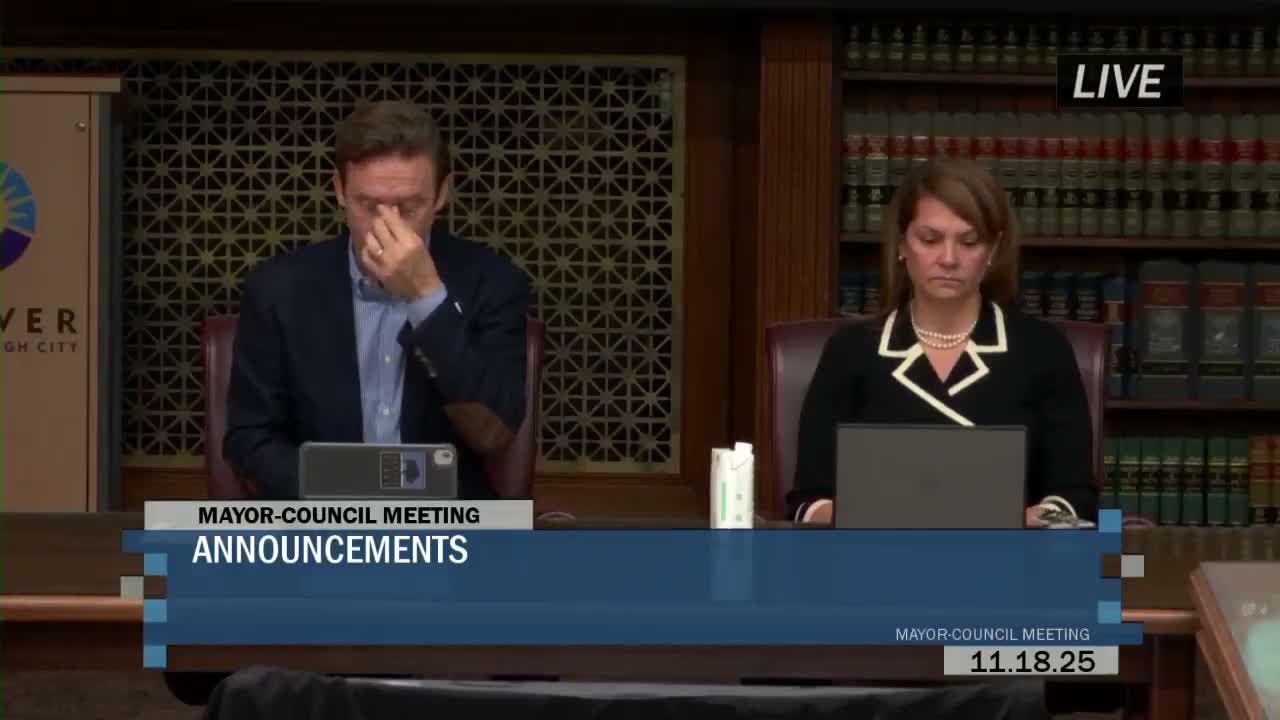
The mayor and council thanked the Brownstein team; no formal actions or votes followed the briefing. Councilmembers also used the session for routine announcements about district surveys, community office hours and upcoming events.
Next steps: Brownstein offered to send the council its written research and contact details; council offices said they would follow up as needed to understand impacts on Denver programs and residents.