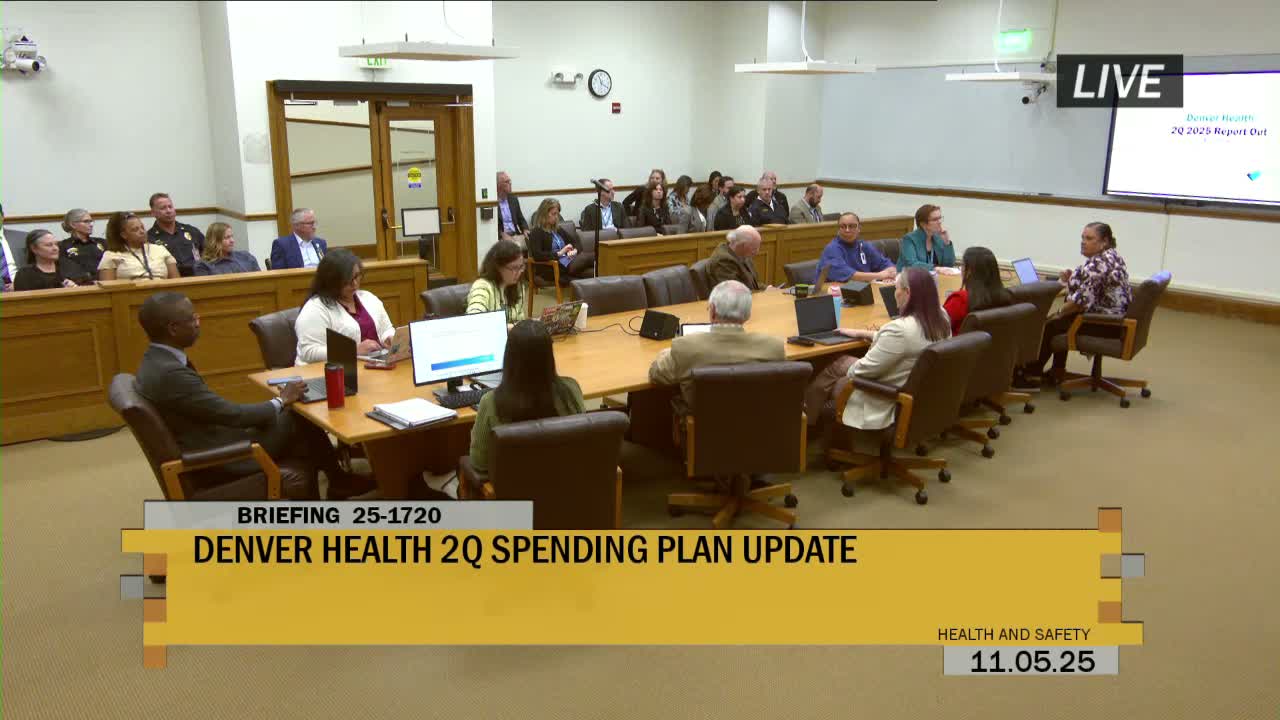
Denver Health details 2Q sales-tax spending on clinics, mental health beds and access expansions
Loading...
Summary
Denver Health told the City Council committee it plans to use 2Q sales-tax revenue across five buckets—emergency and trauma care, primary care, pediatrics, mental health and substance-use services—and described capital and staffing investments including a Southeast clinic site at Evans and Monaco.
Denver Health presented a public accounting of how it is spending revenue from the 2Q sales-tax initiative, saying the funds are organized into five principal buckets: emergency and trauma care, primary care, pediatrics, mental health and substance-use services.
Donna Lynn, Denver Health’s chief executive, said the organization treats a large share of Denver’s uninsured and that uncompensated-care costs rose sharply after 2020. Lynn said the city’s annual medically indigent payment has been effectively flat in recent years (figures cited in the meeting were approximately $30.7 million) and that 2Q revenue was intended to help cover uncompensated care and infrastructure needs.
How 2Q money is being used: Denver Health described investments in the emergency department and trauma services, purchase of new surgical robotics and a hybrid operating room, expanded stroke-center staffing, expanded primary-care radiology at Lowry and the new Westside (Sam Sandoz) Clinic, extended clinic hours (including Saturday openings), and outreach such as medical care at Warren Village. The presentation also listed roughly $2 million toward pediatric capacity (including new nurse‑practitioner hires and school-based clinic visits) and approximately $14 million for behavioral‑health work that supports reopening inpatient psychiatric capacity and new mixed medical/psychiatric beds.
Lynn said the Southeast Clinic site will be at the southwest corner of Evans and Monaco (a converted Walgreens with a parking lot) and emphasized that the model accepts private insurance as well as Medicaid, improving long‑term sustainability. Denver Health said it expects a formal public report that breaks 2Q expenditures into the five categories and that staff are working to make that report readable for the public; it acknowledged that precisely attributing every dollar to specific patient visits is operationally difficult.
Council members asked about the monthly payment and reconciliation process for 2Q receipts. Luis Maghall, who represented DDPHE as the 2Q sales-tax administrator, described a true‑up invoice process and said the contract allows one year to reconcile over‑ or under‑payments rather than collecting or repaying an immediate lump sum.
What’s next: Denver Health and DDPHE said a companion annual report on 2Q expenditures will be produced and provided to Council; staff also said they are working with consultants to make the accounting accessible to the public.
Sources: Presentation by Donna Lynn (Denver Health); DDPHE staff commentary including Luis Maghall.