Get Full Government Meeting Transcripts, Videos, & Alerts Forever!
Get email alerts on the Fire Department Wellness topic
No spam. Unsubscribe anytime.
Denver Fire asks for steady funding as wellness program expands screenings, mental-health outreach
Summary
Denver Fire told the City Council Health & Safety Committee that its wellness and resilience program has reached a 92.8% participation rate for operations screenings, expanded CPAT testing and will launch a de-identified mental-health survey in 2026; leaders asked for stable funding and described partnerships with Kaiser and St. Joe's.
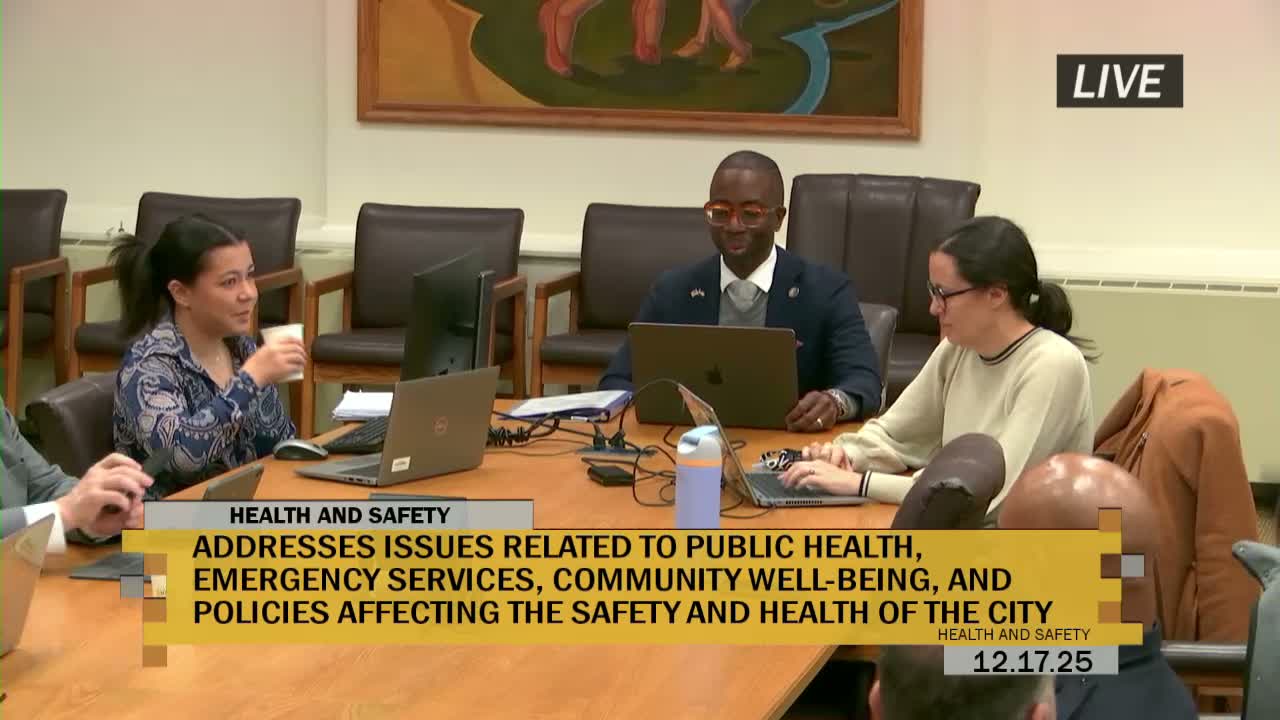
Deputy Chief Kathleen Friedenberg and Denver Fire leaders told the City Council Health & Safety Committee on Dec. 17 that the department’s Wellness and Resilience program has grown substantially but remains underfunded.
Friedenberg said the program now sits under the Deputy Chief’s office to ensure direct oversight and that a small staff coordinates physical and behavioral services for firefighters. "We've kind of built like a stiletto level program with a shoelace budget," she said, urging sustained support.
Why it matters: Firefighters face both high physical-injury rates and elevated cancer and exposure risks tied to combustion byproducts and contaminated gear. DFD leaders told the committee the program helps detect problems earlier through annual screenings, targeted blood testing and embedded physical therapists, improving outcomes and reducing long-term costs.
DFD described three core program areas: annual wellness screenings (physiologic and functional movement testing), expanded blood testing for occupational exposures, and a resilience/peer-support track for behavioral health. Technician Michael Hapman summarized the screening flow: "Every Tuesday is our screening day," he said, describing baseline vitals, grip-strength and treadmill tests followed by medical review and connections to primary care as needed.
Officials cited measurable uptake. Friedenberg reported a 92.8% participation rate among operations personnel in annual wellness screenings and significant growth in Candidate Physical Ability Test (CPAT) administration, which the department runs as both a recruitment and revenue tool; she said testing rose from 521 tests in February 2023 to 908 tests year-to-date this December.
On blood testing, Friedenberg said DFD has added assays to track heavy metals and other markers linked to firefighting exposures. Those tests occur in conjunction with wellness screenings and are performed multiple times per year through partnerships with Kaiser and local providers. "We do it year over year so that when Dr. Kovel sees a huge bump in a number, she can actually do a preventative measure," Friedenberg said, referring to the department’s wellness physician.
Councilmember Kevin Flynn asked whether Denver-only data can be aggregated and anonymized; the department said Kaiser provides population-specific breakouts and that an in-house electronic medical record (EMR) will improve local aggregation and longitudinal analysis.
On behavioral health, DFD leaders said higher utilization largely reflects reduced stigma and active outreach: peer support, embedded physical therapists and a chaplaincy of five help identify and connect members to care sooner. Friedenberg said the department will launch a de-identified mental-health survey in 2026 to inform program design and compare locally and nationally.
Chief Desmond Fulton framed wellness as essential operational readiness: "Unfortunately, you know, as a firefighter, it's... not the if you're gonna get cancer, it's when you're gonna get cancer," he said, arguing the city has a duty to provide tools and policies that enable recovery and return to duty. Fulton described policy changes that prompt wellness-team outreach after traumatic incidents to allow debriefing and recovery time.
Next steps and budget context: DFD requested continued council support to move the program beyond what Friedenberg called a "shoelace budget" into stable funding for expanded screenings, station-based wellness work and staff capacity. The committee did not take votes on funding; council members thanked the department, signaled support and adjourned.
The Health & Safety Committee did not vote on any motions during the presentation; the meeting ended after the briefing.