Get Full Government Meeting Transcripts, Videos, & Alerts Forever!
Get email alerts on the Oim Semiannual Report topic
No spam. Unsubscribe anytime.
Denver independent monitor flags jail overdose incidents, recommends pause on proposed EBD discipline policy
Summary
The Office of the Independent Monitor told the Health & Safety Committee that suspected overdoses have increased in Denver jail facilities, that the OIM returned a high share of investigations for additional work, and that it recommends pausing the proposed Education‑Based Development (EBD) policy pending broader review.
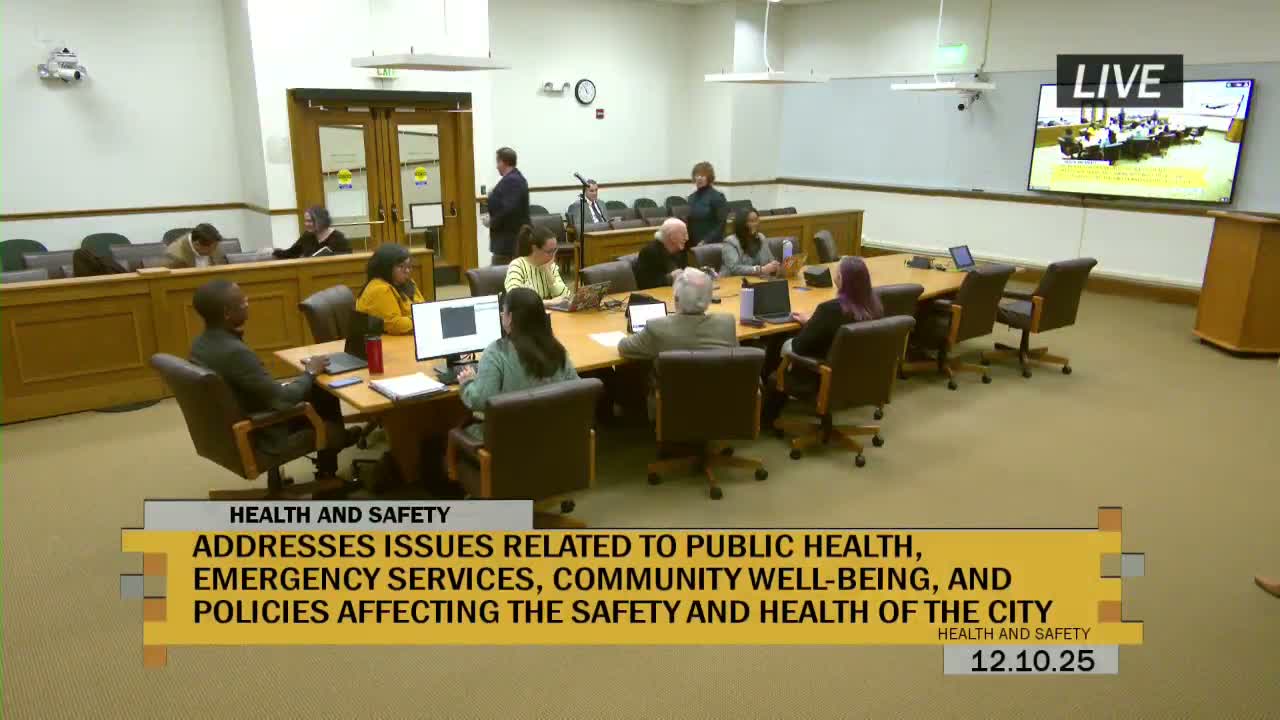
Elizabeth Perez Castle, the Denver Independent Monitor, briefed the Health & Safety Committee on Dec. 10 about the office’s semiannual findings, focusing on suspected overdose incidents in Denver Sheriff Department jails, the OIM’s review workload and its concerns about a proposed Education‑Based Development disciplinary pathway for the Denver Police Department.
Castle told the committee the number of suspected overdose‑related incidents inside DSD facilities has risen and that the OIM is reviewing administrative investigations — including video and interview evidence — to determine whether rounds, medical attention and other protocols were handled appropriately. "There have been 9 deaths so far. 4 of those have been identified as overdoses," Castle said while explaining constraints on confirming nonfatal incidents when a person is stabilized at Denver Health.
On police discipline, the monitor said the office "does not support education based development" (EBD) in its current form and recommended that the Denver Police Department pause development of the program and convene a task force to evaluate whether EBD aligns with community goals and expectations for accountability and transparency. Castle told the committee that her office has reviewed multiple drafts and will review the final draft once published.
The monitor also summarized an audit of the OIM completed by the Denver auditor’s office (audits began in 2024 and concluded in September 2025) that produced findings and recommendations; Castle said the OIM does not agree with every characterization in the audit but will follow its recommendations and work to improve analysis and reporting within the constraints of deliberative privilege.
Castle described progress building a Salesforce database to support aggregate reporting; the OIM said it has begun publishing aggregate figures for the first time in this semiannual report. She reported case‑review metrics: of 216 DPD cases closed in the reporting period, the OIM sent 34.7% back for additional work; of 178 DSD cases, OIM returned 56.2% for additional work. Castle also cited complaint statistics for the half‑year: 190 community complaints to DPD (a reported 28% increase vs. the prior comparable period), and increases in internal and deputy complaints for DSD.
Committee members asked technical questions about the difference between administrative and criminal investigations into in‑custody incidents, the limits of Denver Health’s testing when a person is stabilized there, and whether investigations continue after an officer resigns; Castle said investigations are completed regardless of employee status but noted some post‑employment notification questions involve the attorney general. She told the committee that staffing remains her office’s most pressing constraint and that, while a position was approved in the mayor’s budget, OIM will likely request additional monitors and policy analysts to keep pace with increased caseloads.
Council members expressed appreciation for the OIM’s new aggregate reporting and raised concerns about public interpretation of percentage changes in a half‑year slide deck; Castle said the report and slide deck include context and that staff would ensure the final report and links are posted for council and the public. The committee did not take formal action on the briefing; the Education‑Based Development portal was described as open for public comment until the end of the year and the committee expects a full presentation on the policy in the first quarter after a final draft is published.