Get Full Government Meeting Transcripts, Videos, & Alerts Forever!
City's revenue forecasting team outlines neural-network sales-tax model and warns one-time funds won't close 2026 gap
Summary
Denver budget office presented its sales-tax forecasting approach using a custom neural-network model, reported 2024 collections were 98.8% of budgeted estimates, and said one-time revenues that helped stabilize 2025 (about $36M) are largely absent from the 2026 outlook, leaving the city to rely on expenditure reductions and reserve strategies.
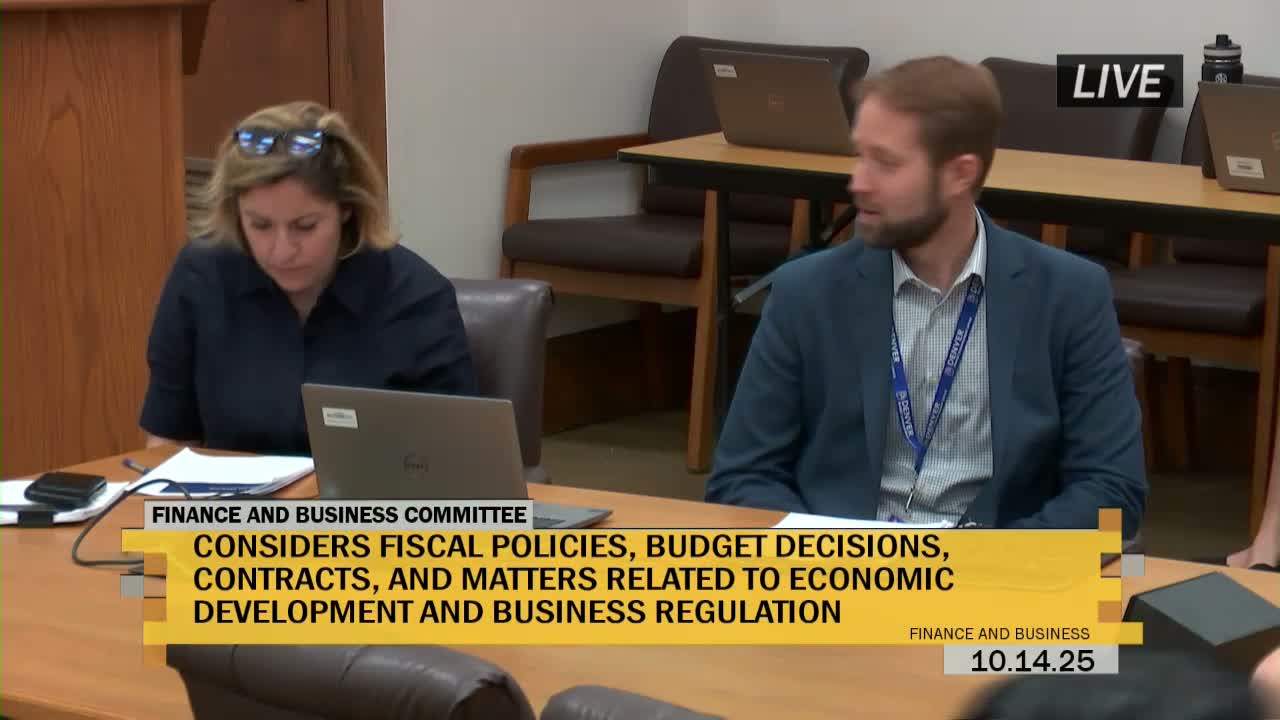
Denver's Budget Management Office briefed the Finance & Business Committee on Oct. 14 about the city's revenue outlook for 2026, explaining modeling methods, one-time revenue uses in 2025 and the five-year forecast and reserve strategy.
Chief economist Lisa Martinez Templeton described the city's consumption-based sales-tax model, a custom program written in Python that uses monthly tax collections at six-digit industry detail, local foot-traffic indicators, tourism and hotel occupancy data, macroeconomic variables and special-event adjustments. Templeton said the model is paired with judgmental adjustments and scenario analysis to produce a baseline and…
Already have an account? Log in
Subscribe to keep reading
Unlock the rest of this article — and every article on Citizen Portal.
- Unlimited articles
- AI-powered breakdowns of topics, speakers, decisions, and budgets
- Instant alerts when your location has a new meeting
- Follow topics and more locations
- 1,000 AI Insights / month, plus AI Chat