Get Full Government Meeting Transcripts, Videos, & Alerts Forever!
Get email alerts on the Short Term Rental topic
No spam. Unsubscribe anytime.
Short‑term rental rezoning at 4909 Kavanaugh fails after wide neighborhood opposition
Summary
The commission denied a planned‑development rezoning to allow a short‑term rental at 4909 Kavanaugh Boulevard after neighbors raised deed‑restriction, shared‑driveway, parking and school‑zone safety concerns; the motion to approve failed to reach the six votes required.
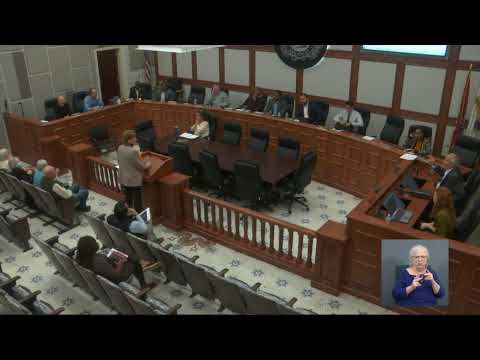
The Little Rock Planning Commission on Nov. 13 considered and ultimately did not approve a planned development allowing a short‑term rental (STR2) at 4909 Kavanaugh Boulevard.
Staff presented file Z‑10217 and said the property—currently listed in the assessor’s records as a single‑family parcel in the Heights overlay—was eligible under the city’s STR ordinance; staff supported the PDC, noting the city’s short‑term rental ordinance allows planned development STRs and that up to 500 licenses are permitted by the code.
Neighbors spoke in force against the rezoning. Sherry Henderson presented pictures and said an 80‑signature petition opposed an Airbnb at the address and warned that rezoning the property would invite commercial encroachment into a long‑standing single‑family neighborhood. Multiple speakers who share or use a private shared driveway said converting the dwelling to short‑term rental use could create parking conflicts and noise. One speaker noted deed restrictions in the McGee Addition and argued that a change to commercial zoning could be a ‘‘Pandora’s box’’ for other conversions.
Several neighbors also stressed safety and school‑zone concerns. A speaker with a law‑enforcement background flagged that state law restricts certain registered offenders’ residence in school zones and warned that a rotating short‑term rental population could create enforcement complications.
Applicant Steven Michael Pierce said he and his wife had owned and lived in the home for 10 years, that the site includes a two‑car pad accessed from the alley, and that he would strictly enforce occupancy limits, prohibit events, and install cameras. Pierce said he would consider revoking the PDC if he sold the property in the future; he also described economic pressures—higher taxes, insurance and mortgage costs—behind his request for STR authorization.
A motion to approve the STR2 PDC (file Z‑10217) was moved and seconded, but the roll call produced split votes; the motion failed to reach the six votes the commission’s bylaws require for passage. The chair noted the applicant may appeal to the Board of Directors.
What happens next: the motion failed at the commission level; the applicant may appeal the decision to the Board of Directors. Neighbors and the applicant were told how to pursue ordinance amendments or appeals with the city attorney and planning staff.