Get Full Government Meeting Transcripts, Videos, & Alerts Forever!
Get email alerts on the Recycling Modernization Act topic
No spam. Unsubscribe anytime.
DEQ and PRO report early progress and rulemaking timeline for Oregon's Recycling Modernization Act
Summary
DEQ and the state’s producer responsibility organization reported implementation milestones for the Recycling Modernization Act, including producer registration numbers, deployed reimbursements, planned exemptions rulemaking and a target for proposed final rules in early 2027.
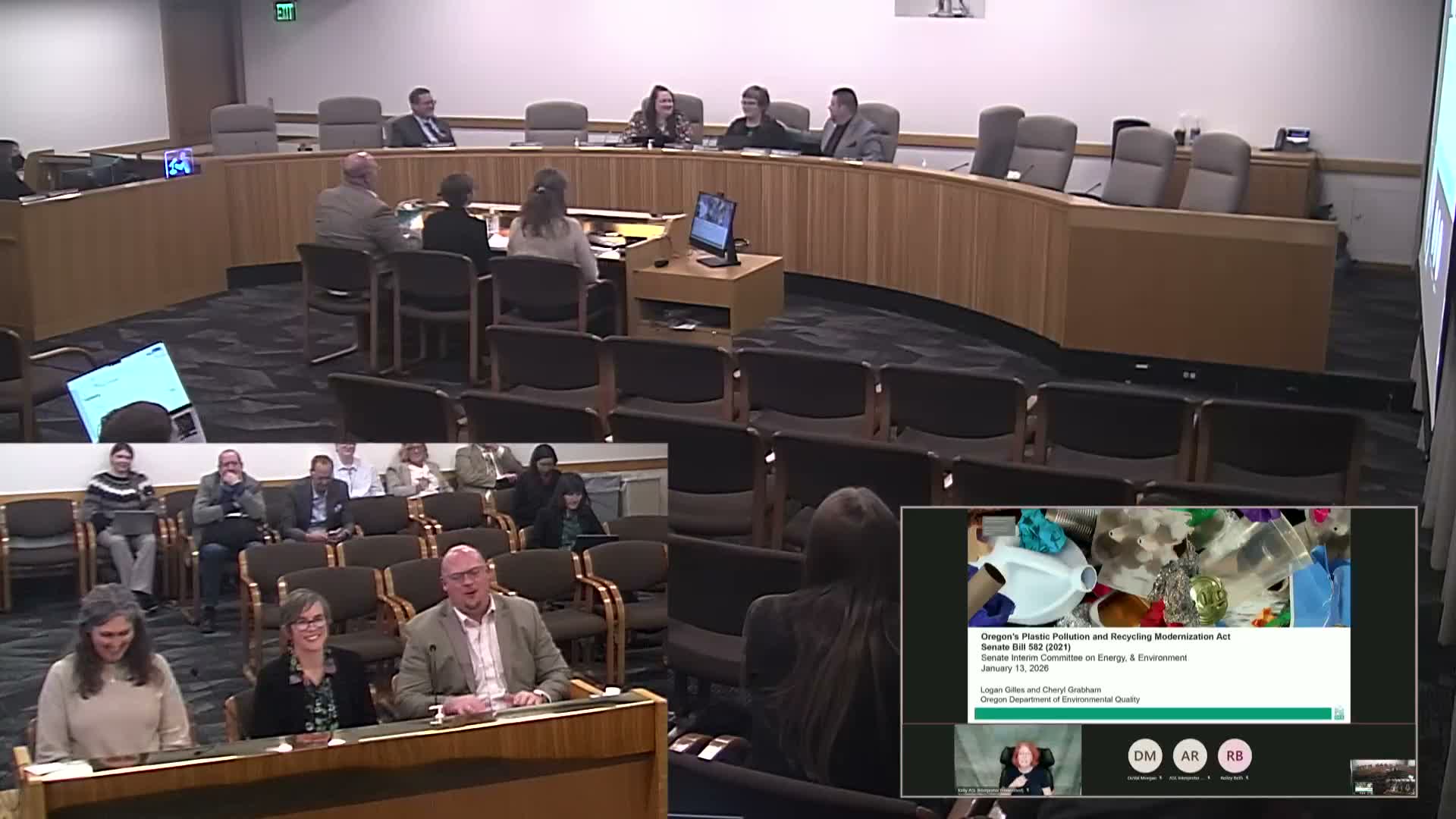
The Department of Environmental Quality and the state’s producer responsibility organization updated the Senate Energy and Environment Committee on Jan. 13 about implementation of the Recycling Modernization Act (RMA), describing progress, exemptions work and early compliance efforts.
Logan Gillis (DEQ) and Cheryl Grama (DEQ materials management) reviewed the product stewardship model: producers join a producer responsibility organization (PRO) that establishes collection networks and reports to DEQ. DEQ said it has completed multiple rulemakings and implementation milestones since the law's passage and is managing a third rulemaking that kicked off in November 2025.
DEQ described two exemption pathways under RMA: a small‑producer exemption (statutory thresholds such as under $5 million gross revenue or under one metric ton sold into Oregon) and product‑specific exemptions that can be approved by rulemaking. DEQ said it solicited exemption requests during a recent window and received 29 product‑specific requests from 17 producers and trade associations; by statute, product‑specific exemptions require consultation with the Oregon Recycling System Advisory Council.
Kim Holmes (Circular Action Alliance), the PRO, summarized operational work: the PRO is directing about $80 million to close service gaps in communities, plans to establish roughly 140 additional “Recycle On” collection centers, and reported roughly 2,900 registered producers in Oregon to date. Holmes said approximately 66% of the program’s initial funding is being routed to local governments and service providers as reimbursements; early disbursements include about $13.8 million to material recovery facilities and $2.5 million to community programs, and the PRO is publishing membership and spending data to support transparency.
On enforcement and compliance, DEQ said it had contacted an initial list of about 700 potentially noncompliant producers and is working to convert them into compliance through outreach, remediation periods and notices; some producers have certified they do not meet the definition of a covered producer, others have come into compliance, and a third group remains under review.
DEQ said it expects draft rule language to be posted for public comment in fall 2026 and proposed final rules to go to the Environmental Quality Commission in early 2027. Committee members pressed on cost impacts and exemptions for difficult‑to‑recycle product categories; DEQ and the PRO said they will continue to refine cost projections and consider exemption requests under the statutory criteria.