Get Full Government Meeting Transcripts, Videos, & Alerts Forever!
Get email alerts on the Committee Bills Introduction topic
No spam. Unsubscribe anytime.
Committee votes to introduce three committee bills: speculative ticketing, utility rate timing fix, and placeholder consumer protection study
Summary
After informational hearings the committee opened a work session and voted to introduce LC 137 (speculative ticketing), LC 142 (clarify residential rate timing exemption for water utilities), and LC 149 (placeholder consumer protection study) as committee bills; the motion passed on a roll‑call vote, 8‑1 (one member excused).
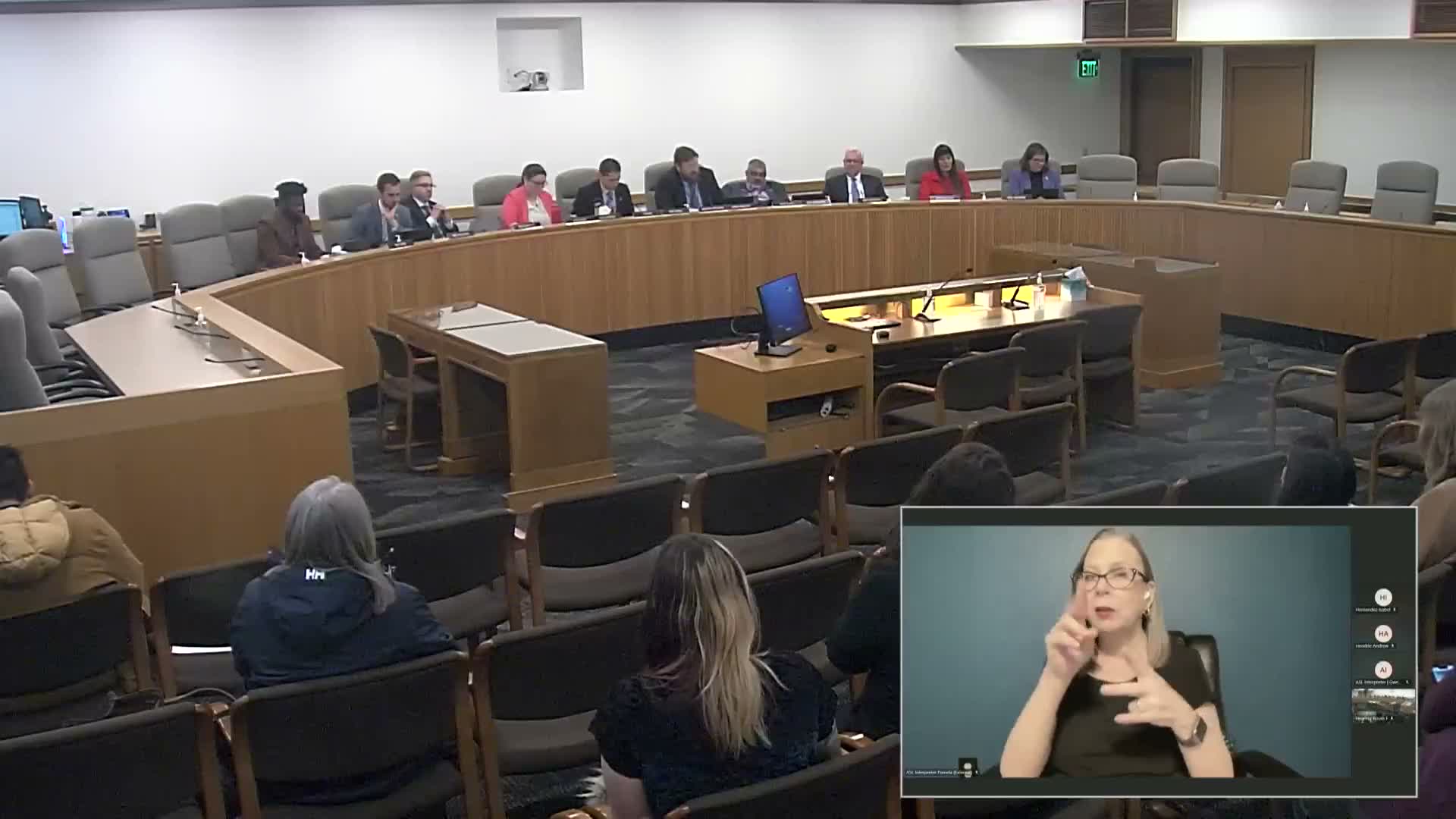
The House Interim Committee on Commerce and Consumer Protection concluded its Jan. 14 meeting with a work session to introduce three legislative concepts.
Staff summarized the posted bills: LC 137 (dated 01/09/2026) would prohibit resellers from reselling an admission ticket unless they possess the ticket or a written contract to obtain it from the initial sale; LC 142 (dated 01/08/2026) would clarify that the winter moratorium on residential rate increases applies only to electric and gas utilities (not other utilities such as small water systems); and LC 149 (dated 12/02/2025) is a placeholder directing the Department of Consumer and Business Services to study consumer protection.
Vice Chair Taichi moved to introduce all three concepts as committee bills. A minority member objected to conducting legislative business while not in session and said she would vote no on process grounds. The committee then held a roll‑call vote: Representative Keh was excused. Representatives Chotin, Gomberg, Wallin, Walters, Wise, Vice Chair Chayche, Vice Chair Osborne and Chair Sosa voted aye; Representative Reschke voted no. The motion passed and the three concepts will be introduced as committee bills.
Next steps: the concepts will be posted as committee bills and proceed through the committee process where members may request further amendments, fiscal analysis, or stakeholder input.