Get Full Government Meeting Transcripts, Videos, & Alerts Forever!
Get email alerts on the Immigration Policy topic
No spam. Unsubscribe anytime.
Lawmakers, prosecutors and municipal leaders urge report on Safe Communities Act at public hearing
Summary
The Joint Committee on Public Safety and Homeland Security heard broad support for the Safe Communities Act (H.2580 / S.1681) on Jan. 20, 2026; speakers — including state senators, district attorneys, police officials and municipal leaders — said the bill would limit local involvement in civil immigration enforcement and rebuild trust with immigrant communities.
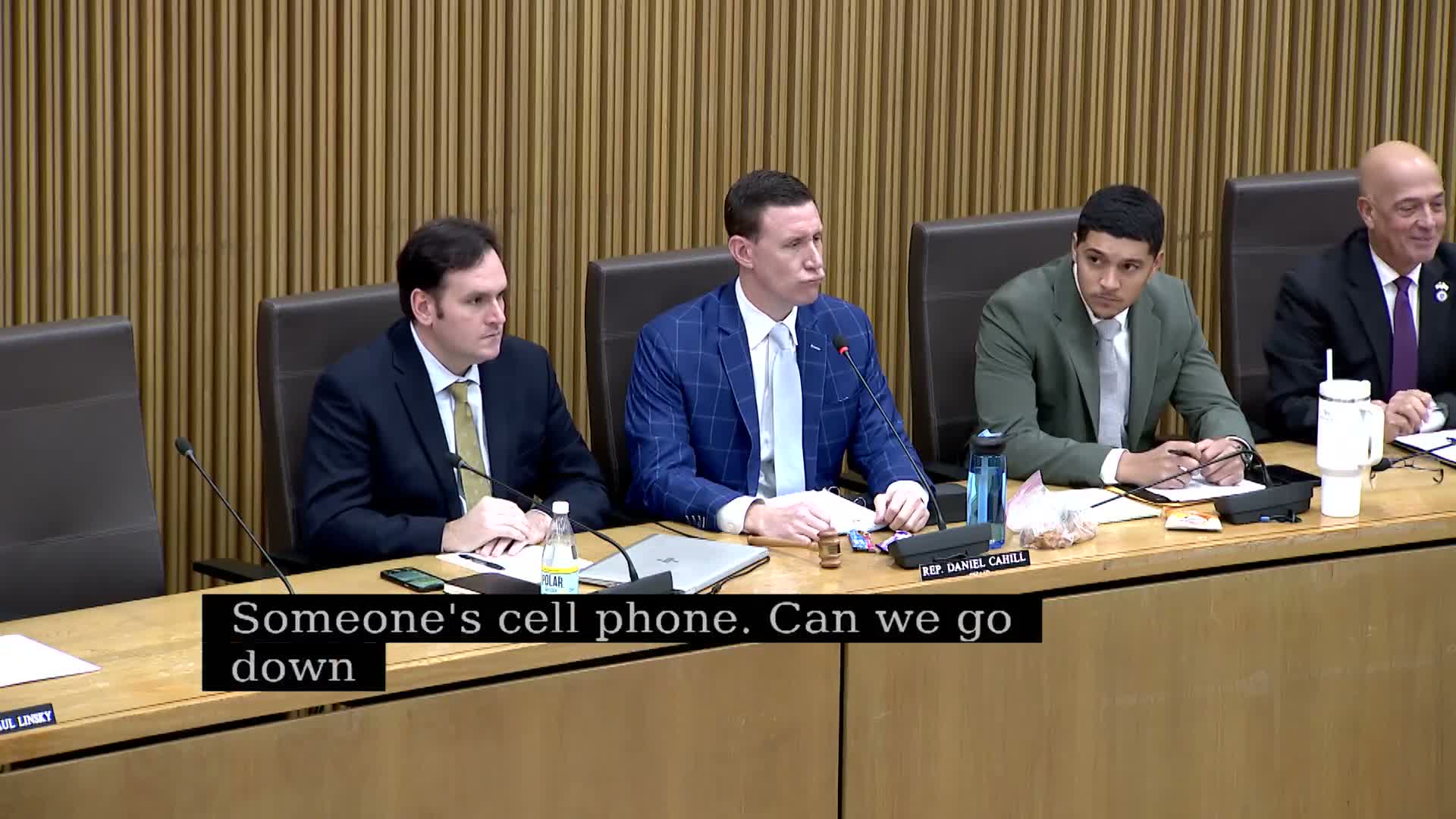
State and local officials, prosecutors, police leaders and dozens of community witnesses packed a Jan. 20 hearing of the Joint Committee on Public Safety and Homeland Security to press the Legislature to advance the Safe Communities Act, filed as House Bill H.2580 and Senate Bill S.1681.
State Senator Jamie Eldridge, a lead filer, told the committee the bill would “prohibit the questioning of people on their immigration status,” bar police, courts and correctional facilities from informing Immigration and Customs Enforcement about an undocumented person in custody unless that person has a criminal conviction and is being sentenced, require notice that an arrested immigrant can obtain counsel for immigration matters, and ban 287(g) deputization agreements that give local officers federal immigration authority. “This is about restoring and maintaining trust between law enforcement and immigrant communities,” Eldridge said.
Pauline Wells, superintendent of operations for the Cambridge Police Department, said Cambridge already follows similar practices and urged the committee to extend those protections statewide. “When community members trust law enforcement enough to come forward, we are all safer,” Wells said, describing Cambridge’s written procedures that decline assistance with civil immigration detainers and emphasizing that the bill would not prevent cooperation with federal authorities on criminal investigations.
Several district attorneys told the committee they support a uniform policy. Berkshire County District Attorney Timothy Jay Shagu and Middlesex County representatives said rising ICE activity has made victims and witnesses reluctant to engage with prosecutors and courts; Shagu said deportations during the pretrial process can prevent victims from seeing cases through to resolution.
Municipal officials from Somerville and Boston described local ordinances and programs they say already protect immigrant residents and recommended statewide clarity. Monique Nguyen, executive director of the Mayor’s Office for American Advancement in Boston, cited Boston’s large immigrant population and said city data show increased ICE arrests and detentions in recent months; she offered to submit supporting figures to the committee.
Law enforcement officials from Chelsea reported that local practice follows judicial guidance from the Lund decision and that civil detainers do not by themselves change custody decisions; Chelsea Police Chief Keith Houghton asked the Legislature to clarify procedures for juveniles and fingerprinting to avoid unequal treatment in court processes.
Senator Peter Durant outlined two related proposals — S.1675 (often characterized as an anti‑"sanctuary" measure to prohibit local policies that block cooperation with federal immigration authorities and to create enforcement mechanisms) and S.1776 (a narrower bill that would permit limited, judicially reviewed custody transfers to federal authorities for up to 12 hours under strict criteria). Durant said those measures address perceived operational gaps and called for transparency and oversight.
Community groups, faith leaders and immigrant-rights advocates gave testimony detailing raids, detention conditions, and the downstream effects on education, healthcare access and public-safety reporting. Brian Garvey of Massachusetts Peace Action described weekly vigils outside the ICE regional office and urged lawmakers to protect civil liberties. Nicole Lockhart Rios of MassNOW highlighted risks to survivors of gender-based violence who avoid filing reports out of fear of immigration consequences.
No formal vote or motion was taken at the hearing. Lawmakers asked witnesses follow-up questions about local practices, and several city and county officials offered to provide additional data. The committee did not state a timetable for reporting the bill out of committee.
The hearing record shows broad support from municipal leaders, prosecutors and community organizations for H.2580/S.1681; supporters argued it would strengthen public safety by encouraging reporting and preserving local resources for criminal policing, while some lawmakers also advanced alternative measures aimed at tightening cooperation rules and judicial oversight.