Get Full Government Meeting Transcripts, Videos, & Alerts Forever!
Get email alerts on the Copyright Public Domain topic
No spam. Unsubscribe anytime.
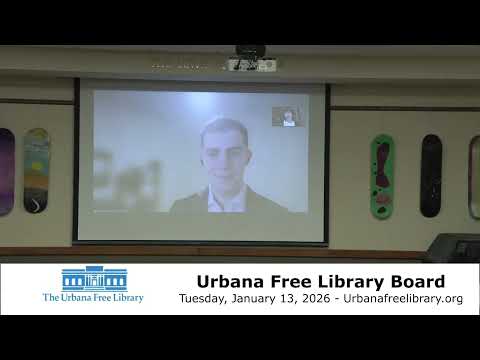
Trustee presentation: copyright, fair use and Public Domain Day highlighted implications for libraries
Summary
Trustee Glenn presented to the board on copyright, fair use and the public domain, noting that works published in 1930 entered the U.S. public domain on Jan. 1, 2026, and offering practical fair‑use guidance for library projects.
Glenn gave a prepared presentation to the Urbana Free Library Board on copyright, fair use and the public domain and urged trustees and staff to consider both legal standards and practical risk in reuse decisions.
Glenn explained the three categories relevant to libraries: (1) copyright protection, (2) fair use (a legal defense with four factors courts weigh), and (3) public domain (works not subject to copyright). He emphasized fair-use is “a defense” and framed decisions as a risk assessment: “If you do that and you get sued and you win, then it was fair use. If you do that and you get sued and you lose, then it wasn't fair use,” he said.
Glenn marked Public Domain Day — Jan. 1 — and noted that in the U.S. works published in 1930 and earlier are now in the public domain; he listed notable examples (authors and titles referenced generically during the talk). He also discussed prior litigation involving large-scale digitization efforts and noted organizations such as HathiTrust and Internet Archive as actors in public-domain and fair-use debates.
During a brief exchange an audience commenter noted that artificial intelligence raises new copyright challenges; Glenn agreed that AI introduces novel issues and that outcomes of litigation and evolving practices may change the landscape.
Glenn closed by offering practical steps: perform a fair‑use risk assessment, limit use to the amount necessary for the intended purpose, and consult counsel when projects carry substantial legal risk. He reminded staff that federal-government works are generally not subject to copyright and therefore freely reusable.