Get Full Government Meeting Transcripts, Videos, & Alerts Forever!
Get email alerts on the Emergency Management topic
No spam. Unsubscribe anytime.
Regional hazard mitigation plan update seeks council adoption to preserve federal grant eligibility
Summary
Pikes Peak regional emergency management staff briefed council on the updated multi‑hazard mitigation plan, which identifies 110 mitigation strategies across nine jurisdictions and is required to preserve eligibility for FEMA mitigation grants including HMGP and BRIC.
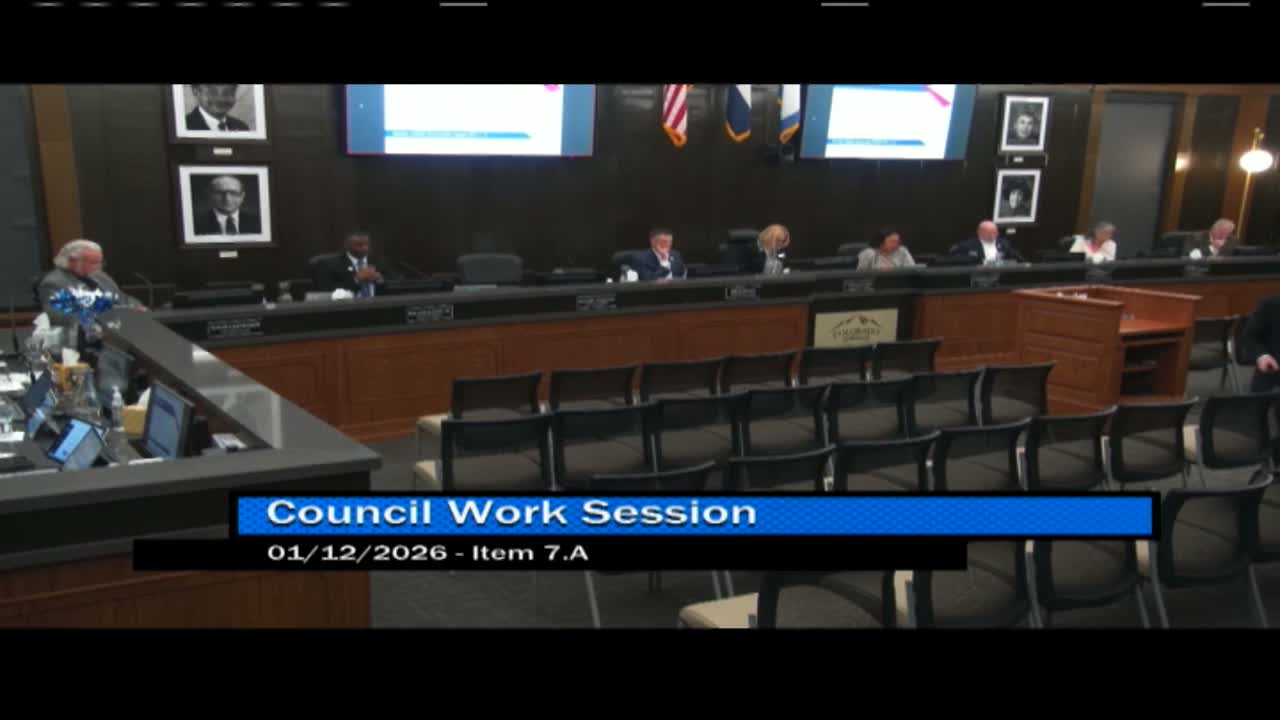
The Pikes Peak Regional Office of Emergency Management presented an updated multi‑hazard mitigation plan for council adoption, emphasizing the plan’s role in preserving eligibility for federal mitigation funding and guiding pre‑ and post‑disaster projects.
Executive Director Andrew Notbohm said the plan compiles a hazard identification and risk assessment that lists prioritized hazards for the region — wildfire, floods and debris flows, landslides and rockfall, hazardous materials incidents, severe weather, winter storms, drought and extreme heat, cyber incidents, and aviation incidents — and recommends mitigation measures such as fuels reduction, stormwater and infrastructure stabilization, buried utilities to reduce wildfire exposure, and public education.
Notbohm said a contractor (Tetra Tech) supported the HIRA and that the county accepted a BRIC-funded contract for plan development; local in-kind staff contributions represented the local share. He noted the plan contains roughly 110 mitigation actions developed with municipal, utility, hospital, school and nonprofit partners and that adoption by each jurisdiction is required before FEMA can approve the regional plan. Notbohm recommended council adopt the plan so the city remains eligible for HMGP and BRIC funding and to enable pre-identified projects to qualify for federal cost-share post‑disaster.
Council members asked about review cadence, stakeholder engagement and whether regional entities such as PPACG were briefed; Notbohm said the plan is updated every five years, will be submitted to the state and then to FEMA, and that staff would welcome additional PPACG briefings if desired.
Council agreed to place the adoption on the consent calendar for the Jan. 27 regular meeting.