Get Full Government Meeting Transcripts, Videos, & Alerts Forever!
Get email alerts on the Legislative Affairs topic
No spam. Unsubscribe anytime.
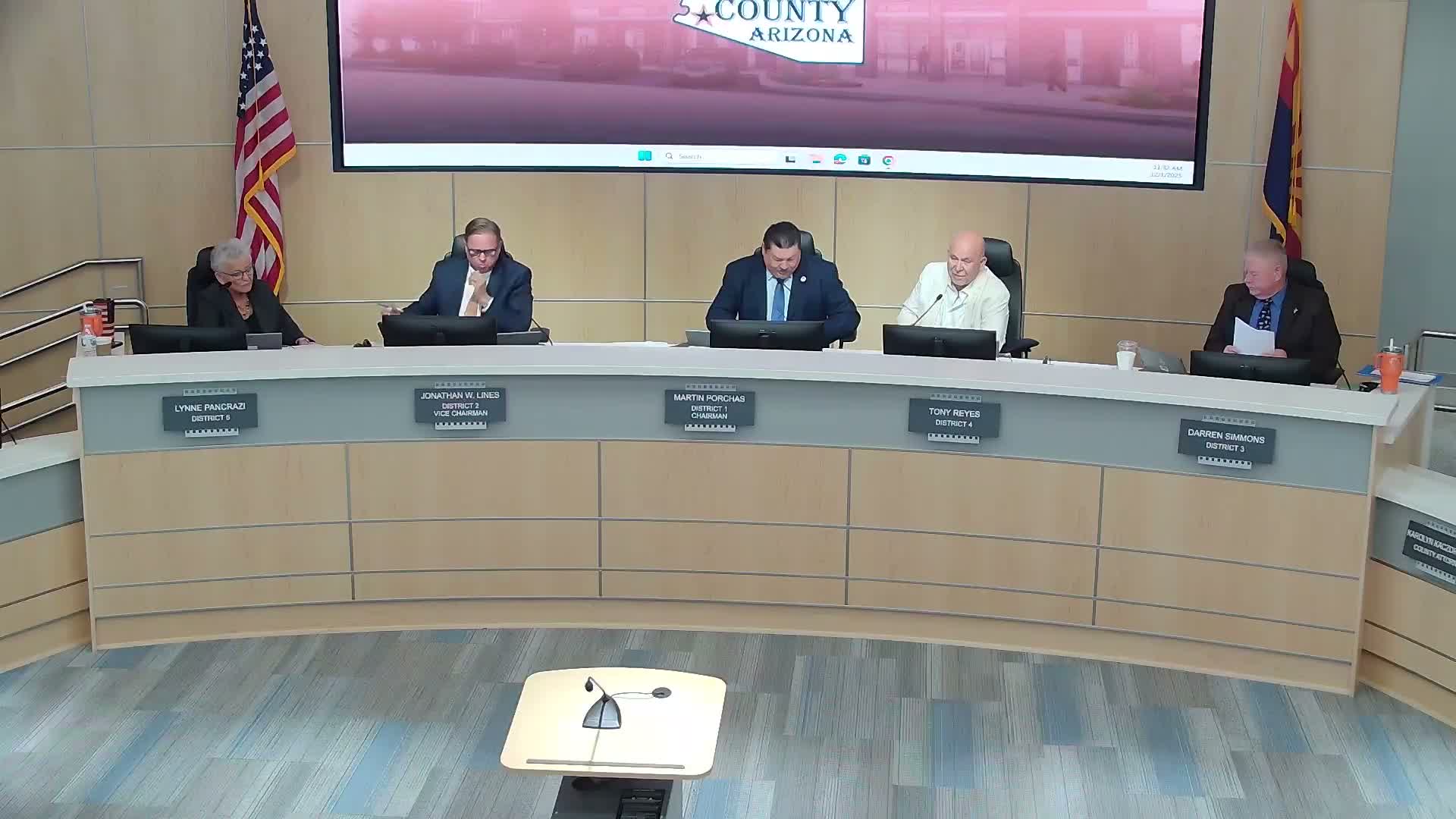
Yuma County staff brief supervisors on 2026 legislative priorities and state policy risks
Summary
County lobbyist Alexis Sazdorf and economic development staff outlined the 2026 legislative calendar and flagged election‑law measures, Colorado River/water issues, energy and housing preemption risks, and potential federal earmark opportunities; the board discussed property tax assessment concerns tied to large energy projects and port‑of‑entry coordination with Mexican counterparts.
Yuma County’s intergovernmental affairs team and contracted lobbyist provided a legislative outlook for the 2026 Arizona session and a summary of federal funding tools.
Alexis Sazdorf of State48 Public Affairs reviewed key calendar dates and committee deadlines for the upcoming session, said 26 bills and eight memorials had been prefiled and noted an unusually high early volume of election‑related bills (including proposals to change mail‑ballot rules and early‑voting timelines). She highlighted leadership changes and committee chair assignments county staff should track and urged close attention to bills that would preempt local planning and zoning authority.
Economic development staff and Sazdorf also flagged water issues, especially proposals responding to Colorado River constraints, as a likely dominant topic at the capitol. They said energy and solar permitting preemption bills, housing preemptions and short‑term rental measures were likely to recur. On federal grants and earmarks, staff summarized that congressionally directed spending has targeted rural water and wastewater, broadband, community facilities and public safety, and they encouraged pursuit of eligible projects.
Board members raised specific concerns about the state’s property tax assessments for large renewable energy projects and proposed sending a letter to the Department of Revenue seeking clarification on reassessments that affected the general fund. Supervisors also asked for more actionable legislative 'positioning' — including an operational action plan for who will handle which topics and when — and for staff to circulate the proposed county legislative principles document for review.
On ports of entry, board members asked about coordination with Mexico and expressed concern that the U.S. side’s construction timelines might not align with progress on the Mexican side, which could leave facilities mismatched; staff said the Mexican federal budget at the time did not include confirmed funding for the Mexican portion of the project and that coordination remains uncertain.
Staff said they would monitor bills closely, flag issues to the board, and pursue narrow, operational engagement where needed to protect county prerogatives.