Get Full Government Meeting Transcripts, Videos, & Alerts Forever!
Get email alerts on the Budget And Finance topic
No spam. Unsubscribe anytime.
Yavapai County raises transfer-station fees to recover costs after 20 years with no increase
Summary
After a public hearing, the board approved an increase to transfer station fees that staff says will raise user‑cost recovery from ~43% to an estimated ~85%; changes include a single‑bag fee increase and higher per‑ton charges at the Paulman scale.
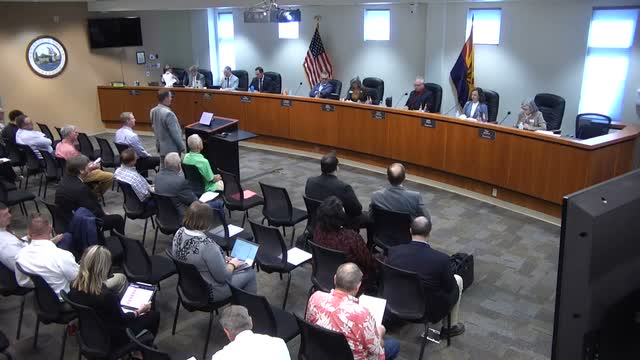
The Yavapai County Board of Supervisors on July 30 approved a revision to the solid‑waste transfer station fee schedule designed to bring user fees closer to operating costs after more than two decades without a general increase.
Public Works Director Roger McCormick told the board that user fees have covered roughly 43%–45% of transfer station operating costs in recent years and that the general fund subsidizes the remainder. Staff proposed increases across multiple line items intended to narrow that subsidy gap; examples highlighted during the hearing included a single 30‑gallon bag fee moving from $1 to $2, a cubic‑yard truckload fee from $24 to $45, and Paulman scale charges increasing from $80 per ton to $140 per ton with a $5 minimum. Residential green‑waste would move from $5 to $10 and mattresses from $5 to $10. Used oil, which had not been charged, was proposed at $1 per gallon; tire fees would increase from $2 to $4 for passenger tires and up to $20 for large off‑road tires.
McCormick estimated that, with the proposed increases and better tonnage tracking at sites that have scales, transfer stations would cover about 85% of operating costs (an estimate staff said could vary once tonnage is recorded under the new fee structure).
Supervisors asked about potential unintended consequences: Supervisor Kupia worried about illegal dumping in remote locations if fees jump sharply; Jeff Darley, the solid‑waste manager, and McCormick noted efforts to post notices at stations for 60 days, publish the schedule and to monitor impacts. Board members also asked about comparable private haul rates; staff indicated approximate regional hauling costs and referenced neighboring operations but did not provide a multi‑year phase‑in plan; one supervisor suggested considering staged increases to reduce “sticker shock.”
No public comments were received during the official comment period. After discussion the board approved the fee schedule unanimously. Staff said they will track tonnage and revenue after implementation and report back if adjustments are needed.
Next steps: revised fee schedule becomes effective per the county’s process and staff will monitor revenue, tonnage and potential impacts such as illegal dumping; staff will return with updated estimates after initial months of implementation.