Get Full Government Meeting Transcripts, Videos, & Alerts Forever!
Get email alerts on the Legislative Agenda topic
No spam. Unsubscribe anytime.
Erie council adopts 2026 legislative agenda after debate over environmental justice language
Summary
The Town of Erie approved its 2026 legislative agenda and created a staff 'legislative action team' to track bills, after council restored language addressing disproportionately impacted communities and aligned part of the agenda with the town charter preamble.
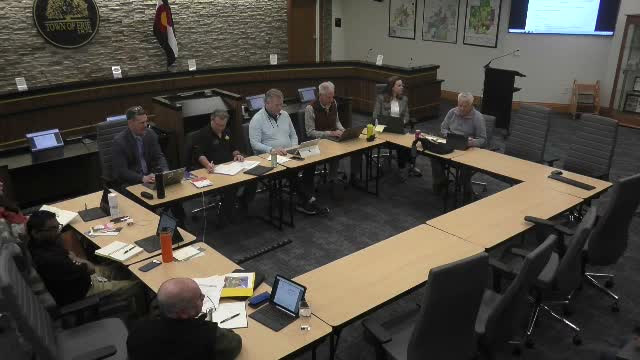
Erie Town Council voted to approve its 2026 legislative agenda (Resolution 26-0003) after staff presented the document and council engaged in extended debate about language addressing environmental justice and inclusivity.
Gabby Ray, the town’s director of communications and community engagement, said staff revised the agenda and removed references to RTD after last year’s election change, strengthened language supporting homeowners and landowners, and clarified that the town will not support unfunded mandates. Ray introduced an internal legislative action team to monitor bills and allow authorized staff and council members to testify on behalf of the town.
Sen. Wallace, invited to preview the coming session, urged local engagement and warned of large state budget pressures. “We are in a crisis,” she said, describing cuts she said will affect child care and social services and noting the constraints created by TABOR. She encouraged the council to flag bills that matter to Erie so staff can act quickly when committees consider them.
Council debate focused on a redlined edit that had removed language explicitly supporting policies addressing disproportionate environmental impacts and broader equity and inclusion phrases. Council member Rivera argued for restoring environmental-justice language to allow the town to sign on to regulatory and rulemaking tables: “...supports policies and regulatory actions that advance environmental justice and protect disproportionately impacted communities,” Rivera said, urging the council to be able to “show up at these tables.” Other members expressed concern that some language may invite state funding loss or politicize the agenda.
Council adopted friendly amendments during discussion to reinstate a targeted environmental-justice statement and to reference paragraph 3 of the town charter preamble to address equity and inclusion concerns. The council then approved the resolution as amended; the record shows the body approved the agenda by voice vote following motion and second. Individual roll-call tallies were not recorded in the public transcript.
Staff said the approved agenda will allow authorized town staff and council designees to testify in House and Senate committees and to use a new bill-tracking tool (Fast Democracy) to flag legislation and respond quickly. Julian Jack Winnick and others on the new legislative action team will brief council as bills are tracked through the session.
Next steps: staff will publish the town’s legislative positions online, run the bill-tracking dashboard during the session, and report back to council when action or testimony is recommended. The agenda and the action-team authority give Erie a standing platform to support or oppose state proposals affecting local services, infrastructure and land use.