Get Full Government Meeting Transcripts, Videos, & Alerts Forever!
Get email alerts on the Metro Districts topic
No spam. Unsubscribe anytime.
Erie hears pleas to appoint member to deadlocked metro board as council reviews special‑district policy
Summary
Residents urged the Erie Town Council to use Title 32 appointment authority to fill a vacancy on Erie Highlands District No. 1, while staff and a municipal finance consultant reviewed metro‑district policy elements including mill caps, pro‑forma review and a point system. Council asked staff to return with policy options.
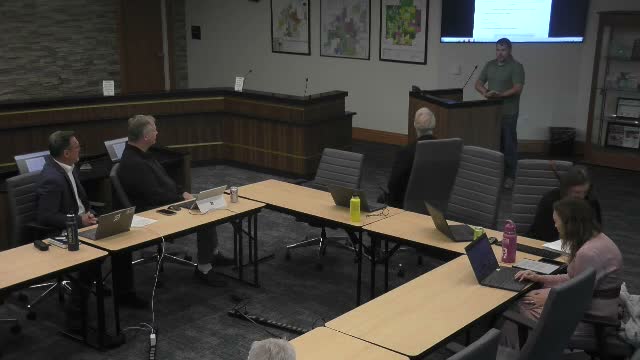
Mayor Moore opened the Oct. 7 special meeting as residents and staff discussed Erie’s approach to metropolitan (metro) districts.
Two residents from Erie Highlands urged council to appoint a replacement to a deadlocked board. Jason Manley, identified as a director of Erie Highlands District Number 1, said the district has been operating with four members since June and has been repeatedly deadlocked 2–2. "I am begging for this council to take action and support Erie Highlands District Number 1 as we continue to move forward," Manley said, asking the council to appoint "Josh" to the vacant seat. Resident Ashraf Sheikh told council a recall petition against a director had reached sufficiency and alleged that the board president and treasurer "left a meeting without an adjournment," describing the behavior as obstructive and costly; Sheikh asked the council to "end this disruptive and costly deadlock by appointing Josh Moll." Neither public commentator reported a formal response or action taken by the council during the meeting.
Staff then presented a multi‑hour review of metro districts, led by municipal finance consultant Melissa Buck and town staff. Buck described metro districts as independent local governments created under the Colorado Special District Act (Title 32) to finance infrastructure; she said they typically levy a mill levy and issue tax‑exempt bonds to reimburse developers for upfront infrastructure costs. Buck emphasized life‑cycle stages — developer‑controlled boards at formation, transition toward resident control as build‑out proceeds, and eventual maturity and potential dissolution once debt is repaid — and warned of conflicts of interest when developers control boards during early stages.
The presentation reviewed policy levers available to the town: mill‑levy caps, a developer rate‑of‑return check (the town’s policy currently cites a cap of about 12–15 percent), required disclosures to buyers (staff said Erie requires notification 10 days before earnest money), a point system to align projects with town goals, and independent third‑party pro‑forma reviews. Buck noted Erie’s policy caps the mill levy at 55 mills (10 mills for operations and 45 for debt) and said that service‑plan guardrails and disclosure requirements are critical because residents ultimately carry the tax obligation.
Council members asked detailed questions about when boards shift to resident control, whether pro‑formas are provided to council, the confidentiality of pro‑formas, and the town’s role in third‑party review. Staff said the finance plan is a public document and that the town retains its own third‑party reviewer for pro‑forma analysis, although developers sometimes request confidentiality for negotiating documents. On resident participation, staff confirmed districts may appoint to fill vacancies and that elections would be required if an appointment is contested.
Mayor Moore asked staff to return with options for policy updates, including alternatives that would be more permissive or more restrictive, and to provide examples from peer municipalities and suggested edits to the point system. Staff agreed to prepare options and a draft for future council consideration.
The meeting did not include a council vote on appointments or any final change to the metro‑district policy; council deferred policy decisions and directed staff to prepare options and comparisons for a future meeting.