Get Full Government Meeting Transcripts, Videos, & Alerts Forever!
Get email alerts on the Planning topic
No spam. Unsubscribe anytime.
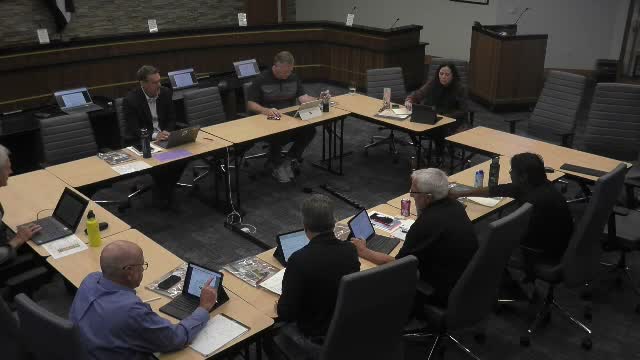
Erie council and planning commission discuss expanding commission authority on routine items
Summary
Council and planning commissioners discussed whether smaller or routine site plans and non-quasi-judicial items could be finalized by the planning commission and presented to council on consent, balancing efficiency gains against public‑oversight concerns.
The Erie Town Council and the planning commission opened a discussion about whether some routine land‑use items could be decided by the planning commission and either stay at staff level or come to council on consent rather than consume full council meeting time.
Councilmembers noted that many typical site plans and smaller projects already move through planning commission review and asked whether thresholds could be adjusted so that certain classes of applications (for example, projects under a stated acreage or with limited code discretion) would not require full council hearings. Councilmember 7 referenced past examples where duplicative hearings had taken staff and council time and suggested a consent‑agenda approach for less complex items.
Planning commission members and staff said the commission already reviews site plans and could take on additional approvals that are not quasi‑judicial in nature. "There is an opportunity for the commission to be approver on items that make sense for the council to not see," the commission chair said, adding the commission would be willing to take on appropriate items and return recommendations on others. Staff cautioned that some changes may require code amendments or charter review and that legal review would be necessary before shifting final decision authority.
Council expressed two consistent concerns: preserving public accountability so citizens still have a clear opportunity to be heard, and avoiding delegation that would create a more complex administrative process. Several councilmembers suggested bringing a more detailed options list to a joint meeting with the planning commission for follow‑up discussion and encouraged staff to prepare a list of candidate items (by type and size) for consideration.
No formal action was taken; council asked staff and the planning commission to prepare proposals and examples for a future joint meeting.