Get Full Government Meeting Transcripts, Videos, & Alerts Forever!
Get email alerts on the PROS Playbook topic
No spam. Unsubscribe anytime.
Erie adopts 2025 PROS Playbook to guide parks, trails and recreation investments
Summary
Council unanimously adopted the 2025 Parks, Recreation, Open Space & Trails (PROS) Playbook after a presentation by Parks & Rec staff and consultants; the plan lays out six goals, priority projects, and a multi-year implementation plan tied to community engagement and potential funding strategies (53% survey support for a sales tax option).
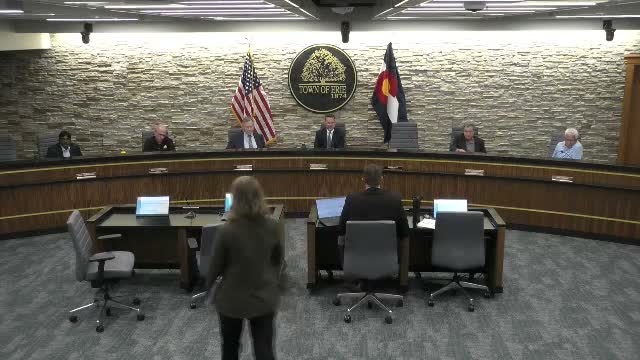
The Erie Town Council voted to adopt the 2025 PROS (Parks, Recreation, Open Space & Trails) Playbook on Aug. 26, approving a strategic guide to parks and recreation investments over the next decade.
Parks & Recreation Director Luke Bollinger and DTJ Design senior associate Michelle Regan presented the playbook, which updates the town’s 2016 plan and incorporates community engagement (726 responses to an online questionnaire and a 2,000-person Magellan survey). The playbook is organized around six goals: equitable access; stewardship of open land; a connected trail and park system; community identity; fiscal sustainability; and growth resiliency.
Key findings cited by staff: strong community interest in expanded recreation facilities and aquatics, trail connectivity to schools and destinations, and concerns about maintenance and access. The plan maps potential future neighborhood and community park sites, identifies priority trail gaps and acquisition opportunities, and presents an implementation action plan with responsible departments, priorities and timelines.
Staff emphasized fiscal realism: the town’s 2024 community survey showed 53% support for a sales tax increase to fund parks and facilities; staff recommended continued work on funding strategies, grant-seeking and partnerships. The plan also includes an action-oriented dashboard for public tracking of implementation progress.
Council moved to adopt Resolution 25-143 to formalize the playbook and voted in favor; staff said the document will be used to inform the CIP, annual work plans and public-facing progress reports.
What’s next: staff will roll out the plan internally, publish the implementation dashboard, and align capital priorities in upcoming budget discussions.