Get Full Government Meeting Transcripts, Videos, & Alerts Forever!
Get email alerts on the Oil And Gas topic
No spam. Unsubscribe anytime.
Erie staff brief council on oil‑and‑gas activity, DRACO plan, lab‑report falsification and large remediation sites
Summary
Director David Franks told council there are roughly 375 wells in the municipal boundary (about 115 active), summarized DRACO OGDP approvals and mitigation commitments, described ECMC’s ongoing data‑falsification investigation (~404 sites flagged) and updated the council on large remediation efforts including Erie 124 and the Arapahoe tank battery.
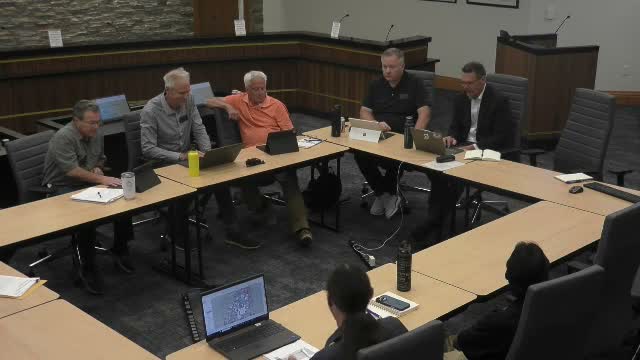
Erie — The council received an extensive briefing on oil and gas activity, operator enforcement actions and site cleanups from David Franks, the town’s director of environmental services, and Ben Kellen, the town’s environmental analyst.
Wells and production: Franks said there are 375 wells inside the municipal boundary with roughly 115 active; he also described the distribution of wells by historic drilling era and noted production in town has dropped from a 2021 peak (David Franks).
K P Kaufman enforcement: Franks summarized the state’s multi‑year enforcement against KP Kaufman (KPK), including hundreds of violations, a state penalty action and subsequent litigation. The operator remains in court and some wells continue producing amid legal challenges.
Data‑falsification investigation: Franks described a major ECMC probe into falsified lab reports and remediation data. ECMC has identified about 404 sites with questionable phosphide/lab data; the agency’s environmental and QA units plus the attorney general's office and prosecutors are pursuing civil and criminal reviews. Franks told the council the problem undermines trust in remediation data and that several investigations are ongoing.
DRACO OGDP: Franks reviewed the DRACO oil‑and‑gas development plan approved by the commission with conditions. The plan authorizes construction of a multi‑well development outside Erie’s municipal limits but within regional footprint; operator commitments include enhanced air monitoring paid by the operator, monitoring of several previously plugged wells before/during operations, visual and landscape mitigation, paving of County Road 6 for heavy haul, and the plugging and abandonment of 22 aging facilities in the project spacing unit. The commission attached timelines (operator must meet certain milestones within roughly three years under local agreements) and the town negotiated specific monitoring and mitigation conditions.
Spills and remediation: Staff updated the council on two high‑profile remediation projects. At Erie 124, operators have excavated about 1,300 cubic yards of contaminated soil and installed 13 monitoring wells; quarterly groundwater testing continues and the operator’s remediation timetable extends into late 2026. At the Arapahoe tank‑battery site, crews have excavated several thousand cubic yards (transcript cited ~6,500 cubic yards) and are continuing phased remediation and testing.
Town enforcement and programmatic changes: Franks said the town purchased an optical gas imaging (OGI) camera and will begin a formal inspection program (independent facility reports and monthly summaries). Staff proposed municipal code updates to add registration requirements for facilities, inspection access, fee structures to cover program costs and daily fines for longstanding noncompliance; the town will coordinate inspection activities with Weld County and ECMC and pursue improved public communication (dashboard, Notify Me alerts and a simplified reporting flow for odors/spills).
Quote: “To falsify lab reports … just so fundamentally breaks the trust of the system,” Franks said of the statewide investigation into consulting‑firm data falsification.
What comes next: Staff plan quarterly meetings with major operators, rolling out the inspection program and posting remediation updates and plain‑English summaries on an updated town oil‑and‑gas web page. Councilors urged immediate steps to fence active excavations, provide more frequent updates on large remediation sites and to maintain close coordination with operators and state regulators.