Get Full Government Meeting Transcripts, Videos, & Alerts Forever!
Get email alerts on the Economy topic
No spam. Unsubscribe anytime.
University of Colorado economist says mixed national signals, urges conservative revenue forecasting for Erie
Summary
University of Colorado economist Rich Wobekind told Erie council that national growth is slowing with mixed signals across sectors, Coloradois tracking near the national average, and Erieshould plan budgets conservatively given data volatility and tail-risk scenarios.
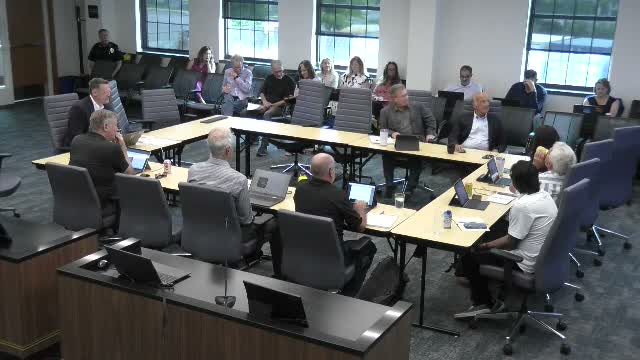
Rich Wobekind of the University of ColoradoLeeds School of Business gave the Town of Erie Council a broad macroeconomic briefing on July 29, saying uncertain national data and shifting sectoral performance make revenue forecasting risky. He told the council that consumption drives roughly 70% of U.S. gross domestic product and that a baseline forecast for 2025 GDP is about 1.0'1.2% for the year, with a strong Q2 rebound offsetting a weak Q1.
Wobekind said the manufacturing ISM index has run below the 50 neutral mark repeatedly, signaling persistent weakness in manufacturing, while employment and consumption remain relative strengths. "Consumption is about 70 of GDP," he said, noting that consumption trends filter down to state and local retail sales tax receipts that matter to Erie.
On Colorado specifically, he said the stateis closer to middle-of-the-pack growth now than in prior years: "We're kind of in the middle," he said, noting per-capita income remains high even as growth has slowed. He urged the council and staff to run optimistic and pessimistic revenue scenarios, and to treat short-term month-to-month swings cautiously because of reporting and data-quality issues.
Council members pressed Wobekind on several local concerns: whether a drop in mortgage rates would unlock pent-up housing demand (he said lower long-term rates would likely spur activity), how a slowdown in international tourism or student visas could affect lodging and higher-education revenues (he said those channels are significant risks), and why Eriehas shown volatility in year-over-year sales-tax charts (he pointed to reporting timing, new retail and e-commerce growth, and the benefit of moving averages rather than single-month comparisons).
Wobekind also warned of distributional risk: household wealth and income gains have been concentrated, and some groups remain more vulnerable to higher living costs. He recommended council and staff adopt conservative revenue assumptions for the 2026 budget process and monitor key indicators (sales tax receipts, building-permit filings, and labor-market data) on a rolling basis. The council took a short recess after the presentation and used Wobekindremarks as a reference point during the later budget forecasting discussion.