Get Full Government Meeting Transcripts, Videos, & Alerts Forever!
Get email alerts on the Public Finance topic
No spam. Unsubscribe anytime.
Erie hears financing options for big projects; advisers outline COPs, bonds and election tradeoffs
Summary
Hilltop Securities presented capital-financing choices to Erie council, explaining certificates of participation (COPs), general obligation and revenue bonds, TABOR implications and ballot timelines; advisers said a near-term debt-service rolloff creates only limited borrowing capacity (roughly $9.5M) without a new tax.
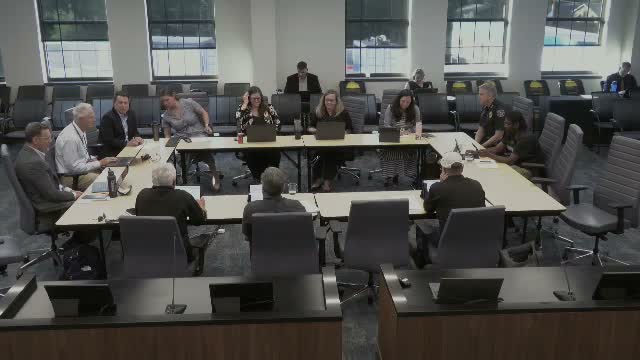
Advisers from Hilltop Securities briefed Erie council on July 15 about long-term financing options for large capital projects and the tradeoffs between using certificates of participation (COPs) and asking voters for tax-backed debt.
"COPs are a form of lease purchase agreement; they're subject to annual appropriation," Jason Simmons (S16) said, explaining that COPs avoid voter authorization because annual payments are subject to the council's budget process. Maddie Bernonavink (S19) described the transaction mechanics: the town can lease a piece of property to a trustee, sell certificates to investors and pay annual lease-like payments that can be structured to reflect the town's repayment sources.
Advisers said COPs are commonly used in Colorado for town halls, public works facilities and other capital needs and noted the market treats COPs similarly to other long-term obligations — typically a roughly one-notch credit distinction from a municipality’s GO rating. They addressed recent controversy around large COPs for private facilities in other jurisdictions but emphasized Colorado courts have upheld municipalities’ use of COPs in prior litigation.
On Erie-specific capacity, advisers pointed to a short window as existing debt service steps down in 2026–27; if the town preserves current rates, that step-down creates roughly $9.5 million of borrowing headroom, the advisers said. They cautioned, however, that figure is unlikely to fund large multi‑facility projects without additional revenues or voter authorization.
Advisers also walked council through ballot mechanics and timing (intergovernmental agreements in July, ordinance/resolution in August, TABOR notices in September, financial disclosure in October, and election in November) and discussed how sales-tax increases, property-tax (mill levy) questions and debt-authority questions differ in allowable uses and political dynamics.
Council members asked about interest-rate differences, potential refinancing options (call periods typically at 10 years), and how COPs can be combined with voter-authorized taxes; advisers recommended staff and bond counsel model multiple scenarios and consider a community survey and polling before any ballot measure.
The briefing concluded with staff asking for direction on budget priorities and which capital projects council might consider for financing during the upcoming budget cycle.