Get Full Government Meeting Transcripts, Videos, & Alerts Forever!
Get email alerts on the Economic Incentives topic
No spam. Unsubscribe anytime.
Erie staff pushes for formal economic‑incentives policy to capture retail and restaurant demand
Summary
Town economic development staff recommended a draft townwide economic incentives policy after outlining tools such as sales/use tax rebates, development fee rebates, matching grants and TIF; council generally supported bringing a policy forward and asked for thresholds, budget details and guardrails.
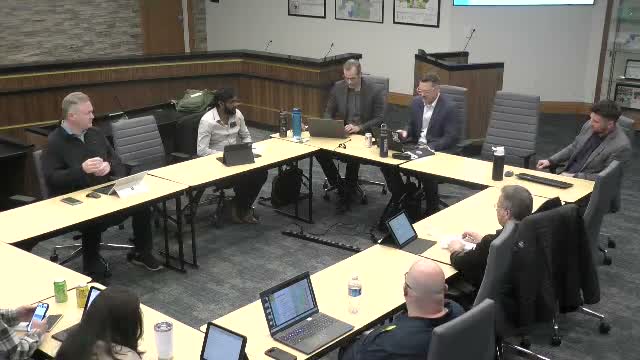
Mayor Pro Tem Mary Andrew Moore convened a study session on March 18, 2025, where Jack Hill, economic development specialist, presented a staff recommendation to formalize a townwide economic‑incentives policy.
Hill told the council Erie currently lacks a comprehensive incentive framework but now that the town is home‑rule staff can craft policy. "Economic incentives are typically targeted public assistance to businesses and developers to catalyze the local economy," he said, listing performance‑based sales and use tax rebates, development fee rebates paid at certificate of occupancy, property‑tax rebate options, special financing districts (metro districts, local improvement districts), targeted matching grants for historic façade or tenant improvements and provision of town‑owned land in exchange for development commitments.
Hill stressed the need to target incentives so they do not merely re‑incentivize businesses that already operate in Erie. He cited what staff described as regional retail leakage — "roughly $64,000,000 in restaurant leakage in the region" — and noted Erie’s very low commercial vacancy rate (about 0.5%), arguing incentives could help create the near‑term commercial inventory that local retailers and restaurateurs need.
On process, Hill described a typical path: applicant pre‑application and letter of intent; an economic impact and gap‑feasibility analysis; negotiations on a performance‑based tool; and either administrative approval under a dollar threshold or council approval above it. Staff said the town had created a $100,000 seed incentive fund in the departmental budget this fiscal year to begin administering small grants and rebate programs while the formal policy and budget are developed.
Councilors asked for clarifying details: what thresholds would trigger council review, whether incentives can be targeted to prevent market cannibalization, how incentives interact with enterprise fund fees (sewer, water, raw water), and whether the town should run third‑party gap studies on large mixed‑use projects. Hill responded that many small grants are administratively approved (under current signing thresholds) and larger requests (commonly $100,000+) would come to council. He said staff prefer performance‑based rebates for restaurants because they reduce upfront risk to the town while still incentivizing long‑term operation.
Council members also discussed guardrails and flexibility. Some favored a standard table comparing regional peers (e.g., Loveland, Brighton, Johnstown) and a mechanism to let council approve exceptions for high‑impact projects. Others warned against undermining public process by granting expedited reviews without adequate public notice. Staff agreed to bring a draft policy and supporting budget scenarios back for council direction.
Next steps: staff will prepare a formal incentive policy draft, include a comparative table of neighboring jurisdictions’ incentives per council request, and present recommended budget options and administrative thresholds for council consideration.