
County fiscal staff warn income‑tax gains are one‑time; urge caution as schools seek more funding
Get AI-powered insights, summaries, and transcripts
Subscribe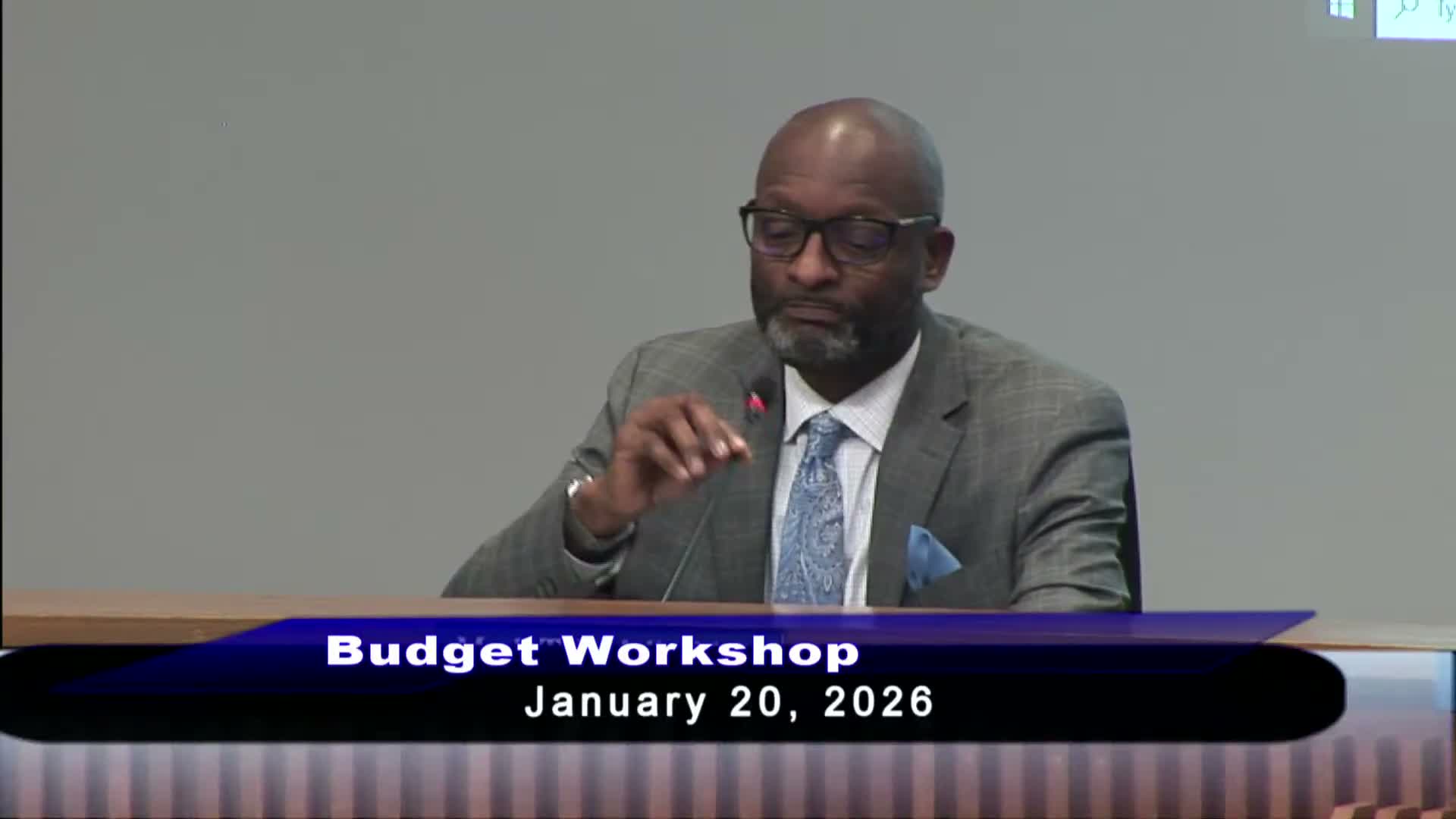
Summary
County fiscal presenter Chris Trumbauer told the Anne Arundel County Board of Education that FY25 revenue outperforms—including about $50 million extra in income‑tax receipts—are largely nonrecurring reconciliation payments and cautioned the board against treating them as long‑term revenue when evaluating school funding requests.
Board President Gloria Dent opened a public workshop Jan. 20 where county fiscal staff briefed the Anne Arundel County Board of Education on the county's fiscal outlook ahead of the superintendent's FY2027 budget request.
Chris Trumbauer, the county's fiscal presenter, told the board most FY25 revenue lines beat projections and singled out income tax and investment income as the largest positive variances. "We are about $50,000,000 to the good for our income tax projections," he said, but immediately warned that much of the increase comes from reconciliation and penalty payments that are atypical and cannot be counted on in future years.
Trumbauer displayed year‑to‑year charts and urged the board to budget to recurring baselines rather than temporary spikes. He said the county's rainy‑day reserve stands at roughly $182,000,000 and that the county has improved its bond ratings by building reserves, but added that those reserves are for downturns and not for recurring program support.
The presenter also highlighted risk factors that could constrain future local support for schools: a slowing labor market that threatens income‑tax growth; flat recordation and transfer tax receipts tied to higher mortgage rates; and a looming state structural deficit that could shift costs onto counties. "The governor will introduce his budget tomorrow," Trumbauer said, noting the state shifted $12,000,000 of expenditures onto counties last year.
Trumbauer framed the broader fiscal picture as a mix of positive near‑term results and structural risks, saying county leaders and the Board of Education should plan for the possibility that one‑time revenues will not recur.
The board will receive updated state figures after the governor releases the budget and expects to use that information in finalizing the superintendent's request before the county and state budget cycles proceed.