Get Full Government Meeting Transcripts, Videos, & Alerts Forever!
Get email alerts on the State Legislation topic
No spam. Unsubscribe anytime.
State lawmakers brief Meriden on 2025 session, warn federal cuts could squeeze SNAP, LIHEAP and Medicaid
Summary
State Senator Jan Hakkadell and Rep. Hilda Santiago updated a Meriden civic board on 2025 state legislation and federal changes they said will reduce SNAP and LIHEAP benefits, expand Medicaid work requirements, and require state agencies to assess fiscal impacts; union representatives hailed passage of early childhood and paraeducator funding.
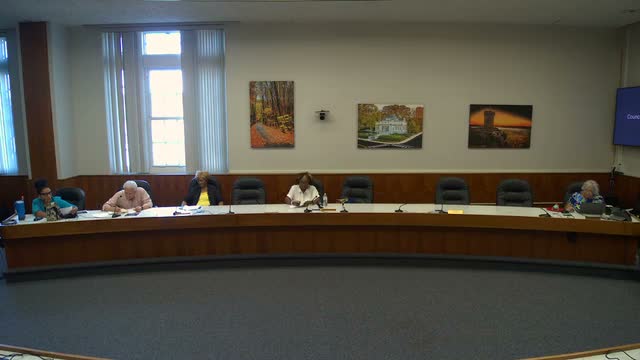
State Senator Jan Hakkadell and State Representative Hilda Santiago told a Meriden civic meeting that this year’s legislative session yielded a mix of state policy wins and federal funding changes that could force the state to fill service gaps.
Hakkadell, who chairs the Senate aging committee, summarized three bills from her panel: a measure she said requires nursing homes to post an LGBTQ+ bill of rights and provide ombudsman contact information for residents who believe they are being discriminated against; a bipartisan biomarker-testing measure she described as requiring Connecticut-licensed insurers to offer biomarker tests more broadly; and a college-expansion bill that would allow nursing-home and long-term-care residents to take online college courses to encourage engagement and potential remote work.
Santiago, who serves on the General Administration and Elections, Finance and Human Services committees, described statutes and rules the legislature changed this session. She said the GAE committee passed an absentee-voting procedure for eligible incarcerated individuals that will take effect Jan. 1, 2026, and described campaign-finance changes that include more detailed explanations when contributions are deemed nonqualifying and a requirement to livestream commission meetings tied to complaints. On human services, Santiago explained work to address the long waiting list for the Katie Beckett program for people with brain injuries and a new requirement for the Department of Social Services (DSS) to update waiting lists annually.
Both lawmakers warned of looming federal changes they said will reduce reimbursements and alter eligibility for key safety-net programs. Santiago said a recently passed federal bill will limit federal SNAP reimbursements to children up to age 14, reduce waivers for areas with low unemployment, constrain LIHEAP grants and expand certain work requirements tied to Medicaid eligibility. She said DSS, the Office of Policy and Management and other state staff are still calculating the fiscal effects and that a special session may be necessary once the state determines how much revenue must be backfilled.
Union legislative representatives at the meeting highlighted enacted state investments and labor priorities. A presenter described a newly funded Early Childhood Education Endowment with an initial $300 million appropriation for fiscal 2025, a $10 million paraeducator fund intended to offset paraeducators’ health-care costs, and expanded paid family and medical leave eligibility for certain noncertified education employees. Speakers also noted $200 million returned from a reported $4 billion state surplus to support nonprofits and cited passage of a private-prison ban.
During audience questions, members asked for clarification about work requirements and exemptions. Santiago read a list of exemptions described in state implementation guidance — including pregnant and postpartum individuals, certain foster youth, veterans with rated disabilities, medically frail individuals, people with serious mental illness or substance-use disorders, parents and caregivers of children 13 and younger, and others — and said some training dollars depend on federal grants that could be cut.
Lawmakers and union representatives urged municipal leaders to track local impacts. Hakkadell and Santiago encouraged DSS and OPM to detail the costs of backfilling federal cuts before legislators consider supplemental appropriations. At the meeting’s close, board members and the delegation discussed possible next steps including follow-up briefings and outreach to state agencies.
The presenters’ remarks and many program names were taken directly from the meeting; figures and projected impacts were presented as speaker estimates at the meeting and, where the source was unclear, are attributed to the speakers rather than stated as independently verified facts. The delegation said more detailed fiscal estimates from state staff are pending and that any decision to call a special session would follow those calculations.