Get Full Government Meeting Transcripts, Videos, & Alerts Forever!
Get email alerts on the Military Equipment Report topic
No spam. Unsubscribe anytime.
South Pasadena police report says no field uses of state-designated military equipment; small training cost recorded
Summary
The South Pasadena Police Department told the Public Safety Commission its June 2024–Sept. 2025 report shows no field deployments of equipment classified under state military‑equipment law and $1,681.13 in training costs for 40mm rounds; inventory includes less‑lethal launchers, flashbangs, precision rifles and patrol rifles.
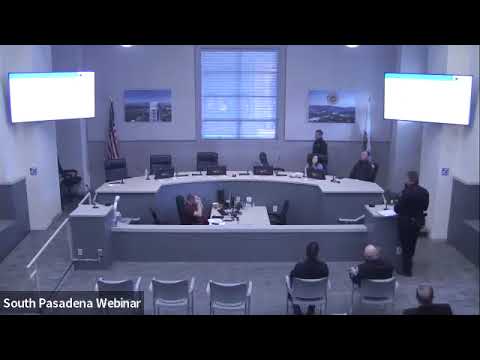
The South Pasadena Police Department reported to the Public Safety Commission on Oct. 13 that it made no field deployments of equipment classified under the state’s military‑equipment reporting law during the June 2024–Sept. 2025 reporting period.
Sergeant Andrew DuBois, presenting the department’s annual military equipment use report, said the department maintains a limited inventory that includes 40 millimeter less‑lethal launchers and related projectiles, noise flash diversionary devices (commonly called flashbangs), four long‑range precision rifles, and patrol rifles. DuBois said none of the listed equipment was obtained through military surplus and that purchases were made through law‑enforcement vendors before the law took effect.
“For the reporting period, there were no uses of the military equipment that South Pasadena Police Department holds,” DuBois said. He told commissioners the only recorded activity during the reporting period was controlled training with the department’s 40mm launcher using specified training projectiles in a 25‑yard range.
The department reported a recorded cost of $1,681.13 for the year, which DuBois said covered a 250‑shot training kit for 40mm rounds that he described as sufficient for roughly two years of the department’s training cycle. DuBois said planned acquisitions include about 50 new exact‑impact foam rounds to replace items exceeding manufacturer warranty; he estimated the new rounds would cost approximately $1,000.
DuBois outlined the department’s deployment policy and training status: precision rifles, flashbangs and chemical munitions remain locked and are not issued for routine field use because personnel are not currently trained for those systems, while patrol rifles have been standard issue for officers since 2005. He cited high‑risk incidents such as active‑shooter events and armed robberies as the kinds of situations in which patrol rifles or other elevated equipment might be employed.
Commissioners asked about disposal and environmental handling of expired rounds; DuBois said aluminum bases are recycled through the department’s recycler, while he was uncertain about the recyclability of plastic or foam components. He also said the department tracks inventory and expiration using an internal spreadsheet maintained by another sergeant.
DuBois said the department does not participate in ICE raids or federal immigration enforcement operations and would not routinely deploy listed equipment for local protests; he added the department would respond to mutual‑aid requests with its own equipment and that reimbursement arrangements have existed in other circumstances but are not guaranteed in advance.
The report was provided for informational review only; commissioners did not take formal action on the item during the special meeting.