Get Full Government Meeting Transcripts, Videos, & Alerts Forever!
Get email alerts on the Housing topic
No spam. Unsubscribe anytime.
County accepts housing study that projects need for nearly 6,000 households by 2040
Summary
The Board accepted a Foothills Regional Commission housing needs assessment that finds Rutherford County faces an aging housing stock, a historic annual housing-unit loss rate of about 0.85% and a projected need for roughly 5,962 additional households by 2040; the study recommends municipal zoning reforms, incentives and home-rehab programs.
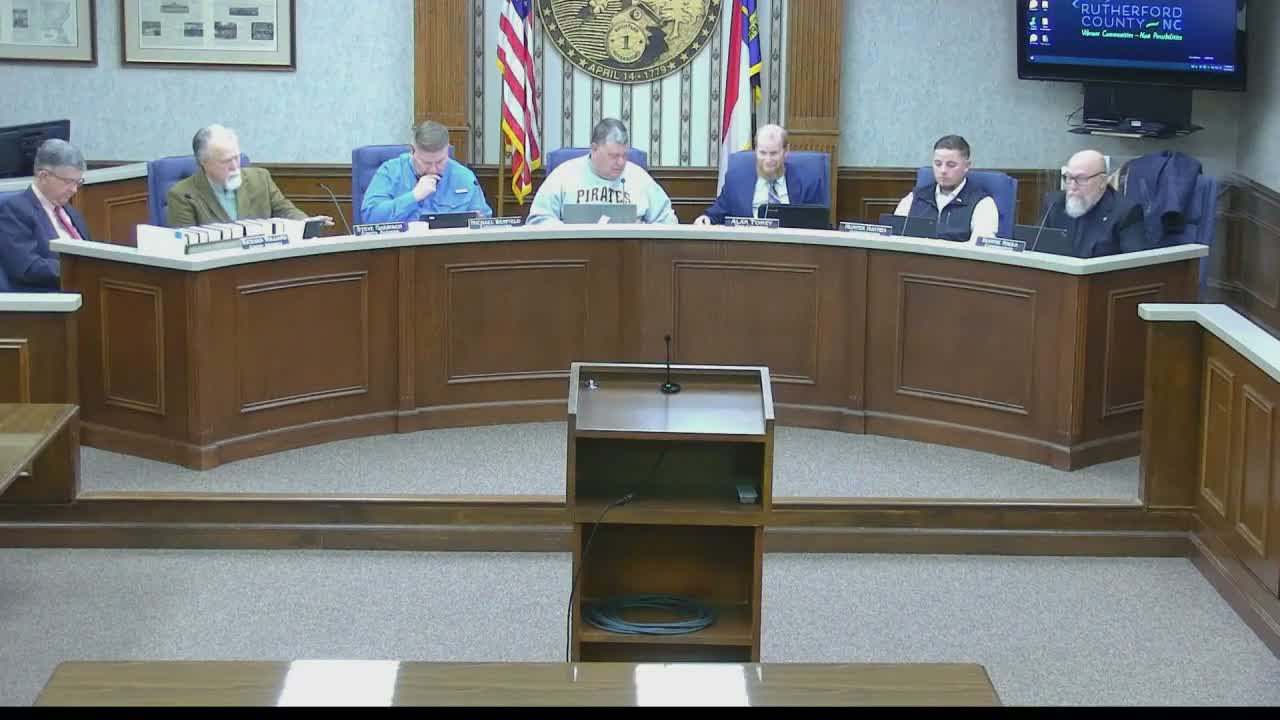
The Rutherford County Board of Commissioners voted Dec. 1 to accept a countywide housing study prepared by the Foothills Regional Commission and funded by Dogwood Health Trust.
Senior planner Preston Jenko said the study covers Rutherford County and its municipalities and combines Census data, public engagement and local focus groups. Key findings include an aging housing inventory (roughly 35% of units built 1969 or earlier and roughly 70% built before 1999) and an annual housing-unit loss rate of about 0.85% between 2010 and 2020 (higher than the national 0.5% figure cited in the report).
Jenko said the county will need about 5,962 additional households by 2040 when factoring modest population growth and replacement of housing units lost to dilapidation, demolition or vacancy. The study recommends expanding affordable and workforce housing, incentives and zoning reforms for municipalities (the county study does not impose countywide zoning), home-rehabilitation programs to address dilapidated structures, and targeted strategies for seniors and vulnerable populations.
Commissioners and attendees discussed utility access for proposed developments in rural areas; a public commenter earlier in the meeting raised concerns about a proposed 300‑unit tiny‑home development in the Bills Creek area lacking public water and sewer. The planner said many of the study’s recommendations apply to municipalities where zoning exists and encouraged using the plan as a funding roadmap and a framework for consistent municipal permitting practices.
The board moved to accept the study and carried the motion by voice vote.