Get Full Government Meeting Transcripts, Videos, & Alerts Forever!
Get email alerts on the Social Services topic
No spam. Unsubscribe anytime.
DSS annual report: Rutherford County highlights disaster response, foster-care strain and Medicaid enrollments
Summary
Rutherford County Department of Social Services told commissioners its 2024–25 year included hurricane response and sheltering, the June 2025 opening of a 'Lighthouse' temporary child facility, roughly 182 children in custody (about 60% placed outside the county), Medicaid expansion enrollment of 5,236 residents, and ongoing staffing shortages driving turnover.
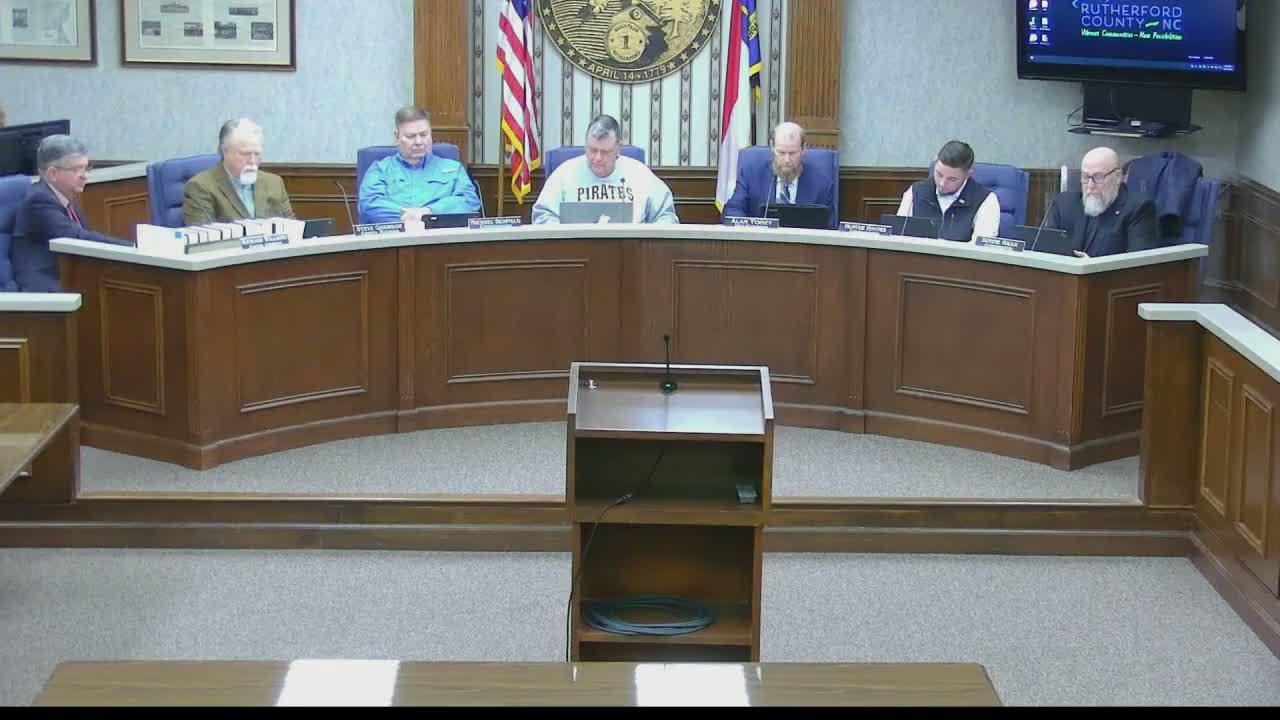
The Rutherford County Department of Social Services presented its FY2024–25 annual report to the Board of Commissioners on Dec. 1, outlining disaster response, child-welfare workloads and program finance.
DSS staff said the department opened and staffed emergency shelters during Hurricane Helene and supported more than 160 displaced residents. The department also noted the June 2025 opening of a "Lighthouse" temporary facility designed as a trauma‑informed temporary home for children entering custody while awaiting foster placements.
The director reported roughly 182 children were in DSS custody during the reporting period; about 60% of those children were placed outside the county. The department said it is pursuing foster‑parent recruitment and partnerships to bring children closer to home, including a "Bring the Kids Back Home" initiative.
On program finances, DSS cited approximately $3,190,000 in Medicaid dollars paid to providers during the fiscal year and said it enrolled 5,236 residents under Medicaid expansion during the period, exceeding a state-identified eligible count of 4,054. The department processed 4,417 disaster SNAP applications and said roughly $4,000,000 in food assistance was delivered during the disaster response.
Commissioners questioned program-integrity measures and turnover. A DSS staff member identified historical program integrity issues at about 1.62% of claims and said roughly 90% of that figure reflects inadvertent household or agency errors rather than fraud. The department reported severe staffing shortages and competition from higher-paying neighboring counties and private plans, and said turnover is highest in child-welfare units; staff described mitigation steps including contracted workers, outreach and job fairs.
Commissioners and staff discussed implementation of recent SNAP and Medicaid rule changes that began Dec. 1, including recertification timelines and potential county financial exposure if error rates exceed state thresholds. DSS staff said they will provide a spreadsheet estimating potential clawback exposure tied to error‑rate thresholds.