Get Full Government Meeting Transcripts, Videos, & Alerts Forever!
Get email alerts on the Warming Centers topic
No spam. Unsubscribe anytime.
Meriden council pledges $30,000 support for regional warming centers; asks coalition for budget details
Summary
After public testimony from the Meriden Coalition to End Homelessness, the finance committee voted to advance a $30,000 contribution (to be funded from contingency) toward regional warming-center operations, subject to council approval on Jan. 20; the coalition supplied staffing and cost figures and will provide a detailed budget.
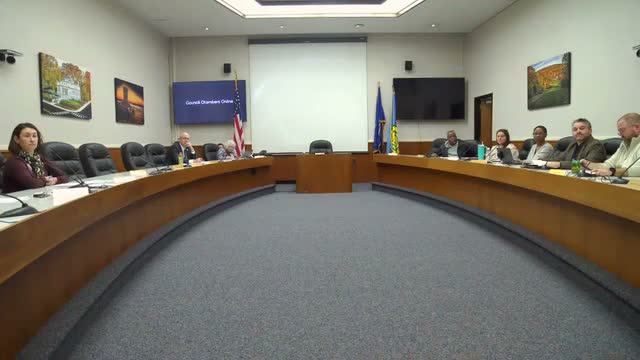
Meriden — The finance committee voted on Jan. 8 to advance a resolution authorizing up to $30,000 to support regional warming-center operations that serve Meriden residents, following public testimony from the Meriden Coalition to End Homelessness.
Donna Detrio, co‑chair of the Meriden Coalition to End Homelessness, told the committee that the region’s coordinated access network (MMW CAN) and partner municipalities are providing warming‑center capacity but that local contributions remain necessary to sustain staffing, security and supplies. "To ensure the warming center can meet the needs of Meriden residents during the coldest months of the year, we respectfully request that the City of Meriden contribute $30,000 to support the effort," Detrio said.
Councilor Sonia Jelks, who disclosed her employment with the Connecticut Department of Housing, described regional coordination and warned that the region has seen recent cold‑weather fatalities, saying commissioners had “three deaths attributed to freezing outside” this season. Jelks and other council members emphasized a desire for oversight and accounting: the coalition was asked to provide a line‑item budget before the full council votes on Jan. 20.
Coalition testimony included a staffing and operating breakdown: the coalition said roughly $69,759 of grant funding covers staff salaries for one site and that security costs in a single shelter example were cited as $40,222. Detrio also described the warming‑center model in the region and said overflow arrangements use New Beginnings emergency shelter when needed.
Finance director Kevin McAbowell said the quick path to fund the request would be a contingency transfer, noting the fiscal year is still in progress and many departmental accounts remain open. Council members asked whether the requested payment would be routed through the CAN pooled fund and sought assurances that Meriden’s share could be tracked; councilors were told that the CAN allocates funds to the locations with need and that the coalition would provide more detailed invoices and documentation.
The committee approved the resolution to contribute up to $30,000 and asked the coalition to submit detailed budgeting and documentation prior to the full council’s Jan. 20 meeting, when the contingency transfer will be formally recorded for the city’s financial records.