Get Full Government Meeting Transcripts, Videos, & Alerts Forever!
Get email alerts on the Land Use topic
No spam. Unsubscribe anytime.
Planning board advances University Research Overlay District amid debate over transferability and affordability
Summary
The Stamford Planning Board voted Feb. 25 to forward a zoning text amendment creating a University Research Overlay District (UROD) and a related map change, approving the text with amendments to tighten affordability standards, clarify internet requirements, and narrow the innovation-center definition; the text passed 3–1 and the map change passed 3–1.
The Stamford Planning Board on Feb. 25 voted to forward a zoning text amendment establishing a University Research Overlay District (UROD) and a related map change, after an extended presentation by city economic-development staff and UConn Stamford representatives and a lengthy board Q&A.
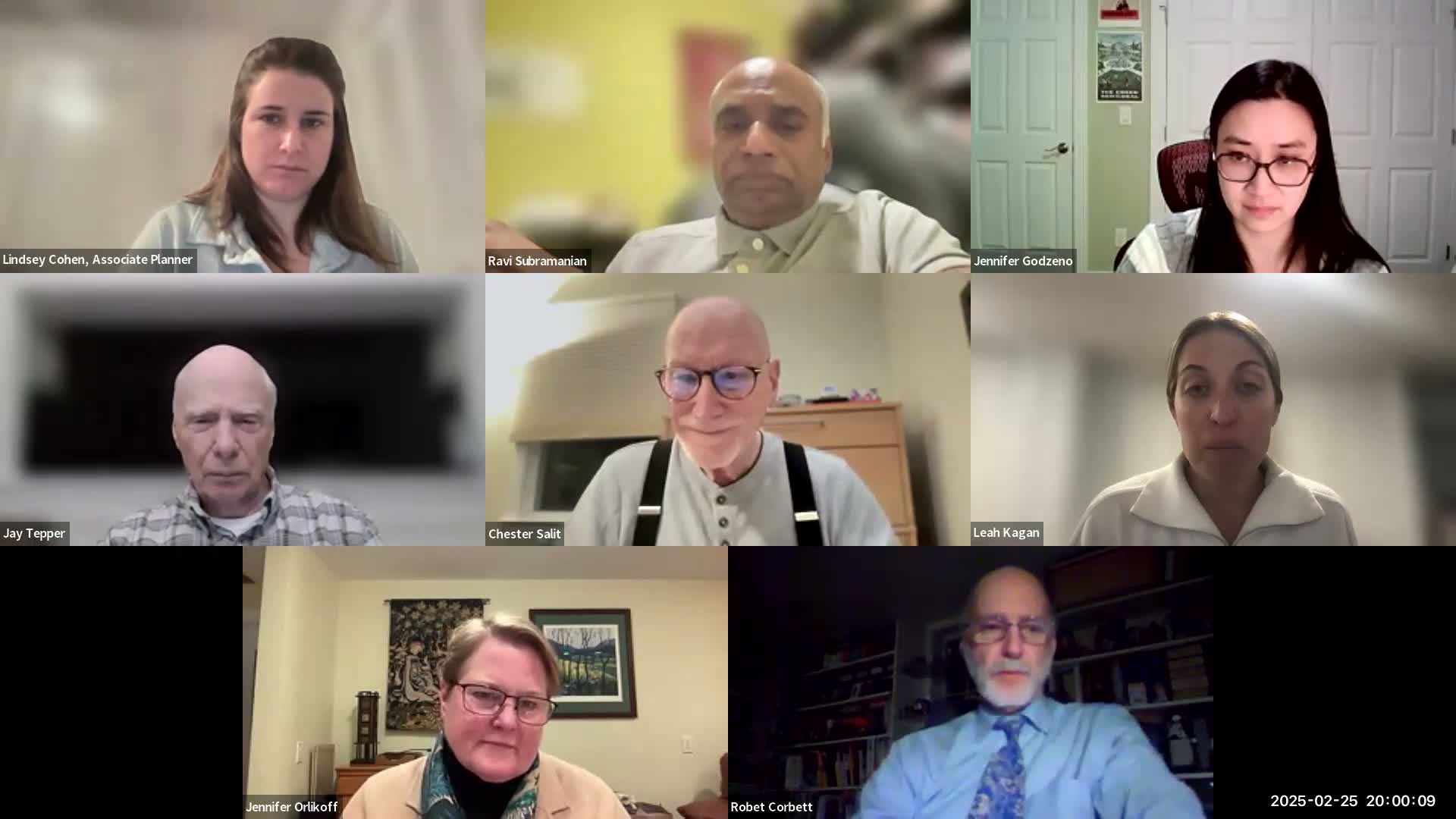
Leah Kagan, director of economic development, described the UROD as a tool to encourage UConn Stamford’s expansion, promote student and faculty housing, and attract cultural and research uses. “The purpose of the University Research Overlay District is to encourage the expansion of UConn and other academic institutions, encourage affordable faculty and student housing, and encourage expansion of existing and attraction of new cultural and educational institutions,” Kagan said.
UConn presenters said the overlay would allow development bonuses for eligible university-related uses, permit transfers of unused development rights within the overlay and narrow eligible uses from an earlier draft to better focus on campus‑related activity. Robert Corbett, associate vice president for university planning, said the overlay is intended to help create contiguous student housing and academic uses adjacent to the existing campus footprint and support workforce pipelines with local employers.
Board members pressed presenters on several points: timing relative to the ongoing 2035 master plan, mechanics of transferring development rights (including whether receiving sites must be university‑affiliated), and how affordability requirements would be enforced. Several board members questioned whether transfers could increase density in parts of the city that are further from campus and whether the proposal would create incentives for conversion of existing BMR units into student housing.
The board accepted several procedural amendments before voting. Chair Jennifer Gazzano proposed, and the mover accepted, amendments requiring clearer affordability thresholds tied to income for faculty and student housing; a revised provision allowing the public‑internet performance standard to be updated without numeric obsolescence; and a clarification to the innovation‑center definition to require a combination of support services (e.g., shared labs, flexible space and programming) so that no single factor alone would qualify. After those amendments, the text change passed with three in favor and one opposed.
The related map change — which would apply the overlay to select downtown and South End parcels with explicit exclusions for historic and cultural registry sites — was also forwarded with a 3–1 vote. Board members noted that special permit applications under the UROD would return to the planning board, which would evaluate compatibility with the final 2035 master plan when it is adopted later this year.
Next steps: the text and map changes will continue through the statutory referral process; special permit applications under the new overlay will return to the planning board for project-level review.