
Germantown board votes to join county study of countywide EMS funding, amid tax concerns
Get AI-powered insights, summaries, and transcripts
Subscribe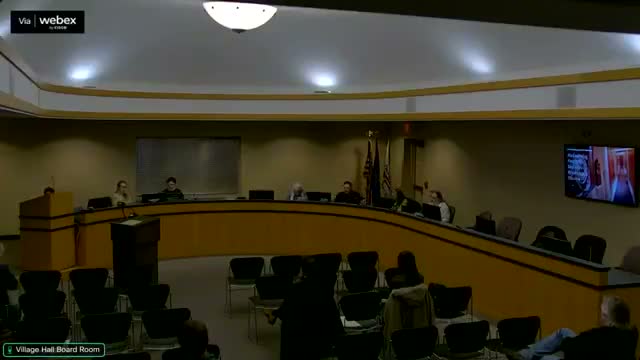
Summary
Washington County officials presented a proposal to study a countywide EMS funding model that could exceed municipal levy limits; Germantown trustees approved study participation but raised concerns about potential tax increases and the long-term effect of lowering municipal levies.
Germantown’s General Government & Finance Committee voted to join a Washington County-led study exploring a countywide emergency medical services (EMS) funding model, after a two-hour presentation and extended public and trustee discussion.
Dave Sager, chief public safety officer for Washington County, told the committee the county’s statutory authority would allow a county levy for a countywide EMS system that could exceed municipal levy limits. Sager said the proposal is intended to "stabilize today and secure tomorrow," while leaving local operational control with municipalities. He described the mechanism as potentially tax-neutral if municipalities lower their local levies by the same amount the county levies, and said a county work group will develop distribution formulas based on population, run volume and square mileage.
The discussion highlighted two competing concerns. Residents and trustees who supported recent local referendums warned that a county levy could result in duplicate charges on residents’ tax bills if municipalities did not reduce their own levies. Public commenter Melanie Smyth said she feared the result could be "triple taxation" and called the current dependence on TIDs "this Ponzi scheme," urging clearer projections when districts close. Village President Soderbergh told the committee he was "open minded" about the study but cautioned: "This will not be a reduction in taxes for anyone. It’ll be a tax increase," and asked that the study account for indirect costs including depreciation on buildings and apparatus.
County presenters gave preliminary budget figures, saying the EMS portion was approximately $14,600,000 while a broader public-safety figure was around $18,600,000; presenters noted those numbers were pulled from 2024 data and described as "a little skewed" and subject to refinement. County officials also said the statute that permits county levies for countywide EMS is ambiguous about eligible line items, and that the county’s interpretation would be to include operational costs (salaries, benefits, pensions), capital and debt service.
Trustees pressed for concrete return-on-investment numbers and a clear road map before any levy decision. Sager said the county expects to convene a work group on Feb. 3 and aims to return detailed governance, distribution and financial scenarios in time to inform summer budget decisions. The committee’s action on Monday was limited to approving participation in the county study; the motion to pursue the study passed, with one member recorded in opposition.
What happens next: the county will convene administrators and chiefs in a work group to model distributions and governance; Germantown staff said they will be represented in that group and expect to receive more detailed financial modeling before any formal levy or intergovernmental agreement is proposed.
The vote: the committee adopted a motion to accept the resolution to study a countywide EMS system; the motion carried with one member opposed.