Get Full Government Meeting Transcripts, Videos, & Alerts Forever!
Get email alerts on the Tax Incremental Financing topic
No spam. Unsubscribe anytime.
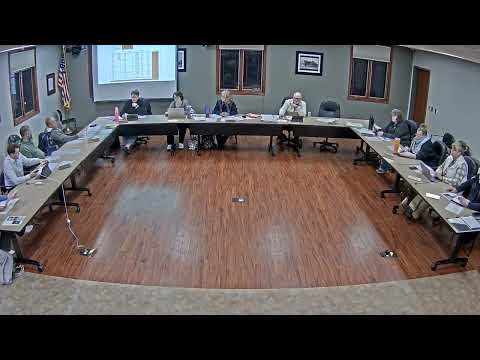
Hortonville board approves creation of TID No. 7 to enable Nature’s Haven development
Summary
The Village of Hortonville approved Resolution R-1-26 to create Tax Incremental District No. 7 and adopt a project plan that would make development costs — including incentives for the proposed Nature’s Haven subdivision — eligible for tax-increment financing. The resolution passed by voice roll call; the creation does not itself approve the subdivision or development agreement.
The Village of Hortonville board voted to create Tax Incremental District (TID) No. 7 and approve its project plan, a step the village says will allow tax-increment revenue from new development to pay eligible future projects. The board adopted Resolution R-1-26 after a presentation by Ariana Schmidt of Eller's Financial Advisors and a motion from the board.
Ariana Schmidt, the financial consultant, told trustees the district’s boundaries were adjusted since earlier review — three parcels added and one removed — to align with a prospective Nature’s Haven subdivision. She said the district meets statutory tests for a mixed‑use TID (96% of parcels suitable for mixed use, under the 50% test) and that newly platted acreage is 33%, under the 35% limit. Schmidt said the proposed base value would add roughly $3.7 million to the village’s TID total and that the new district would keep the village well under the statutory equalized-value cap (projected at about 7.25% of the 12%/approximately $46.5 million cap).
Schmidt described the plan’s financial assumptions: the Nature’s Haven subdivision is estimated to produce about 104 units over five years, with roughly $6–$7 million in new equalized value annually across that period in the consultant’s scenario. She said the village could expect roughly $8.2 million in tax-increment revenue over the 20‑year life of the TID as modeled, with revenue collection beginning in revenue year 2028 and an initial-year increment of about $88,000 under the conservative assumptions used.
The project plan lists a potential development incentive that would channel about 80% of the tax increment generated by the Nature’s Haven development back to the developer as a municipal revenue obligation (MRO). Schmidt emphasized that approving the TID creates eligibility for reimbursements through tax increment financing but does not approve the subdivision itself or a development contract: “Approving the district does not give any approval for that subdivision to happen. Those approvals happen separately,” she said.
Trustees discussed the planning, the timing of required approvals (including a final Joint Review Board meeting that would consider the "but for" test), and next steps. The board moved to approve Resolution R‑1‑26; the motion was seconded and passed by roll call (motion carried). The creation ordinance and project plan will return to the Joint Review Board for final action on February 5, 2026, if the village board’s approval stands.
The village clerk will maintain the full project plan and map in the files; formal development agreements or incentive contracts for Nature’s Haven would require separate review and approval by the board and, where applicable, by the Joint Review Board and other statutory bodies.
What’s next: The final Joint Review Board meeting and any future development agreements that rely on the TID will appear on a future meeting agenda for formal approval.