Board approves Alamo-area rezone, neighbors object to slope, drainage and fire risks
Loading...
Summary
After staff recommended approval and a 4–1 planning commission recommendation, the Board of Supervisors approved rezoning and a minor subdivision at 1921 Green Valley Road (Alamo) with variances for retaining walls and setbacks despite extended neighbor testimony on slope stability, landslides and watershed impact.
The Contra Costa County Board of Supervisors on Tuesday approved a rezone and minor subdivision at 1921 Green Valley Road in the unincorporated Alamo area, a project that drew extensive public opposition over hillside stability, creek impacts and proposed retaining‑wall variances.
County staff told the board the property is roughly two acres and that the project would rezone the parcel from agricultural to R‑40 (single‑family residential), split the lot into roughly 0.95‑acre and 1.05‑acre parcels, and require variances for front and side setbacks to accommodate retaining walls and driveway improvements. Staff said the parcel met the minimum acreage for the proposed zoning and that a draft mitigated negative declaration identified impacts in biology, geology/soils, cultural resources and wildfire, all of which staff said could be mitigated through conditions.
Neighbors and community associations presented multiple speakers who said the parcel sits on a steep slope with a history of ground movement and nearby landslides. Robert Geider, a 55‑year resident, and Melinda Trost, a nearby homeowner, described ongoing slope movement and expressed concern that construction would worsen erosion and property damage. An attorney representing neighborhood associations questioned the rationale for rezoning the rural parcel and said there was no changed circumstance to justify the rezoning.
The project applicant, George Moore, described longstanding maintenance needs at the property, replacement of failing redwood retaining walls and fire‑safety improvements, and said peer‑reviewed geotechnical work and required design‑level reports would address stability concerns. "No one's more invested in slope stability than I am," Moore told the board, adding the owner plans additional engineering and mitigation.
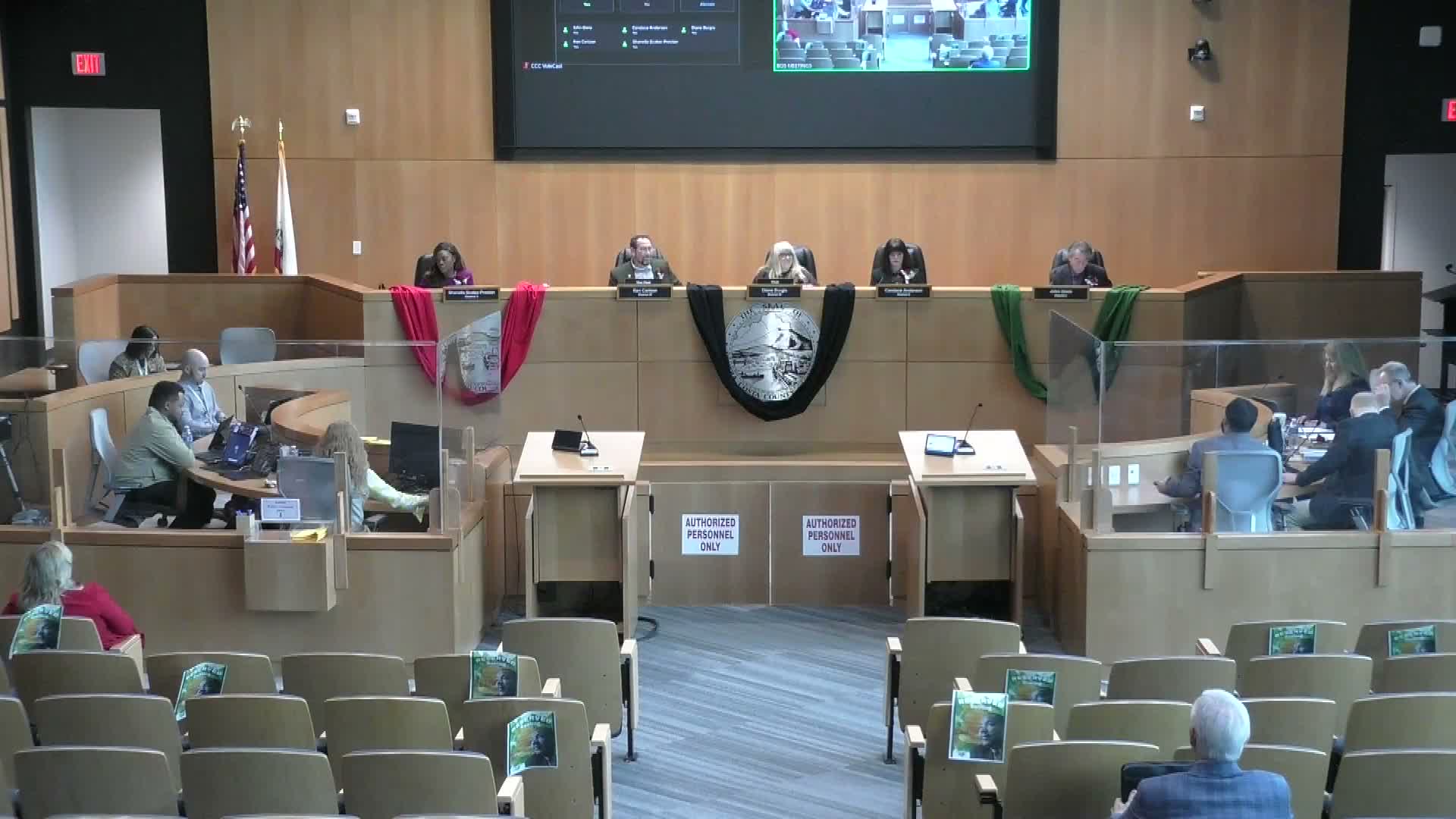
Planning staff noted a previous planning commission recommendation (4–1) to approve the project. After questions from supervisors about hydrology and trenching, Supervisor Candace Anderson moved to adopt staff recommendations and approve the rezoning, the tentative vesting map, variances and tree permit; Supervisor Ken Carlson seconded and the motion passed unanimously.
The board recorded several conditions intended to reduce environmental and safety impacts, including additional geotechnical reports and mitigation measures required prior to construction.
What happens next: the project will proceed to final permitting and require the design‑level geotechnical reports and any conditions listed in the mitigated negative declaration before building permits are issued.